Chitown Eyes US$11m Investment in 2027 Budget Amid Mounting Service Delivery Challenges
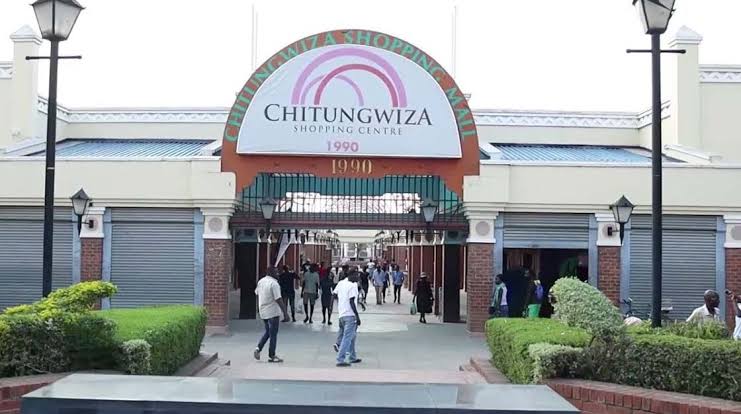
Chitungwiza Municipality has embarked on ward-based consultations to formulate its 2027 budget, with the proposed spending plan placing emphasis on the rehabilitation of water and sewer infrastructure, road improvements, healthcare and community facilities as the local authority seeks to address longstanding service delivery challenges.
The consultations, which cover all 25 wards, commenced last Saturday, November 7, at Katanga Beerhall in Ward 1 before spreading to other areas of the dormitory town. They provided residents with an opportunity to scrutinise the municipality’s financial performance and contribute to its spending priorities for the forthcoming year.
The proposed capital projects have a combined estimated cost of US$11,182,260, with water, sanitation and hygiene (WASH) infrastructure accounting for a substantial portion of the planned investment.
However, the ambitious programme comes against a challenging financial background, with the municipality recording a significant revenue shortfall during the first nine months of 2026, compounded by growing debts owed by ratepayers and mounting obligations to creditors.
According to the municipality’s January-September 2026 budget performance review, council had projected revenue of approximately ZWG847 million but managed to collect ZWG333 million, representing just 39 percent of its target and leaving a shortfall of about ZWG513.4 million.
Own-source revenue contributed ZWG325 million against a budgeted ZWG748 million, translating to 43 percent performance, while external funding from sources including ZINARA, devolution and beer levy collections generated only ZWG8 million against an expected ZWG99 million.
The revenue constraints have affected capital investment, which accounted for just three percent of the municipality’s ZWG332.68 million expenditure during the period under review.
Salaries and wages consumed 47 percent of expenditure, while third-party payments accounted for 26 percent, further illustrating the pressure on resources available for infrastructure development.
One of the municipality’s major concerns remains poor revenue collection, with its collection efficiency standing at 58 percent of the ZWG576 million billed during the nine-month period.
Consequently, outstanding receivables increased from ZWG445.37 million at the beginning of the year to ZWG698.81 million by September 30, representing a 56.91 percent increase.
Council has consequently appealed to residents and businesses to settle their bills, arguing that improved collections are essential to financing operations and sustaining service delivery.
Council is also considering expanding its revenue collection infrastructure, starting with the town centre.
Meanwhile, its financial position has been further strained by mounting obligations to creditors, with trade and other payables rising from ZWG270.35 million to ZWG650.47 million, a 141 percent increase.
The largest outstanding obligation is reportedly owed to the City of Harare, at approximately ZWG456 million, while third parties are owed ZWG121 million and employees ZWG71 million.
Despite the financial difficulties, council says it has registered some notable achievements during the year.
These include ensuring that all four municipal clinics now have doctors, introducing weekly refuse collection in all accessible areas and procuring two tipper trucks to strengthen waste management operations.
The acquisition of another tipper truck and a motorised grader is reportedly at an advanced stage.
In the water and sanitation sector, rehabilitation works are underway on several sewer lines, including the 3.5km Zengeza outfall and the 1.2km PaGomba line in Zengeza 4, using devolution funds.
Council is also rehabilitating the 700-metre Seke outfall using its own resources, alongside interventions targeting perennial sewer blockage hotspots such as Chiweshe and Forward Shops.
Nevertheless, illegal dumpsites, water leakages, dilapidated water and sewer infrastructure, illegal connections and the need to prepay for tower lights remain among the challenges confronting the municipality.
For 2027, council is proposing a number of major infrastructure projects intended to improve the situation.
The WASH programme has been allocated an estimated US$6.21 million, including US$3.3 million for the rehabilitation of the main water transmission line from Prince Edward to Chitungwiza.
Other proposed interventions include the rehabilitation of Pump Stations 1 and 3, replacement of pressure mains, upgrading of the Forward and Tilco Road trunk sewer lines, and rehabilitation of the Upper and Lower Seke sewer outfalls.
Roads and public lighting have also featured in the proposed spending programme, with US$1.02 million earmarked for improvements. These include the installation of traffic signals at the Chaminuka-Hombarume and Tilco-Chitungwiza Road intersections, upgrading of two major intersections, expansion of the Nyatsime Cemetery Road and installation of solar-powered systems at 10 community tower lights.
Under social services, council is proposing US$2.3 million for the rehabilitation of Chibuku Stadium, US$500,000 for a civic centre and US$200,000 towards establishing markets at Chikwanha, Makoni and Huruyadzo.
The programme also includes the construction of an administration block at Seke North and a classroom block at Tasimukira Primary School.
In the health sector, proposed projects include the construction of a satellite clinic in Nyatsime, upgrading Seke North Clinic to a district hospital, establishing a drug rehabilitation facility at Utano Centre and rehabilitating public toilets.
However, residents are also likely to pay particular attention to the proposed tariff adjustments.
For residential properties, the combined monthly charges for sewer, fixed water and refuse collection are proposed to increase from US$14.18 to US$18.80.
Commercial charges would rise from US$90 to US$130.20, while industrial tariffs would increase from US$190.99 to US$277.62. Institutional charges are proposed to rise from US$67 to US$96.43.
Council says its tariffs are pegged in United States dollars but are payable in either US dollars or Zimbabwe Gold at the prevailing market rate, a dual-pricing arrangement intended to cushion its budget against macroeconomic instability.
Property taxes are also being reviewed following the finalisation of a new valuation roll, with proposed adjustments varying across residential zones and commercial and industrial categories.
The municipality says it must also align its 2027 spending priorities with the minimum service delivery standards prescribed under Statutory Instruments 69 of 2026 and 170 of 2025, covering governance, water, sanitation and hygiene, social services, roads, public safety and natural resources.
As the consultations progress across the municipality’s 25 wards, the challenge for council will be to balance residents’ expectations for improved services against the reality of constrained finances.
Ultimately, the success of the 2027 budget will depend not only on the projects and allocations approved, but also on council’s capacity to collect revenue, manage expenditure and translate its promises into tangible improvements in the lives of Chitungwiza residents.

About Gilbert Munetsi - Correspondent
Staff Writer