
CHIWENGA’S GAMBIT: 2014 PURGE OR 2017 REVERSAL?
Chiwenga faces a defining battle for political survival as ZANU PF’s shifting power dynamics echo two historic succession showdowns
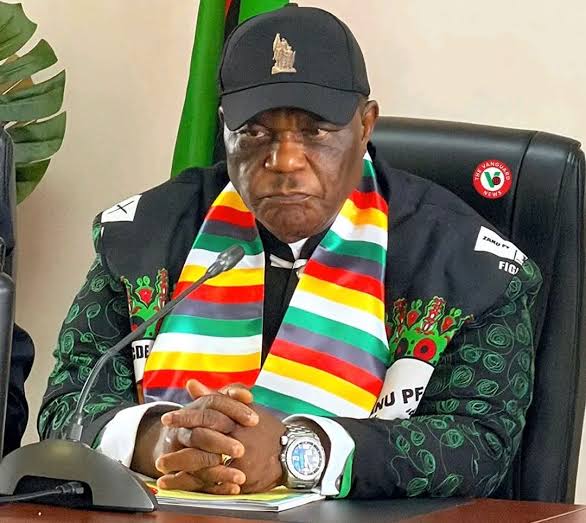
Vice President Constantino Chiwenga faces a defining battle for political survival as ZANU PF’s shifting power dynamics echo two historic succession showdowns,Joyce Mujuru’s 2014 ouster and Emmerson Mnangagwa’s 2017 return.
Both Mujuru and Mnangagwa served as deputies to the late former President Robert Mugabe, and both lost their posts after falling behind in bitter factional battles. Yet their fates diverged sharply.
Mujuru was systematically stripped of her party base and expelled into the political wilderness, whereas Mnangagwa, dismissed and forced to flee the country, returned in triumph less than three weeks later on the back of a military intervention that ended Mugabe’s 37 year rule.
Nearly nine years after orchestrating that 2017 transition as commander of the Zimbabwe Defence Forces, Chiwenga is now on the receiving end of an entrenched incumbency.
Following ZANU PF’s 23rd National People’s Conference in Chinhoyi, Mnangagwa’s grip on power has been significantly reinforced.
Party delegates endorsed the President as their sole candidate for the next elective Congress, deferred that Congress from 2027 to 2029, and resolved to align the party’s charter with the national Constitution.
Combined with constitutional amendments that shift presidential selection toward a parliamentary vote rather than a direct national ballot, these moves dramatically alter the terrain of succession, placing a premium on institutional control over party structures and lawmakers.
For Chiwenga, the central question is whether he retains enough leverage to shape his own political survival or whether he is slowly being boxed into a corner reminiscent of Mujuru’s downfall.
In December 2014, following an aggressive internal campaign led by a faction aligned to former First Lady Grace Mugabe, Mujuru was accused of corruption and plotting against the President.
She failed to win election to the Central Committee, was fired from government, and was subsequently expelled from ZANU PF, dismantling her once formidable network in a matter of months.
Some within the ruling party appear to view the 2014 playbook as a viable template today.
Responding to online warnings of a repeat of the 2017 upheaval amid renewed factional friction, ZANU PF Youth League Deputy National Political Commissar Taurai Kandishaya offered a cryptic retort: "What if we repeat 2014."
That sentiment has gained traction alongside the rising prominence of wealthy businessman Kudakwashe Tagwirei within party ranks, a development many observers interpret as a sign of shifting patronage networks and emerging succession ambitions.
Political analyst Kudakwashe Munemo believes Mnangagwa has already gained the upper hand by leveraging state appointments and party machinery to outflank his deputy.
Munemo notes that while the Chinhoyi resolutions do not permanently settle the succession question, they effectively buy the President valuable time.
For Chiwenga, the immediate danger is that this extended timeline will be used to systematically weaken his remaining allies, erode his grassroots support, and leave him isolated ahead of 2029.
Yet any assumption that Chiwenga could simply replicate the 2017 military backed reversal ignores fundamental shifts in Zimbabwe’s power dynamics. Unlike in November 2017, Chiwenga is no longer in uniform; he is a civilian politician operating within an administration led by the very man he helped install.
Political analyst Wellington Muzengeza cautions against equating Chiwenga’s liberation war credentials and past military command with present day control over the security establishment, noting that years of reshuffles and new appointments have reshaped institutional loyalties.
However, Muzengeza warns that an increasingly closed succession process carries systemic risks, potentially pushing powerful political actors to seek solutions outside constitutional boundaries.
Tensions between the President and his deputy were thinly veiled at the Chinhoyi gathering. While Mnangagwa urged unity and focus on his Vision 2030 economic agenda, Chiwenga delivered a pointed call for a "brutal and honest self appraisal," questioning whether the ruling party was repeating the very mistakes that prompted the birth of the Second Republic in 2017.
Legal and political commentator Brighton Mutebuka interprets Chiwenga’s remarks as a direct challenge to Mnangagwa’s legitimacy, arguing that the Vice President is essentially framing the current administration’s constitutional manoeuvres as self serving and comparable to the excesses that led to Mugabe’s ouster.
Still, veteran analyst Siphosami Malunga warns against taking conference displays of loyalty at face value, describing ZANU PF’s internal alignments as notoriously fluid and transactional.
Recalling how provincial structures unanimously backed Mugabe right up until they celebrated his removal, Malunga suggests that the growing influence of money in party politics makes current endorsements unreliable indicators of future allegiance.
Ultimately, the broader history of Zimbabwe’s vice presidency offers no fixed script for how Chiwenga’s predicament will resolve.
While early deputies like Joshua Nkomo, Simon Muzenda, Joseph Msika, and John Nkomo died in office, more recent occupants have navigated turbulent exits, from Phelekezela Mphoko’s abrupt removal during the 2017 transition to Kembo Mohadi’s 2021 resignation over misconduct allegations and his subsequent rehabilitation in 2023.
Caught between a consolidated presidency, shifting patronage networks, and a delayed party Congress, Chiwenga faces a defining test of political endurance, where his survival will depend less on past military glory and more on his ability to build durable alliances within the party and Parliament before time runs out.

About Oscar Jeke - Reporter
Staff Writer