
ConCourt Defers CAA3 Challenges as Madhuku Explains Bench Dispute
The Constitutional Court has postponed hearings on two challenges to Constitutional Amendment No. 3 (CAA3) by a week to allow the cases to proceed before a reconstituted bench that excludes judges whose appointments are being contested.
The applications, filed by former opposition legislator Prince Dubeko Sibanda and National Constitutional Assembly member Vhurande Mahlupeko, had been scheduled for Wednesday, November 11, but will now be heard on November 18 following a case-management meeting involving the parties and Deputy Chief Justice Elizabeth Garwe.
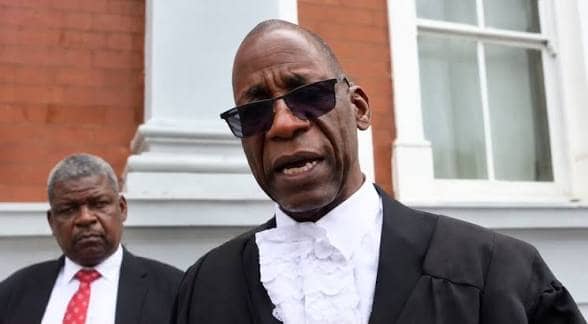
Constitutional law professor Lovemore Madhuku, who is representing the applicants, said the court had raised the question of whether the parties were comfortable proceeding with judges appointed following the constitutional amendment that expanded the composition of the Constitutional Court.
“The matter was supposed to start at 0930hrs. We were then called into a meeting with the Deputy Chief Justice Garwe, who was presiding over the court. It was a meeting we call a case management, to look at the issues and hear from us,” Madhuku said.
He said the court wanted to establish whether the parties were prepared to have the challenges heard by a bench that included judges whose appointments could be affected by the constitutional provisions under challenge.
Madhuku said the applicants preferred that the matters be determined without the additional judges, arguing that their participation would raise concerns because the expansion of the bench was itself part of the constitutional dispute.
“We had a problem with the judges going beyond seven, which is also part of the matter being contested,” he said.
The parties agreed that the cases should proceed before the previous composition of the court, with the exception of Justice Guvava, whose inclusion was accepted following the retirement of former Chief Justice Luke Malaba.
“So it was an agreement between us and the court that we proceed next week on Wednesday with the bench as it was before the amendment, with only the addition of Justice Guvava, who was going to be there anyway because of the retirement of the Chief Justice, Luke Malaba, and we were clear that we had no problem with that,” Madhuku said.
The two applications raise separate constitutional challenges to CAA3, which was signed into law by President Emmerson Mnangagwa in July 2026.
Sibanda is challenging provisions extending presidential and parliamentary terms from five to seven years, particularly their application to incumbent officeholders. His argument is anchored on Section 328(7) of the Constitution, which restricts the application of amendments extending the period a person may hold public office to those already occupying that office.
Madhuku said the court had identified this as the central issue in Sibanda's application.
“The first one, which was Prince Dubeko Sibanda, his matter raises one issue, which is that the amendment cannot apply to a sitting President. He is saying the amendment is invalid because it is contravening Section 328(7),” he said.
Mahlupeko's application challenges the process through which the amendment was enacted, arguing that provisions ultimately incorporated into the legislation were not included in the original Gazette notice that initiated the public consultation process.
“The second matter, which is Vhurande Mahlupeko, raises a number of points, but the starting point is that he is saying there are certain amendments that were done which were not part of the Gazette notice,” Madhuku said.
The challenge places the public consultation process at the centre of the dispute, with the applicant questioning whether citizens were afforded an opportunity to make representations on provisions that were subsequently included in the final legislation.
CAA3 also changed the presidential electoral system by transferring the election of the President from a direct popular vote to a parliamentary process, alongside other constitutional changes.
Supporters of the amendment have defended it as part of efforts to promote political and institutional stability, while opponents argue that extending the terms of incumbent officeholders and removing direct presidential elections undermines citizens' participation and constitutional safeguards.
The postponement does not determine the merits of either application. The Constitutional Court is expected to hear the parties' arguments on November 18, with the disputes placing the amendment's application to incumbents, the consultation process and the composition of the apex court under judicial scrutiny.

About Oscar Jeke - Reporter
Staff Writer