
Farmers Urged to Delay Planting Until Adequate Rains
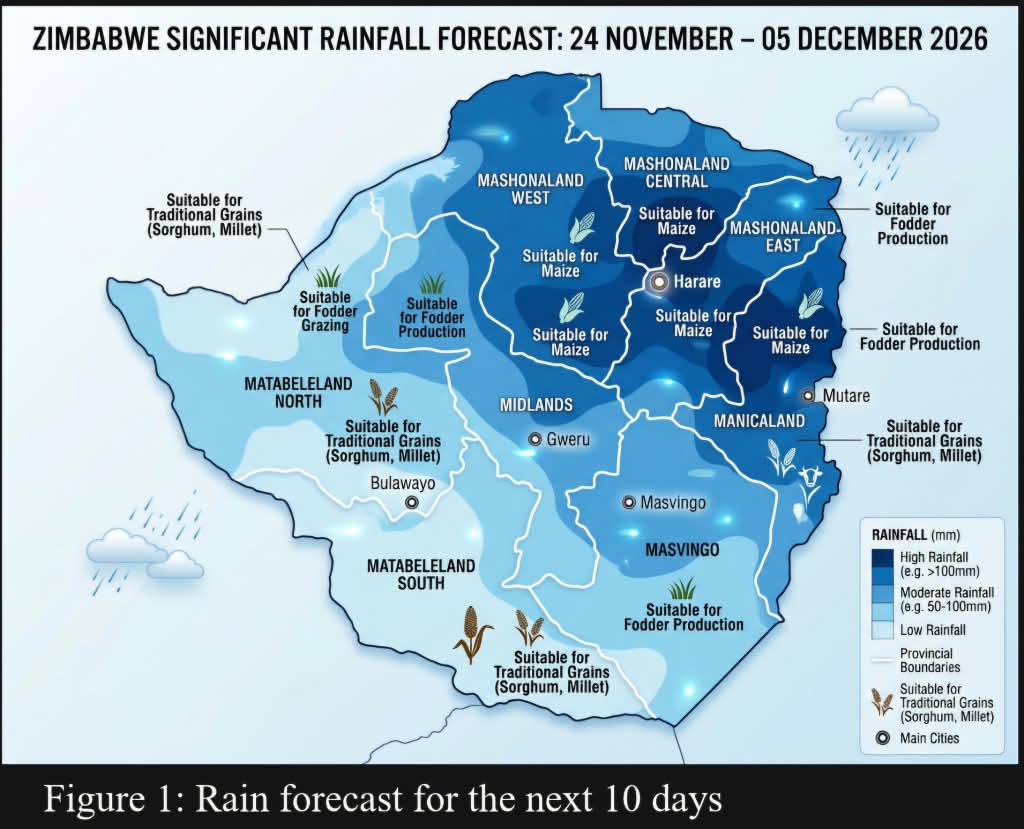
Farmers have been urged to delay planting until their respective areas receive adequate rainfall, with the Government warning that premature planting could expose crops to poor germination and establishment during the anticipated El Niño-induced drought season.
Agriculture Permanent Secretary Obert Jiri said farmers should base their planting decisions on actual rainfall received in their respective areas rather than the onset of the rainy season, as rainfall distribution is expected to remain a major determinant of crop performance during the 2026/27 agricultural season.
Jiri recommended that farmers wait until their areas receive at least 20mm of rainfall within 24 hours before planting, while cumulative rainfall of between 20mm and 40mm or more over a week would provide a more favourable basis for successful crop establishment.
He said maize farmers planting short- to early-maturing varieties should target rainfall of between 25mm and 40mm, while those who have received less than 20mm should postpone planting to minimise the risk of poor germination and crop failure.
"Farmers are encouraged to make informed planting decisions guided by rainfall received in their respective areas. As a general guide, planting should commence after receiving at least 20mm of rainfall within 24 hours, with cumulative rainfall of 20–40mm or more in a week providing a better basis for successful crop establishment," Jiri said.
The Government is also encouraging farmers to diversify away from sole dependence on maize by increasing the production of traditional grains such as sorghum, pearl millet and finger millet, which are generally more resilient to dry conditions.
Jiri said traditional grains should be prioritised across all agricultural regions, noting that they require approximately 20mm of rainfall for planting and offer an alternative for farmers operating in areas vulnerable to prolonged dry spells.
The shift towards drought-tolerant crops is part of broader efforts to minimise the impact of anticipated poor rainfall on household food security and national agricultural production.
Maize remains a major staple crop in Zimbabwe, but its performance is particularly vulnerable to prolonged dry spells, especially during critical stages such as germination, establishment and flowering. Farmers who plant following isolated rainfall events risk losing seed and incurring additional production costs if the rains subsequently become erratic.
The Government is therefore urging farmers to consider both the quantity and distribution of rainfall before committing seed and other inputs to their fields.
Beyond crop production, authorities are calling for increased investment in livestock protection through the establishment of drought-tolerant fodder crops to ensure the availability of feed during periods of reduced pasture growth.
Farmers have also been encouraged to strengthen water-harvesting initiatives, conserve available moisture and adopt climate-smart agricultural practices to improve resilience to changing weather patterns.
"We must also strengthen water harvesting and climate-smart agricultural practices as we navigate the anticipated El Niño season," Jiri said.
Water harvesting is expected to play an important role in sustaining agricultural activities, particularly in communities that depend on rain-fed production and have limited access to irrigation infrastructure.
The advice comes as farmers begin preparations for the 2026/27 agricultural season, with the Government seeking to reduce the risk of widespread crop losses through early adaptation to anticipated weather conditions.
Zimbabwe's agricultural sector remains heavily dependent on rainfall, making planting time, crop selection and access to water critical to seasonal production outcomes.
The latest guidance places emphasis on farmers making decisions according to local rainfall patterns rather than following uniform planting dates, given that rainfall onset and distribution can differ significantly between regions.
Farmers are also being encouraged to make use of seasonal weather updates and agricultural extension officers for guidance on suitable crop varieties, planting windows and other measures to protect production.

About Oscar Jeke - Reporter
Staff Writer