
SMART TRAFFIC CAMERAS TRIGGER PANIC AND PRAYERS FOR AMNESTY ON HARARE’S ROADS
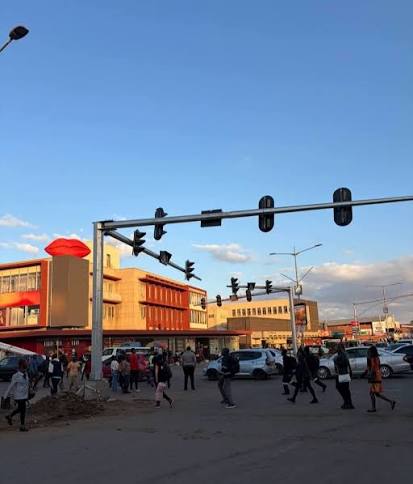
For decades, navigating the urban arteries of Harare has felt less like driving and more like surviving an unscripted obstacle course.
Commuter omnibuses weaving through red lights, private motorists cutting across solid white lines, and illegal drop-offs at undesignated intersections had become the accepted chaos of daily life.
That unwritten contract of impunity, however, was rewritten overnight. With the rollout of the high-tech, automated smart traffic management system, thousands of drivers are finding themselves caught in a digital net, leading to a desperate plea from motorists and transport operators for a clean slate.
At the busy Simon Muzenda Street rank, engine fumes mix with palpable anxiety among commuter drivers. Tendai Moyo, a thirty-four-year-old kombi driver plying the Domboshava route, explained that the fast-paced nature of their work meant many operators were caught completely off guard during the initial system rollout.
He pointed out that if authorities trace back and enforce every violation recorded since the cameras went live, the accumulated fines will bankrupt operators and result in widespread vehicle impoundments.
Private motorists share the same dread, arguing that a thirty-day grace period combined with SMS warning alerts would give the public time to adapt, understand the system, and start afresh on equal footing.
The technology operating behind the scenes relies on artificial intelligence and high-definition smart cameras installed at key intersections across the city. These cameras operate by continuously capturing high-resolution video streams that are processed in real time by machine vision software.
When a traffic signal turns red, the system creates a virtual enforcement line across the intersection. Any vehicle crossing that threshold triggers the camera to capture multiple high-definition frames and extract the vehicle's registration details using automatic number plate recognition software.
The system also monitors lane discipline, illegal U-turns, and speed violations, bundling the visual evidence together before transmitting it securely to a central traffic command center for validation and digital ticket issuance.
The friction caused by the new system recently spilled directly onto the floor of Parliament, where legislators confronted Home Affairs and Cultural Heritage Minister Kazembe Kazembe over teething issues, erroneous notifications, and public outcry.
Defending the homegrown technology developed in partnership with TelOne, Minister Kazembe addressed Parliament, stating, "This is a very good system and it has been done by the children of Zimbabwe. It is a home-grown solution."
Addressing concerns raised by parliamentarians regarding erroneous automated texts sent to individuals who did not own the vehicles in question, Minister Kazembe acknowledged that the digital infrastructure is not entirely infallible.
Addressing the house, he noted, "We now have plus or minus five million violations. And we've received these errors, which are probably about ten or twenty. On a scale or as a percentage, we want to believe that the system is probably 98 per cent to 99 per cent accurate. But that does not justify those errors. "The Minister emphasized that the government accepts accountability for the technical hiccups, assuring lawmakers that the police are actively reviewing complaints. As he stated to Parliament, "However we take responsibility and we are attending to that issue."
Looking beyond local borders reveals how other nations have navigated similar shifts toward automated traffic surveillance.
In the United Arab Emirates, authorities routinely offer structured fine discount schemes and periodic holiday amnesties, allowing drivers to clear accumulated penalties at a reduced rate while encouraging timely compliance.
In several European countries, systems are designed around prompt-payment incentives, where motorists who settle camera-generated fines online within a short window receive significant financial discounts.
Meanwhile, the United Kingdom offers minor or first-time offenders the option to complete driver educational courses to clear their violation records rather than paying heavy monetary fines.
As Harare transitions toward fully automated road policing, the debate over historical fines highlights a critical balancing act.
Authorities view the camera network as an indispensable tool to eliminate road corruption and enforce order, while everyday drivers view immediate retroactive fines as an unmanageable financial blow

About Philemon Jambaya
Editor