
Solar Pump Keeps Mutoko Farmer Going as River Dries Up
As the Chitora River dries up, farmer Chengetai Chimutere is relying on a small solar-powered water pump to sustain his vegetable garden
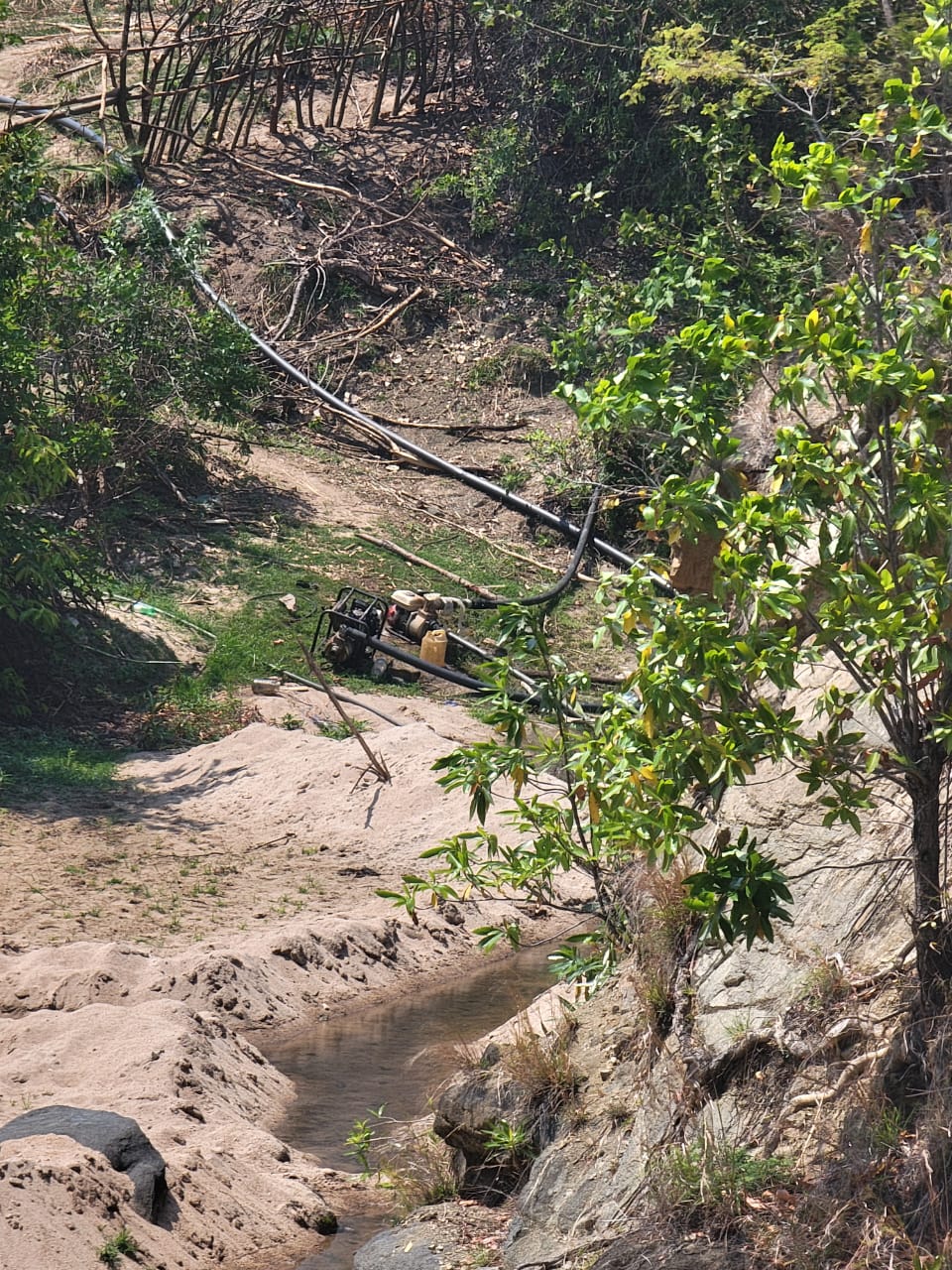
As the Chitora River dries up, farmer Chengetai Chimutere is relying on a small solar-powered water pump to sustain his vegetable garden, support his family and supply vendors who depend on his produce.
Based along the riverbank in Mutoko, Mashonaland East, Chimutere grows tomatoes, green pepper, beans, cucumbers and butternuts. Vendors visit his garden to place orders for the vegetables.
“Farming has been the backbone of our household. Through the crops we harvest and sell, I’ve been able to pay school fees for my children, cover medical expenses, and keep food on our table year-round,” Chimutere said.
His garden provides income for his family while supporting vendors who buy and resell his vegetables, creating a local supply chain that depends on consistent production.
However, the drying river has forced farmers to dig shallow wells, locally known as mufuku, into the riverbed to access the remaining water. Chimutere uses one of these wells to draw water with his small solar-powered pump. Farmers also dig wider, shallow wells to provide drinking water for livestock.
“My biggest fear is losing our livelihood. Without water from the river, our crops wither in the fields, and our livestock have nowhere to drink,” he said.
While the pump allows Chimutere to continue irrigating his crops, it cannot guarantee a reliable water supply if the shallow well runs low or dries up. His situation also raises questions about water abstraction, environmental protection and the regulations governing access to water.
Solar-powered irrigation can reduce dependence on grid electricity and diesel, potentially lowering pumping costs for smallholder farmers. However, the technology cannot solve water scarcity when rivers and shallow wells run dry.
Chimutere's current water-abstraction arrangement is understood to be restricted under applicable regulations, although the precise legal provision requires confirmation from the relevant water authorities.
Zimbabwe's Water Act [Chapter 20:24] regulates water use and abstraction. Section 34 generally requires permits for water use beyond primary purposes, subject to the Act's provisions and applicable restrictions.
The relevant catchment council needs to clarify which requirements apply to Chimutere's circumstances and what lawful alternatives are available to farmers facing similar challenges.
On October 19, 2026, Agriculture Minister Dr Anxious Masuka said Zimbabwe had developed 305,121 hectares of irrigated land, with 67,000 hectares added during the year.
“This year alone, we have done 67 000 hectares, the fastest in terms of irrigation development since 1980,” Masuka said, according to The Herald.
At the Zimbabwe Farmers Union Congress in Gweru on October 5, Masuka urged farmers to treat agriculture as a profitable business through value addition and stronger participation in agricultural markets.
Chimutere's experience highlights the challenge of achieving that ambition when water supplies become unreliable. His garden supports his household and supplies vendors, but both depend on his ability to keep crops growing.
Shared solar irrigation systems could help farmers spread equipment and maintenance costs, while efficient irrigation methods, appropriate water storage and affordable financing could improve access to water.
Such interventions must be supported by sustainable water management and compliance with applicable regulations. Authorities also need to explain how smallholder farmers can access approved irrigation systems and reliable water sources when rivers become unreliable.
For Chimutere, the stakes extend beyond his garden.
“A drying river means failed harvests, which directly threatens our ability to feed our family and earn an income to survive the coming months,” he said.

About Patience Muchemwa
Senior Reporter