
Stigma, service barriers limit adolescents’ reproductive choices
Civil society organisations have called on the Government to expand access to sexual and reproductive health and rights services
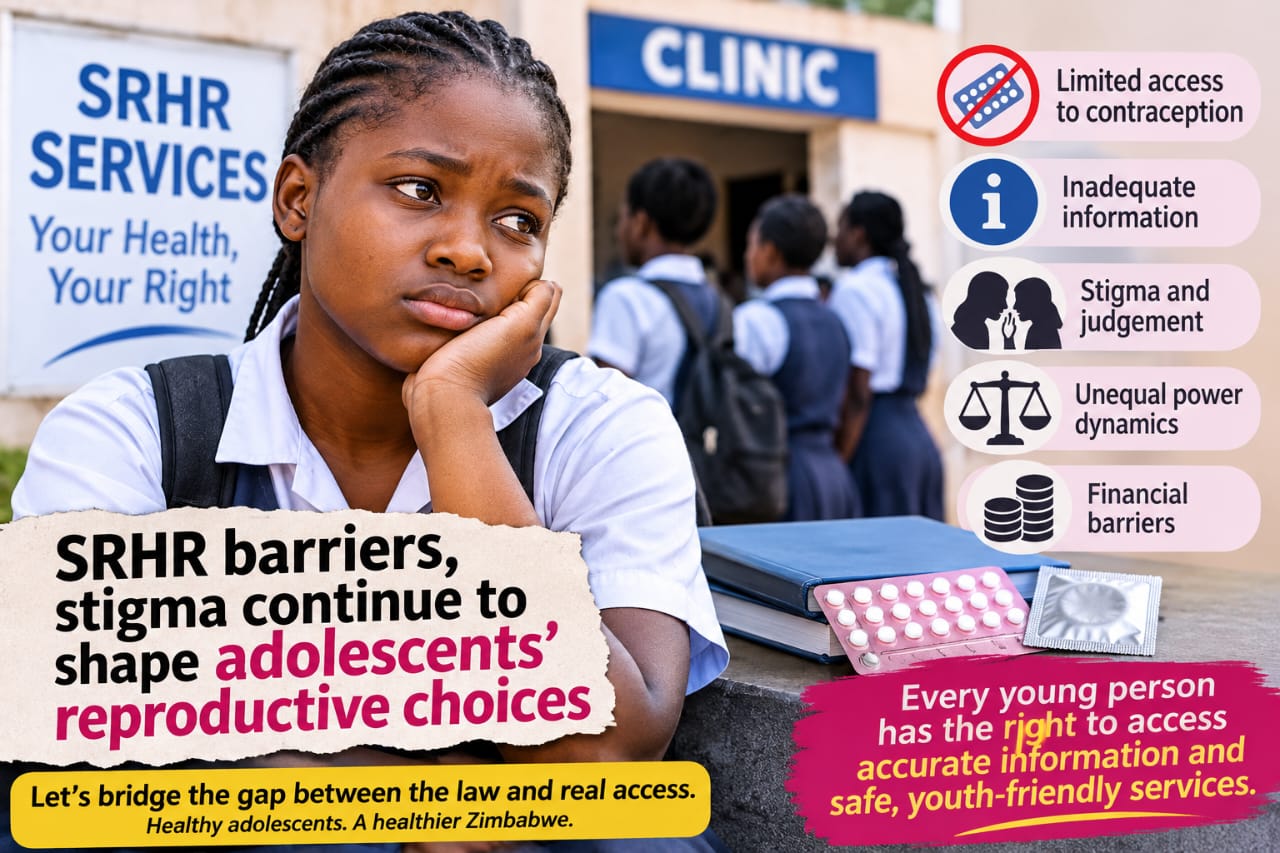
Civil society organisations have called on the Government to expand access to sexual and reproductive health and rights (SRHR) services, warning that limited access undermines adolescents’ ability to prevent unintended pregnancies.
While young people are often urged to make responsible decisions about their sexual and reproductive health, the realities they face tell a different story.
From difficulties accessing contraceptives and inadequate SRHR information to fear of judgement and stigma from healthcare providers, parents and communities, several barriers continue to shape adolescents’ reproductive choices.
For some girls, an unintended pregnancy exposes these systemic failures when they begin navigating Zimbabwe’s healthcare and legal systems.
SRHR expert Pamela Kadau said many decisions described as individual reproductive choices are made in environments characterised by limited agency, unequal power and restricted access to services.
“First, limited access to contraception undermines adolescents’ ability to prevent unintended pregnancies. Young people may face financial barriers, geographical distance, provider judgement, confidentiality concerns and uncertainty about whether they can access contraception without parental involvement. These barriers can make prevention difficult even where an adolescent understands the risks of pregnancy.
“Second, inadequate sexual and reproductive health information creates vulnerability. When sexuality education is incomplete, moralistic or fear-based, adolescents may lack accurate knowledge about fertility, contraception, consent, sexually transmitted infections and where to obtain help. Silence does not protect young people. It can leave them dependent on misinformation, peers or partners who may not have their best interests at heart,” she said.
Kadau added that stigma and fear of judgement could delay access to essential healthcare.
A girl who fears being shamed by a nurse, teacher, parent or religious leader may conceal her pregnancy, avoid antenatal care or delay seeking professional advice. In some cases, this fear may push adolescents towards unsafe or clandestine practices.
“Reproductive choices are shaped by unequal gender and economic power. We cannot assume that every adolescent has the ability to negotiate contraception, refuse sexual activity or leave an exploitative relationship. Poverty, coercion, transactional relationships and gender-based violence can significantly restrict autonomy,” she said.
Kadau said success should not be measured by how society polices adolescent sexuality, but by how effectively unintended pregnancies are prevented, young people protected from exploitation and their access to dignity, information and healthcare guaranteed.
Zimbabwe’s legal framework permits termination of pregnancy under specific circumstances. However, a gap remains between what the law allows and what girls and women can access, with procedural requirements, limited awareness, stigma and institutional barriers restricting access to legally permitted services.
Hamida Ismail-Mauto, Operations Manager at SRHR Africa Trust, said the gap between the law and access to services was concerning.
“My main concern is the gap between law and access. Even within Zimbabwe’s existing legal framework, our HHFA 2023/24 data shows only 5-6% of facilities provide legal abortion services and only 5% have staff trained in comprehensive abortion care.
“The concern is that uncertainty and inconsistent administrative requirements will further delay timely care for legally eligible women and girls, increasing the risk of unsafe abortion complications.
“There is a need to clarify and standardise procedures and documentation for legally permissible services to avoid inconsistent application. We also need to strengthen facility readiness through trained providers, essential commodities and functional referral pathways, with priority given to underserved provinces,” she said.
Mauto added that post-abortion counselling, contraception and child-protection referrals should be integrated to ensure no girl leaves a health facility without the care and support she needs.
Tinashe Mundawarara, Board Chairperson of the Health Law and Policy Consortium, said the issue extended beyond contraception to children's constitutional rights, healthcare, protection and best interests.
“Access should not depend on parental permission where healthcare is in the child's best interests.
“Access to sexual and reproductive health services for adolescents should be guided by the constitutional principles of the right to healthcare and the best interests of the child. However, these protections must translate into practical access through clear guidelines, informed healthcare providers and services that respect children's dignity and evolving capacity,” he said.
Mundawarara said the Medical Services Amendment Act, 2026 strengthens children's access to healthcare in line with their best interests, including reproductive health services that are otherwise lawful.

About Patricia Mashiri
Reporter