
Zimbabwean Craftswomen Tap into Chinese Markets
In the rural heartlands of Buhera and Lupane, the rhythmic rustle of dried grasses and natural fibres has echoed across generations
In the rural heartlands of Buhera and Lupane, the rhythmic rustle of dried grasses and natural fibres has echoed across generations.
For centuries, women in these communities have transformed raw, locally harvested materials into intricate, hand-stitched baskets a quiet mastery that preserves cultural heritage while keeping household fires burning.
Now, these artisans are weaving a bold new chapter, looking thousands of miles east to China to secure their economic independence.
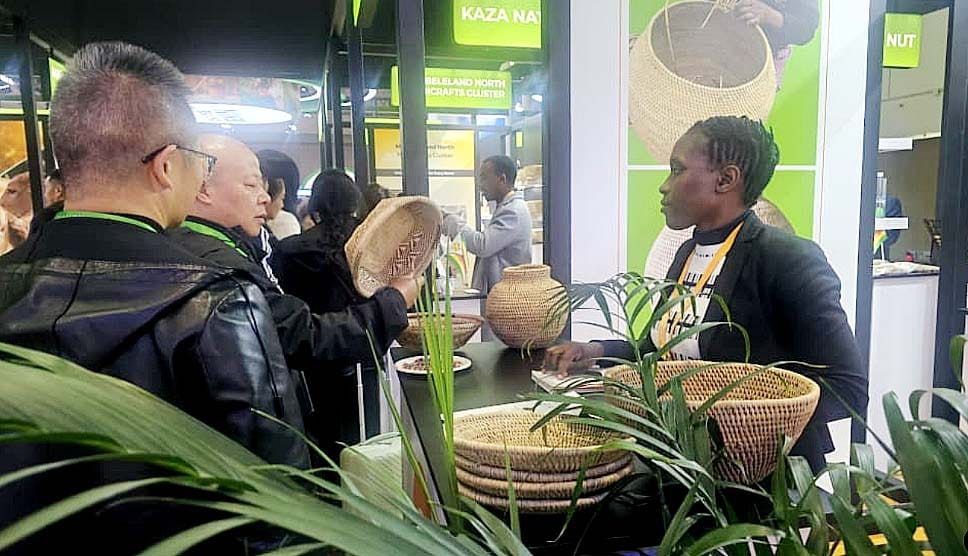
Earlier this month, their craftsmanship took centre stage at the ninth China International Import Expo (CIIE), held in Shanghai from November 5 to 10, 2026.
Through a strategic partnership between the Self-Help Development Foundation and national trade promotion body ZimTrade, a curated collection of handwoven pieces went on display, opening doors to international buyers for 261 rural women artisans.
For many rural weavers, the journey from the homestead to the global marketplace has long been hindered by supply chain bottlenecks.
SHDF programmes coordinator Mendy Mkondwa explained that the Shanghai showcase was specifically designed to connect rural producers directly with international buyers, cutting out middlemen who frequently purchase baskets at depressed prices, leaving the creators with meagre returns.
"We are supporting the women to find markets," Mkondwa said, underscoring the painstaking, labour-intensive nature of a craft in which every single piece is stitched entirely by hand.
Adapting Tradition for Modern Homes
The collection presented in Shanghai bridged the gap between ancient technique and contemporary interior design. Alongside traditional forms, the artisans showcased functional items tailored for modern households, including fruit bowls, decorative bowls, planters, toiletry trays, bins, and placemats.
Yet, stepping onto a global stage also brought vital lessons in shifting consumer habits.
While international visitors admired the artistry, Mkondwa noted that the exhibition highlighted the necessity of tailoring products to fit buyers' lifestyles.
Most prospective buyers gravitated toward smaller items suited for personal use, with several explaining that compact urban living spaces heavily influenced their purchasing decisions.
The push into Asia builds upon a rich, unbroken lineage. According to a National Gallery of Zimbabwe publication, indigenous basketry dates back to the Iron Age, evolving alongside early agricultural societies as women gradually assumed the central role in crafting vessels for domestic storage and harvest work.
In recent decades, that heritage has proven its commercial viability. The Lupane Women’s Centre founded in 1997 by just 14 women has blossomed into a powerhouse collective of 4,500 members, including 450 professional weavers.
By 2022, the centre was exporting to more than 20 countries and generating at least US$60,000 annually.
Similarly, ZimTrade has worked closely with basketry clusters in Buhera and Chivi to refine product finishing, elevate quality control, and build export readiness. Such interventions have become increasingly urgent.
Master weaver Regina Gomba, who has practised the craft since 1975, previously noted that local weaving groups were in desperate need of reliable international buyers after losing key customers in South Africa and the United States.
Zimbabwe’s push into Shanghai arrives amid a period of robust economic engagement with Beijing. Bilateral trade between Zimbabwe and China reached US$4.4billionin2025 a15.2percentincrease withZimbabweanexportsaccountingforUS$2.57 billion of that total.
Against this backdrop of expanding commerce, the 2026 CIIE offered immense scale, attracting 4,142 overseas exhibitors from 162 countries, regions, and international organisations, and generating approximately US$85.45 billion in tentative deals.
For the 261 women represented in Shanghai, the real work begins now. The immediate challenge lies in translating exhibition floor enthusiasm into consistent purchase orders, fair pricing, and long-term contracts.
Ultimately, their ambition stretches far beyond simply selling baskets; it is about transforming an ancestral art form into a resilient economic engine for rural families, ensuring Zimbabwean heritage commands both respect and fair value on the world stage.

About Patience Muchemwa
Senior Reporter