
Zimbabwe’s 10,600 Water Bodies Get ZiG4.7 Billion
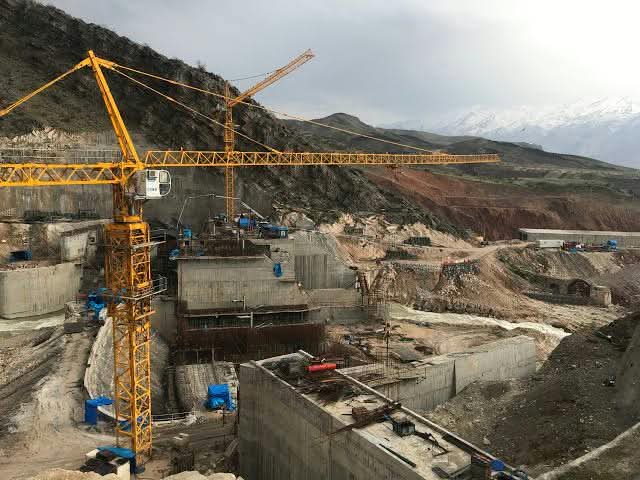
Zimbabwe has more than 10,600 water bodies, but Government is now seeking to turn this extensive water resource into a productive economic asset through an additional ZiG4.7 billion investment in dams and water infrastructure, targeting irrigation, fisheries, livestock production and rural enterprise.
Agriculture Permanent Secretary Obert Jiri said the investment was intended to move the country beyond dependence on rain-fed agriculture by ensuring that dams support year-round production and strengthen food security, particularly during drought periods.
"Government is investing an additional ZiG4.7 billion in dams and water infrastructure. Our aim is to turn every dam into a productive hub that supports irrigation, livestock, fisheries and rural enterprise, so that production no longer waits on the rains," Jiri said.
"With our partners, we are building a sector where water drives food security, even in drought."
The investment comes as Zimbabwe continues to grapple with increasingly unpredictable rainfall, exposing the vulnerability of an agricultural system that remains heavily dependent on seasonal weather patterns despite decades of dam construction and rehabilitation.
Jiri has said the country's water bodies have the potential to irrigate more than two million hectares, but the gap between available water and productive agricultural activity remains a major challenge.
The 2027 National Budget provides an indication of where Government's immediate construction priorities lie. Treasury allocated approximately ZiG4.26 billion towards dam construction and associated infrastructure, with the Gwayi-Shangani Water Supply Project receiving ZiG2 billion and the Kunzvi-Musami Water Supply Project allocated ZiG1.98 billion.
Together, the two projects account for about 93 percent of the allocation, leaving ZiG279 million for running costs at other dam project sites.
The concentration of funding reflects Government's priority to complete major projects expected to address water shortages in the country's two largest cities. However, it also raises questions about the pace of development across the wider national dam programme.
Gwayi-Shangani Dam in Matabeleland North was reported to be 83 percent complete in the 2027 Budget, with the dam wall, pump station and 10MW power plant targeted for completion during 2027.
The project is central to the long-term plan to supply Bulawayo with water from the Zambezi catchment. However, its benefits depend on the completion of the wider water conveyance system, including the pipeline, booster pump stations and water treatment plant.
The budget's project progress table showed that the Gwayi-Shangani-Bulawayo pipeline was 15 percent complete, booster pump stations were at 18 percent, while the Cowdray Park water treatment plant stood at just two percent.
This exposes a critical infrastructure gap: completing the dam wall alone will not deliver water to Bulawayo or unlock the project's full irrigation and industrial potential.
The Kunzvi-Musami project, intended to improve water supplies to Harare and surrounding communities, was reported to be 77 percent complete in the 2027 Budget.
Construction of its dam wall, intake tower and spillway has advanced, with water already being impounded. However, the associated water treatment plant and pipeline remain behind the main dam works.
The budget reported that six kilometres of the 48-kilometre pipeline had been installed, while seven kilometres had been trenched. The contractor for the treatment plant had mobilised and completed foundation works.
Government has also initiated the second phase of the project, which involves the construction of Musami Dam, with Treasury expected to disburse US$20 million to kick-start the works.
The sequencing of these projects raises an important question about whether sufficient attention is being given to the infrastructure required to make completed dams operational. Without pipelines, treatment facilities and distribution networks, the economic benefits of large reservoirs remain limited.
Several other dam projects remain at different stages of construction. The 2027 Budget progress report puts Semwa Dam in Mashonaland Central at 47 percent completion, Vungu Dam at 46 percent, Bindura Dam at 38 percent, Tuli-Manyange at 34 percent and Ziminya Dam at 32 percent.
Dande Dam was at 20 percent completion, while Silverstroom, also known as Mbada Dam, stood at 13 percent. Defe Dopota Dam in Masvingo was at 11 percent.
The figures show that the country's dam construction programme extends beyond the two flagship projects, but progress remains uneven. These projects will require sustained funding if they are to avoid prolonged construction periods that delay the availability of water for communities and agricultural production.
Government's proposed Dam as an Economy concept seeks to address the gap between water storage and productive use by transforming dams into integrated economic hubs through irrigation, fisheries, aquaculture, tourism, renewable energy and agro-processing.
This approach is important because irrigation is only one aspect of the potential economic value of water bodies. Commercial fisheries and aquaculture can create employment and provide alternative sources of protein, while livestock production can benefit from more reliable water supplies and associated fodder production.
Tourism and recreation can also create business opportunities around suitable reservoirs, while agro-processing can provide markets for crops produced through irrigation schemes.
However, these activities require more than water. They also need investment in access roads, electricity, cold storage, processing facilities, technical skills, market linkages and clear arrangements for managing resources around the dams.
The experience of existing dams will be important in assessing how quickly the concept can be implemented. Tugwi-Mukosi, for instance, has been cited by Jiri as having the potential to irrigate more than 40,000 hectares. Marovanyati Dam has the potential to support more than 5,000 hectares, while Gwayi-Shangani is expected to support up to 10,000 hectares.
The key question is how much of that potential has been translated into operational irrigation schemes, actual production and income for surrounding communities.
The 2027 National Budget says Government, the private sector and development partners have rehabilitated and developed irrigation facilities covering 66,765 hectares, with a further 65,000 hectares targeted for 2027.
It also identifies underutilised water bodies, stalled irrigation schemes and non-functional facilities as priority areas for intervention.
This suggests that Zimbabwe's water challenge is not exclusively about building new dams. Restoring existing irrigation infrastructure and connecting farmers to available water could deliver production gains without waiting for new reservoirs to be completed.
Government's irrigation development strategy also targets communal, A1 and old resettlement areas, particularly communities vulnerable to drought, alongside commercial farms where irrigation can increase strategic grain production.
Zimbabwe requires at least 350,000 hectares under irrigation to guarantee cereal self-sufficiency, according to Jiri. The difference between that requirement and the country's current irrigation footprint illustrates the scale of the task.
For the dam investment to deliver meaningful food security gains, Government will have to demonstrate how many hectares each project will bring under irrigation, how many farmers will benefit and what production increases are expected.
It will also need to address the cost of irrigation equipment, energy for pumping water, maintenance of canals and pipelines, and the affordability of water for smallholder farmers.
Without these complementary investments, the country risks expanding water storage without achieving a corresponding increase in agricultural production.
The proposed investment also raises questions about project implementation, funding and maintenance. The 2027 Budget allocates approximately ZiG4.26 billion to dam construction and associated infrastructure, while Jiri has referred to an additional ZiG4.7 billion investment.
The two figures require clarification from Government on whether the ZiG4.7 billion includes funding beyond the specific 2027 Budget allocation or refers to a wider investment commitment.
Government also needs to provide a clearer national inventory showing the condition, capacity and utilisation of the country's more than 10,600 water bodies. Such information would help identify which dams need rehabilitation, which have untapped irrigation potential and which can support fisheries, livestock production and other rural enterprises.

About Oscar Jeke - Reporter
Staff Writer