Zimbabwe’s Economy Set to Reach US$69.1 Billion in 2027 as Growth Slows
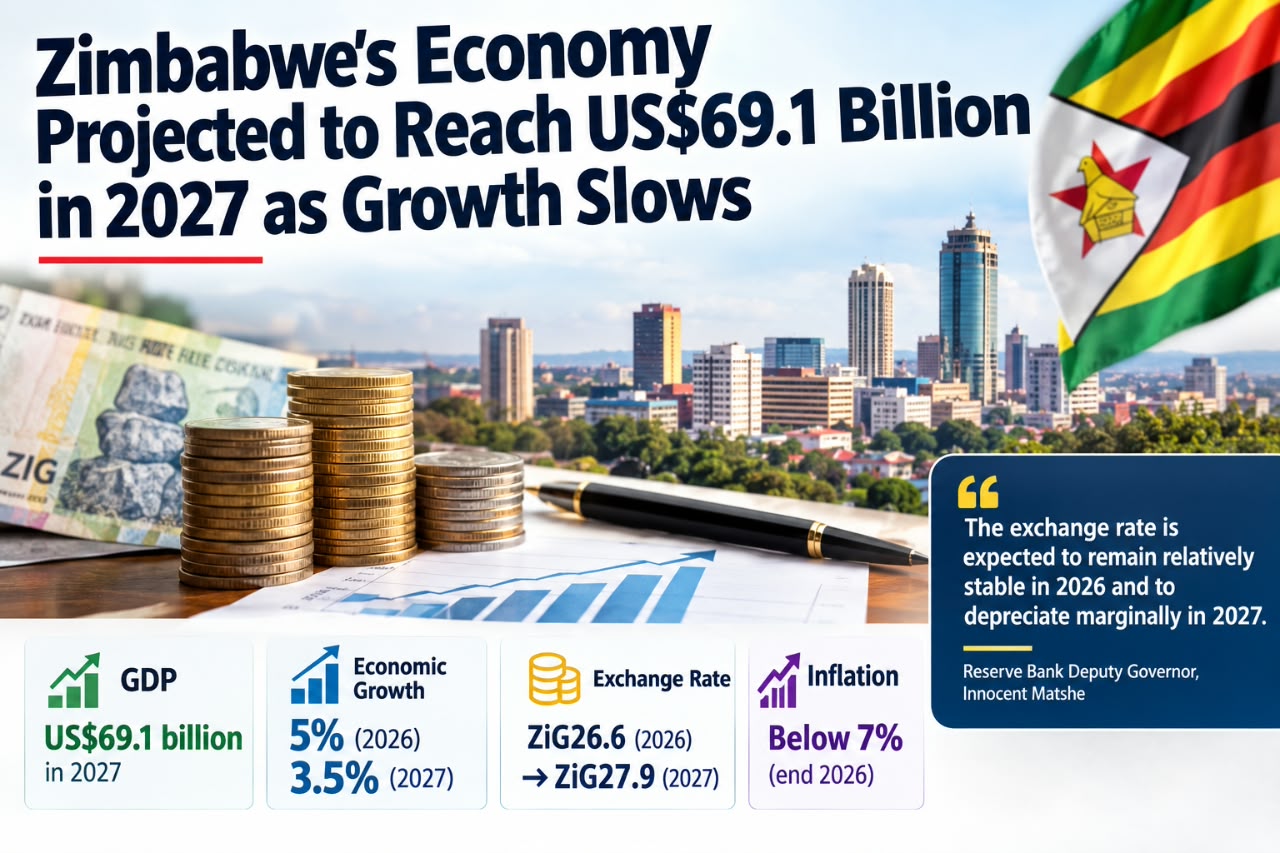
Zimbabwe’s economy is projected to reach US$69.1 billion in nominal gross domestic product (GDP) in 2027, up from US$66.4 billion in 2026
Zimbabwe’s economy is projected to reach US$69.1 billion in nominal gross domestic product (GDP) in 2027, up from US$66.4 billion in 2026, as the government anticipates slower growth amid climate risks, global uncertainties, and potential exchange-rate pressure.
Finance Minister Professor Mthuli Ncube presented the projections at the 2027 Pre-Budget Seminar in Bulawayo on October 28, 2026, outlining the country’s economic outlook, export performance, fiscal targets and key policy priorities for the coming year.
According to the projections, Zimbabwe’s economic growth rate is expected to slow from 8.3 percent in 2025 to five percent in 2026 and 3.5 percent in 2027.
The anticipated slowdown reflects concerns over a potentially severe El Niño-induced drought, which could affect agricultural production, electricity generation, food supplies, and overall economic activity.
While the projected increase in nominal GDP suggests that the economy will continue to expand in US dollar terms, the declining growth rate indicates that the pace of economic expansion is expected to weaken.
The distinction is important because an increase in nominal GDP does not necessarily mean that households will become wealthier. Changes in prices, exchange rates and population growth can influence the overall figure, while real GDP growth provides a clearer indication of changes in economic output after adjusting for inflation.
Reserve Bank of Zimbabwe Deputy Governor Innocent Matshe said the exchange rate was expected to remain relatively stable in 2026 before experiencing a marginal depreciation in 2027.
“The exchange rate is expected to remain relatively stable at around ZiG26.6 per US dollar in 2026 and to depreciate marginally to ZiG27.9 per US dollar in 2027, reflecting anticipated global and domestic risks,” Matshe said.
He identified oil price shocks and the expected severe El Niño-induced drought as some of the risks that could affect the economic outlook.
The projection suggests that the ZiG could lose some value against the US dollar, with the exchange rate rising from ZiG26.6 to ZiG27.9 per US dollar.
If the forecast materialises, importers could face higher local currency costs for goods priced in US dollars, particularly fuel, machinery and industrial inputs. The extent to which this affects consumers will depend on exchange-rate movements, business costs and the degree to which companies pass additional costs on to customers.
Matshe also said ZiG inflation was expected to remain low and stable, in single digits, for the remainder of 2026.
“Over the remainder of 2026, ZiG inflation is expected to remain low and stable in single digits, ending the year below 7%, supported by well-anchored inflation expectations,” he said.
Low inflation would help preserve the purchasing power of incomes earned in ZiG and improve price predictability for businesses. However, individual households may have different experiences, particularly where food, transport, housing and other essential expenses rise faster than the overall inflation rate.

About Witness Runodada - Reporter
Staff Writer