









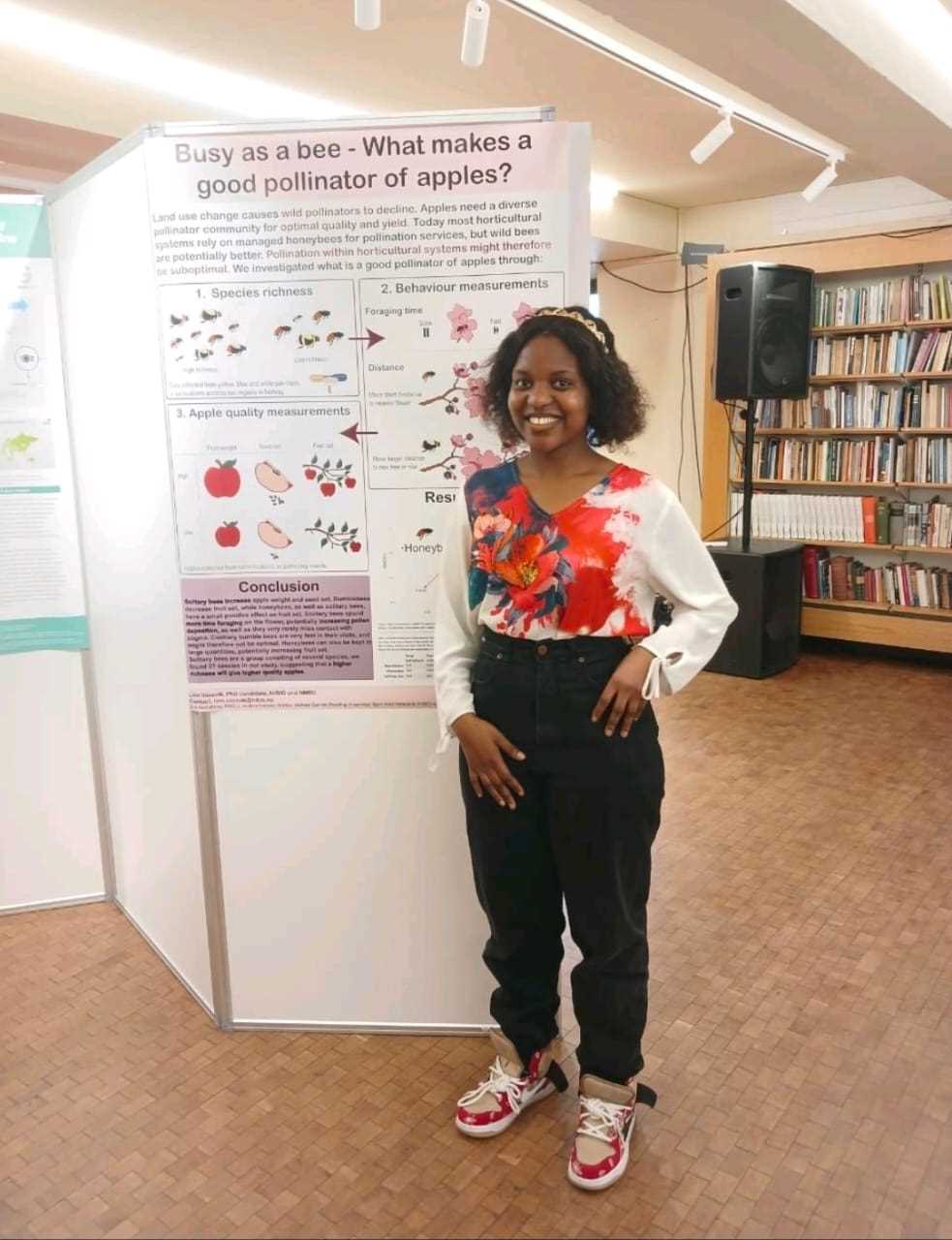
Award-winning climate justice advocate Aulyn Makoni is calling on researchers, academics and apiculture practitioners across Australia to collaborate on what she believes could become a significant contribution to sustainable pollinator management and agroecological research.
Drawing from hands-on field experience, Makoni is developing a concept focused on non-lethal pollinator harvesting and circular apiculture, rooted in indigenous and field-based knowledge systems.
Her approach rejects industrial inputs and chemical interventions, instead emphasising ecological balance, material reuse and traditional techniques.
Makoni argues that Australia remains one of the few regions globally with exceptional climatic conditions for both honey production and pollinator conservation. However, she believes there is a critical gap in sustainable and ethical pollinator management that has yet to receive sufficient academic and applied research attention.
“I’ve identified a specific gap that deserves deeper exploration, ideally leading to a formal publication,” Makoni said. “This is about bringing together science, indigenous practice and real-world fieldwork.”
Related Stories
At the centre of his current work is a 15-year-old wild bee colony located at a family home. Makoni is in the process of safely relocating the colony and has constructed a new beehive using recycled scrap materials found on site. The relocation process involves no lethal chemicals or industrial equipment. Instead, she relies on cow-dung smoke, manual techniques and experiential knowledge.
Makoni describes the practice as non-lethal pollinator management, a form of sustainable pest control that respects pollinator life cycles while addressing human–wildlife coexistence.
“This is circular practice,” she said. “It’s sustainable pest control rooted in indigenous and field-based knowledge. It’s about instinct, experience and deep respect for ecological balance.”
Beyond the immediate project, Makoni is seeking to connect with professors, research groups and apiculture enthusiasts working in pollination, agroecology, biodiversity and sustainable agriculture across Australia.
Her aim is to build a collaborative network capable of transforming grassroots experimentation into peer-reviewed research and scalable ecological practice.
“I know I’m not the only one working in this space,” she said. “So let me in, and let’s learn from each other.”








Leave Comments