








Once under pressure from cheap imports, weak demand and informal clothing traders, Edgars is using local manufacturing, own brands and supplier networks to rebuild its model instead of waiting for the old market to return.
When Sevious Mushosho took over at Edgars Stores Limited, the company was not facing an existential question beyond ordinary retail slowdown:
Could a formal clothing retailer survive in a market reshaped by mabhero, cheap imports, informal traders, currency instability, weak consumer demand and shrinking disposable incomes?
For years, Zimbabwe’s formal retailers have complained about the same problem: informal traders sell cheaper, operate with lower overheads, respond faster to cash customers and are not always carrying the same compliance costs as established companies.
The result has been brutal for parts of the formal retail sector.
OK Zimbabwe, once the country’s dominant grocery retailer, has become the clearest billboard with its outlet closures and clear decline in the remaining ones. Its 2025 annual report says revenue fell by 52% to US$245 million, while the group recorded a US$25 million loss.
Now under corporate rescue, the company blamed supply-chain disruption, unstable exchange rates, liquidity shortages, heightened informal sector competition and exchange-rate controls that distorted pricing.It also said it could not pay suppliers, creating a working capital funding gap.
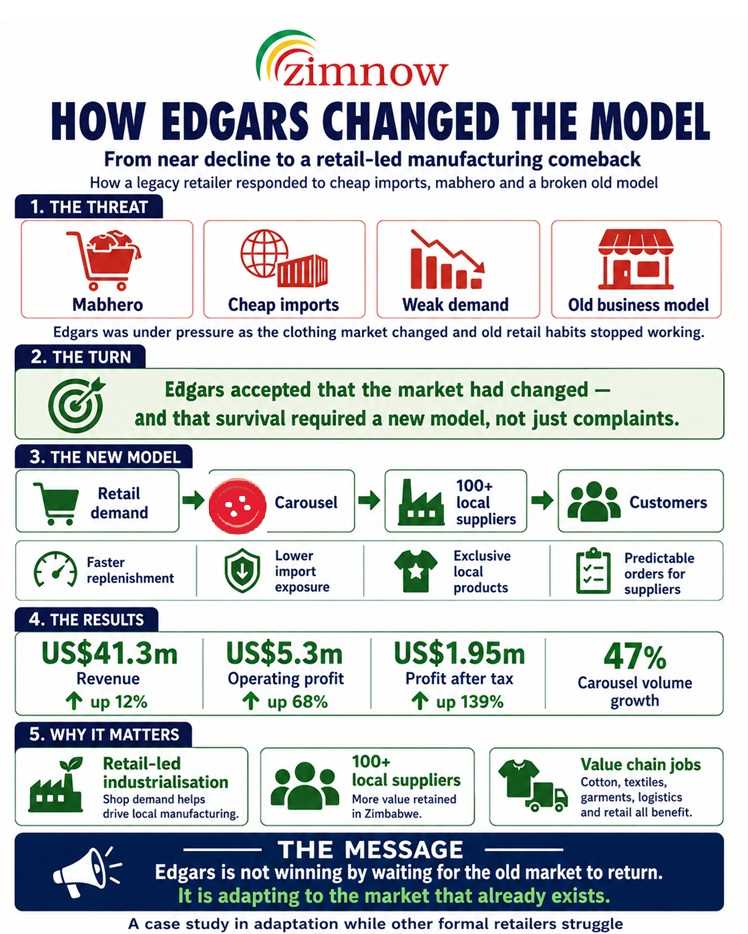
Edgars faced the same storm: Mabhero and cheap imported clothes changed the rules of the clothing market. Consumers had more options. Price sensitivity increased. The old department-store model, built around imported merchandise, formal retail margins and predictable consumer behaviour, no longer offered enough protection.
But the Edgars story is becoming different because the company appears to have accepted a hard truth: the market was not going back to the old shape.
Instead of repeatedly complaining about cheap imports and mabhero, Edgars has been changing the business model.
Its current strategy combines retail, local manufacturing, supplier development and consumer credit. Through Carousel, its manufacturing arm, Edgars is using demand from its Edgars, Jet and Express stores to support more than 100 local suppliers.
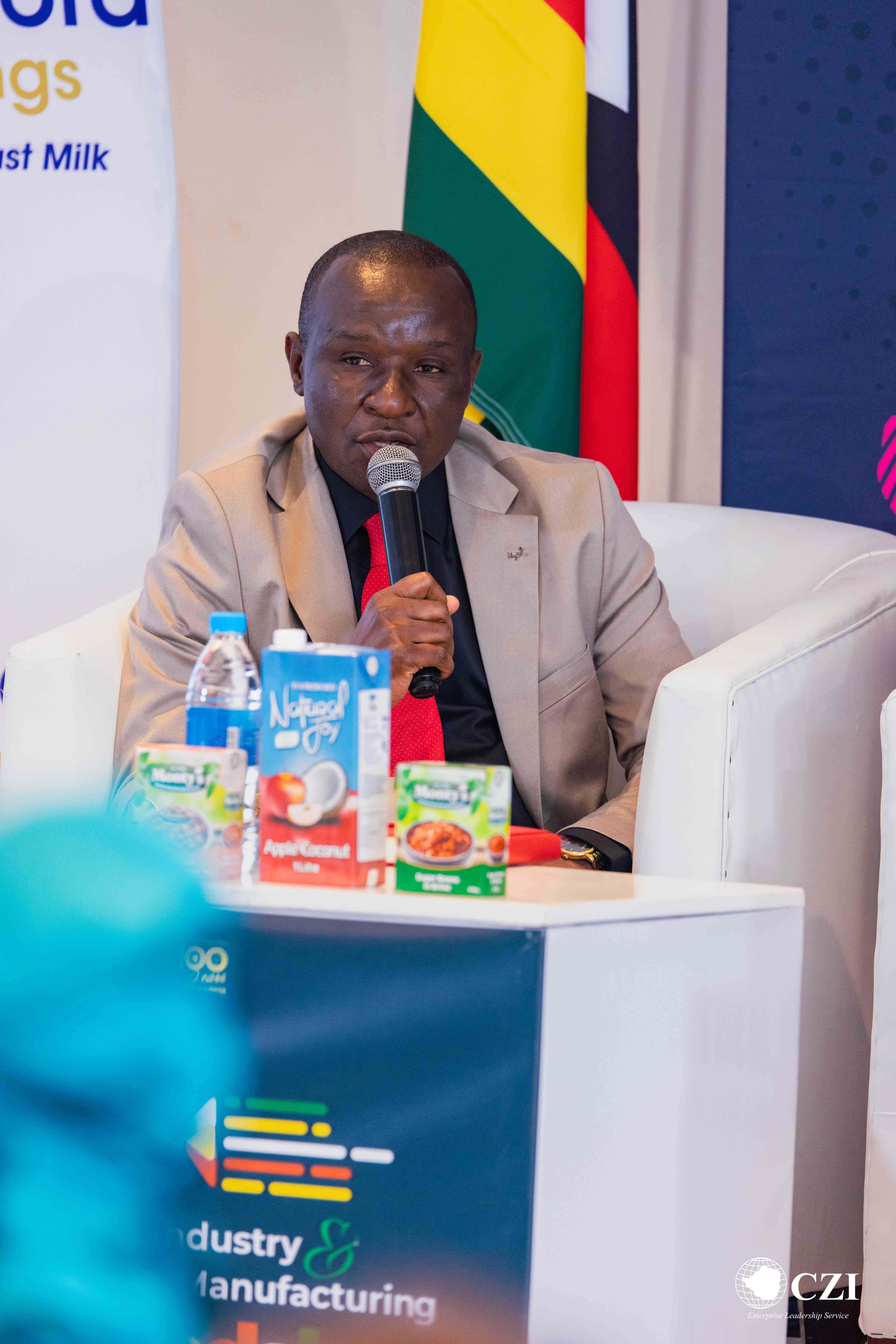
At the CZI Manufacturing Sector Review held in Harare on June 18, Mushosho presented the model as more than a sourcing arrangement. He said Carousel and its supplier network have become strategic enablers of both Edgars’ growth and Zimbabwe’s industrialisation agenda under NDS2 and Vision 2030.
Related Stories
The idea is simple, but powerful: retail demand can drive manufacturing.
Instead of waiting for factories to produce and then search for markets, Edgars is using its own store network to aggregate demand, place orders and give local manufacturers a predictable route to customers.
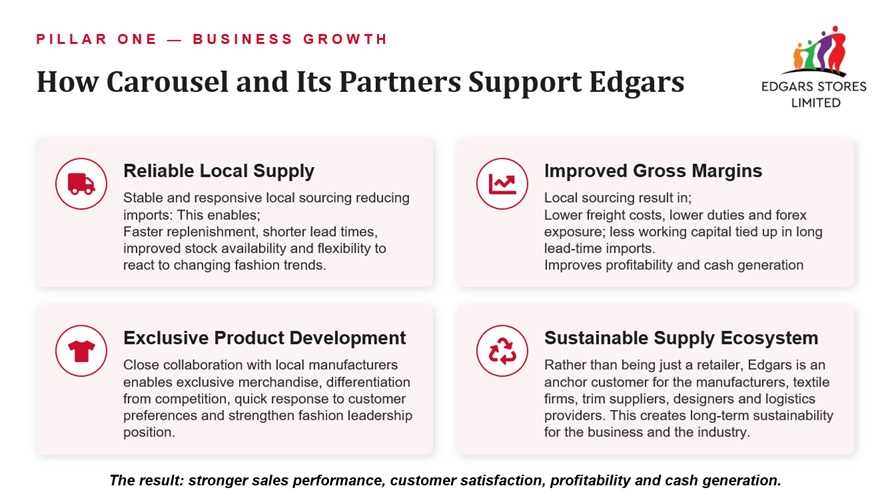
That changes the relationship between retailer and manufacturer. Edgars is helping shape a value chain that includes manufacturers, designers, cut-make-trim operators, textile firms, trim suppliers, logistics providers and retailers.
The company says local sourcing is a competitiveness strategy that gives it faster replenishment, shorter lead times, improved stock availability and flexibility to respond to changing fashion trends.
It also reduces freight costs, duties, foreign currency exposure and working capital tied up in long import cycles. That matters in a market where formal retailers are often punished by delays, currency movements and high costs before a product even reaches the shelf.
The company’s 2025 performance suggests the model is beginning to work. Edgars reported revenue of US$41.3 million for the year, up 12% year-on-year. Operating profit rose 68% to US$5.3 million, while profit after tax rose 139% to US$1.95 million.
The manufacturing side is also gaining traction. Carousel unit volumes reportedly rose 47%, pointing to stronger integration between production, retail and finance.
Zimbabwe’s manufacturing sector has a weak value-chain problem. The CZI Annual Manufacturing Sector Survey shows that only 7% of manufacturers report strong vertical integration with suppliers or customers.
Edgars is showing one practical way to deal with that weakness. By using retail demand to pull production, the company is creating a market for local suppliers. For small manufacturers, that means access to formal retail shelves.
The Carousel model also supports several layers of the clothing and textile chain. A locally made garment can touch cotton farming, ginning, spinning, weaving, knitting, dyeing, finishing, garment manufacturing, packaging, transport and retail.
Edgars says the model supports capacity utilisation, employment creation, cotton-to-clothing revival, foreign currency conservation, MSME development and tax revenue growth.
That does not mean the company is free of risk. Finance costs, consumer pressure, competition from imports, weak demand and the general operating environment remain real constraints.
But the big win is in strategic leadership. While some formal retailers are still asking the market to return to them, Edgars is moving with the market as it now exists. A retailer bucking the trend is a case study in adaptation.








Leave Comments