








My Journey Begins in a Cave
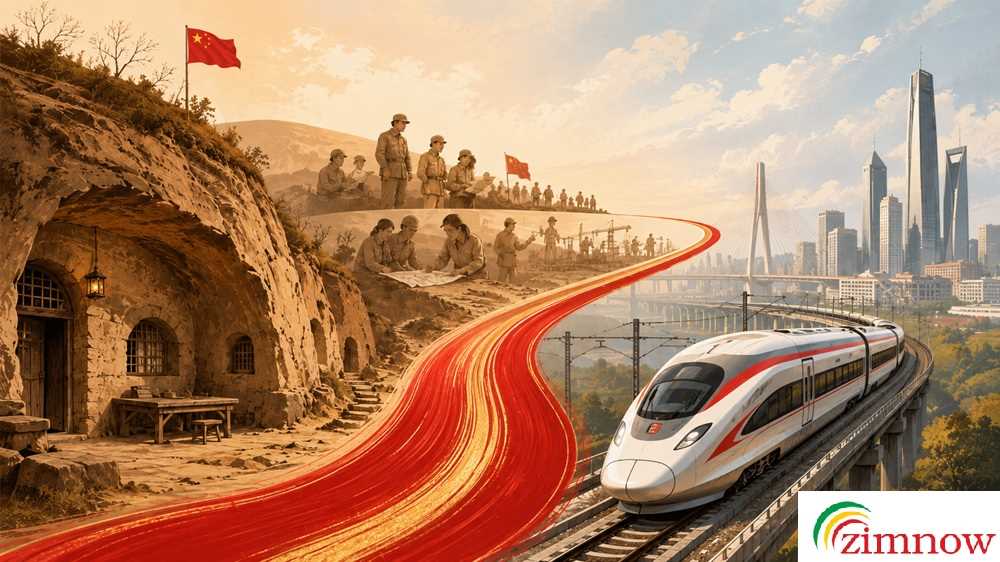
Almost a decade ago, in the loess hills of Yan’an, I stood in the cave dwellings that were Mao Zedong’s headquarters as he coordinated China’s bitter war against foreign invaders and domestic enablers.
In that place with little aesthetic recommendation, just the literal grit of determined dreams, I developed a yearning to understand the Communist Party of China. Up then, I had only seen the party as a carefully cropped shot presented through western media lenses: secretive, with an ominous intent to turn the world red.
The Liangjiahe Lesson
That trail led me to a place where I experienced the party’s realisation that urban technocrats don’t solve rural problems while crunching crispy Peking Duck in Beijing. In Liangjiahe, I laughed at the mental image of a young Xi Jinping with the unfortunate contents of his biogas plant experiment plastered all over him.
But more than that, I developed immense respect for the man who is now the president of China and got why, for him, modernisation and rural revitalisation are not slogans. The Beijing youth, sent to the village all those years ago, has turned his ideals of balancing inequality and creating common prosperity into work in progress, lifting hundreds of millions of people out of poverty and creating a middle class bigger than the total population of Europe.
Practical Ballot Resulting In Bullet Trains
During the Two Sessions in March 2025, I witnessed, firsthand, that same clarity and determination.
The National People's Congress works with the National Committee of the Chinese People's Political Consultative Conference to ensure structured implementation of strategic action plans that feed into the national vision created by addressing the aspirations of the multiple constituencies who make up the very diverse demographics who call this humongous country home.
The NPC election system ensures representation and inclusion and, as result, Inner Mongolians can whizz off to access the best medical service in hours aboard high-speed trains, a journey that once was too arduous for the truly ill to undertake.
In my view, the real secret of success is that where other parties wage wars with rivals, the CPC chooses inclusion. No shouting matches in parliament, no destructive social media battles, but five-year plans that get done. No blowing billions on elections and expensive power struggles between the presidency and state institutions.
So, unlike countries where the winner takes all and the loser works on maximum disruption until the next election, the CPC has created a system where national interest and development don’t take time off for the silly season. Just a 24/7 delivery service, constantly upgraded and reoriented to meet the challenges of the day.
Evolution in Process
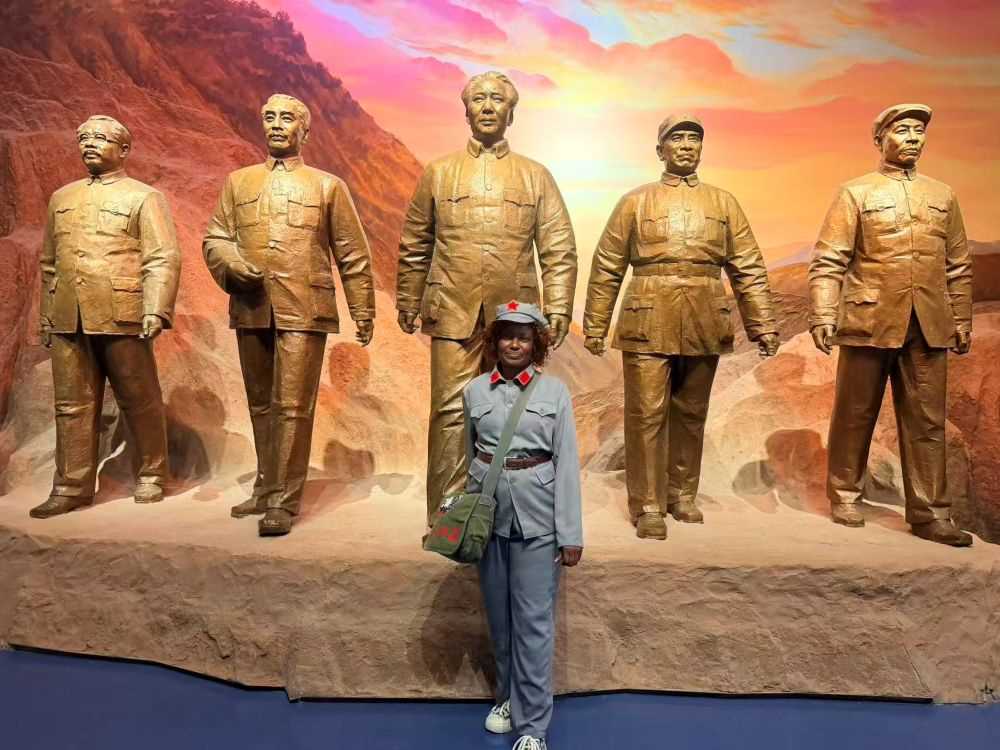
From the time of Mao, when it was soldered into a war machine, the CPC has evolved under various leaders like Liu Shaoqi, Deng Xiaoping, Li Xiannian, Yang Shangkun, Jiang Zemin, Hu Jintao and incumbent Xi Jinping, into an administrative supercomputer, now powered by AI.
Yet we can’t tell the Party stories of success without seeking to understand its dark spots and failures like the Cultural Revolution which failed to deliver on its vision. But errors were recognised and owned, leading to recalibration, a culture that has been nourished and deeply entrenched.
In 1978, China was poorer than some African nations. In 2026, it is the world’s second largest economy, associated with green energy, robots, AI, space programmes, e-commerce and high-speed rail.
The Mindset
In 2023, I visited the new party museum in Beijing. From less than 60 people in Shanghai in 1921, to more than 100 million members across China, 102 years on, the epic was told through pictures on the wall, real-life artifacts, replicas and immersive storytelling. Watching the movie depicting the Long March was a peek into the psyche of the complex, but cohesive unit that is the CPC.
Related Stories
Why membership in the party is not about registering, wearing regalia, chanting slogans and shouting down, beating and even killing anyone facing you who says your right is their left.
Visiting the Party School in Beijing, which has online access and other branches all over the country and is open to foreigners, I got a deeper insight into how cadres are schooled in ethics.
Training is consistent and ongoing, from the moment one applies to join the party. It increases the chance that corrupt officials get caught before they fritter their ill-gotten gains on jet setter lifestyles. Beyond ideology, the party school ensures that the best brains of China are equipped to govern the country for the people.
The Rice Shop Lesson
In June 2025, the trail took me to Changsha, where I visited a tourist village with one powerful relic: an old rice shop once used as a CPC front. Preserved as part of the revolutionary memory, it shows how the Party survived through bravery, innovation, adaptation and tactical intelligence. The rice shop remained ordinary to the passing eye, yet it was a political organisation learning how to live, shift, hide, reorganise and continue. For me, that small, preserved shop carries one of the biggest lessons of the CPC story: survival is not stubbornly standing in one place until you are crushed. It is knowing when to adapt without losing the mission.
The Latest Stop on the Journey
In May 2026, that journey brought me back to the Museum of the Communist Party of China in Beijing. This time, I was in the iconic grey and red old uniform of the People’s Liberation Army, a costume worn while touring a museum that stages history as a national instruction manual. It was fun, yes. I will not pretend otherwise. But it was also a sharper reminder that the CPC is not just commemorating where it came from. It is constantly asking what kind of political machine it must become to carry China into its next development stage.
That question remains in the spotlight as July 1 marks the 105th anniversary of the founding of the Communist Party of China. In June 2026, China’s latest articulation of Xi Jinping Thought on Party Building condensed the governing philosophy into fourteen principles. In ordinary language, they say a ruling party must lead, discipline itself, train its cadres, fight corruption, strengthen its grassroots structures, stay connected to the people, govern through rules and hold leaders responsible for the performance of the system. Stripped of official phrasing, the message is simple: a party that wants to govern a country must first govern itself.

Turning the lenses homeward
As I study others, so must I assess what’s at home. China is moving into its 15th Five-Year Plan, covering 2026 to 2030. Zimbabwe is moving into NDS2, also covering 2026 to 2030. Two countries. Two 2030 horizons. Two national development plans running at the same time.
China is the world’s second largest economy, still adjusting its machinery for the next stage of modernisation. Its 15th Five-Year Plan stands on previous plans, completed infrastructure, industrial capacity, a disciplined bureaucracy, policy continuity and a political culture that treats implementation as a national duty.
Zimbabwe is a resource-rich country of just over 16 million people, still working to make Vision 2030 feel like a lived possibility. NDS2 speaks to industrialisation, value addition, infrastructure, food security, human capital, devolution, digitalisation and the upper middle-income dream.
Where the CPC has deliberately built mechanisms to carry everyone into the national project, Zimbabwe still needs to confront a culture that leaves too many people feeling permanently disenfranchised. When citizens feel they have no structured space to contribute, their only remaining agency becomes “kudira jecha”.
My biggest lesson in my journey as a scholar of the CPC has been that true democracy is what we define it as, not what we are told by others. But it must feed the people, develop the country, include the majority and correct itself when necessary.
Most importantly it must traverse the distance between slogans and systems and so evolve from an organisation housed in cave dwellings to a government delivering modernisation through building a high-speed train network that is larger than that of the rest of the world combined.
Monica Cheru is the Publisher of Zim Now and Mabwe Waves Media products. She has travelled across several Chinese provinces, following governance, development, and China-Africa cooperation issues. This article is an opinion piece based on the writer’s personal observations, study visits and reflections. It does not necessarily represent the editorial position of Zim Now.







Leave Comments