







African governments have been urged to reject a proposed African Charter on Family Sovereignty and Values, with rights advocates warning that the draft framework could reverse decades of progress on gender equality, sexual and reproductive health rights, and broader human rights protections across the continent.
Speaking during the June session of SHE & Rights, Dr Tlaleng Mofokeng, the United Nations Special Rapporteur on the Right to Health, described the proposed charter as a direct threat to the rights protections enshrined in the Maputo Protocol, one of Africa's most significant legal instruments for advancing women's rights.
"The regressive draft African Charter on Family Sovereignty and Values is yet another assault on sexual and reproductive health rights and justice, as well as bodily autonomy and human rights in general," said Dr Mofokeng.
She warned that the draft charter encourages African governments to withdraw from progressive and evidence-based agreements, including the legally binding Maputo Protocol, which was adopted by the African Union in 2003.
"Among growing global anti-rights and anti-gender pushbacks, this draft Charter is an additional attack which is attempting to backslide progress made on gender equality and human rights to health," she said.
Dr Mofokeng called on governments across Africa to distance themselves from the proposed charter and instead focus on fulfilling existing commitments to gender equality and healthcare.
"This draft Charter is the first African continent-wide patriarchal push to dislodge human rights and replace rights with so-called moralistic viewpoints. We cannot undo progress made by years of dedication and decades of struggle," she said.
"Governments need to disengage with this draft Charter and instead honour and deliver on the promises they have made on gender equality and human rights to health, where no one is left behind."
According to legal experts, the draft charter would fundamentally reshape how rights are interpreted on the continent by placing family values, sovereignty and cultural preservation above individual rights and freedoms.
Sibongile Ndashe, Executive Director of the Initiative for Strategic Litigation in Africa (ISLA), said an analysis of the draft revealed a deliberate weakening of rights protections.
"This draft Charter is not merely conservative. It constitutes a sinister restructuring of rights through legal distortion," said Ndashe.
"The rights language is retained in form, but the rights protection is weakened in substance. Sovereignty is used to resist accountability, and family protection is used to justify exclusion."
Ndashe noted that the draft charter defines family exclusively as a union between a man and a woman, a position she said conflicts with existing regional and international human rights standards.
"The practical implication is profound because family recognition determines access to inheritance, housing, custody, migration status, social protection and legal recognition before the state," she said.
She added that the charter prioritises family cohesion and authority without providing safeguards for women, children and vulnerable groups who may experience violence or discrimination within family structures.
South African legal practitioner Letlhogonolo Mokgoroane also criticised the draft charter for excluding gender-diverse people from legal recognition.
"What it does to gender diverse persons is erasure — legal, political and physical," Mokgoroane said.
"It defines gender as limited to male and female, erasing the existence of intersex and gender diverse persons."
Mokgoroane further argued that the draft rejects comprehensive sexuality education despite evidence showing that it contributes to better health outcomes.
"The draft Charter rejects comprehensive sexuality education — the very education that evidence has shown leads to better sexual and reproductive health outcomes, lower rates of HIV transmission, lower rates of unintended pregnancies and lower rates of gender-based violence," she said.
"The draft Charter replaces evidence with ideology and public health with moralism."
Related Stories
Concerns were also raised over the draft's interpretation of sovereignty.
Famia Nkansa, Communications Lead at Purposeful, a feminist organisation based in Sierra Leone, said the proposed charter shifts power away from individuals and towards state control.
"This draft charter is dangerous because it frames sovereignty as something that the state is entitled to versus the individual," Nkansa said.
"When they portray gender equality as a threat to social stability, when they portray sexual and reproductive rights as foreign agendas, it is not accidental."
She argued that the draft attempts to redefine rights debates away from autonomy, equality and dignity towards tradition, parental authority and cultural preservation.
The controversy surrounding the proposed charter comes at a time when advocates say gender rights are increasingly facing resistance globally.
Dr Pam Rajput, Professor Emeritus at Panjab University and former chairperson of India's High-Level Committee on the Status of Women, warned that anti-rights movements are gaining momentum beyond Africa.
"Patriarchy is transnational and so are all anti-rights movements," Rajput said.
"The question is not what does the draft Charter mean to Africans. The question is what it means for the future of women's rights everywhere."
She warned that rights rollbacks in one region can quickly become precedents elsewhere.
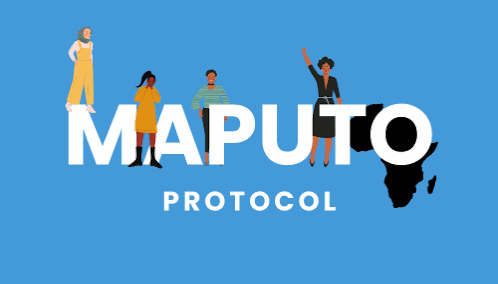
Advocates at the SHE & Rights session repeatedly pointed to the importance of protecting the Maputo Protocol, which has been ratified by 46 of the African Union's 55 member states.
The protocol guarantees a wide range of protections for women and girls, including protection from violence, harmful cultural practices such as female genital mutilation and forced marriage, as well as access to sexual and reproductive healthcare.
"It is one of the most widely accepted and most progressive human rights instruments on the African continent," Mokgoroane said.
"Feminist advocates have reaffirmed the Maputo Protocol as what it is — a weapon of resistance, solidarity and accountability."
Nkansa said the protocol's significance extends beyond its legal provisions.
"Maputo Protocol is significant not only because of its legal protections, but because of what it symbolises," she said.
"It demonstrates that gender equality and women's rights are not external concepts that were imposed on Africa, but they are principles that African governments themselves negotiated and adopted."
With just 54 months remaining before the 2030 deadline for achieving the Sustainable Development Goals, advocates warned that the world is already falling behind on commitments related to gender equality and health.
SHE & Rights Coordinator Shobha Shukla said the current moment demands urgency rather than regression.
"Only 54 months are left to deliver on the promise of gender equality and health and wellbeing by 2030," said Shukla.
"If we recognise that the world is not on track to deliver on either of these goals, instead of going forward, in many instances we are slipping backwards."
She stressed that gender equality and the right to health remain inseparable human rights and warned that growing anti-rights movements threaten hard-won gains for women, girls and gender-diverse communities across the globe.






Leave Comments