









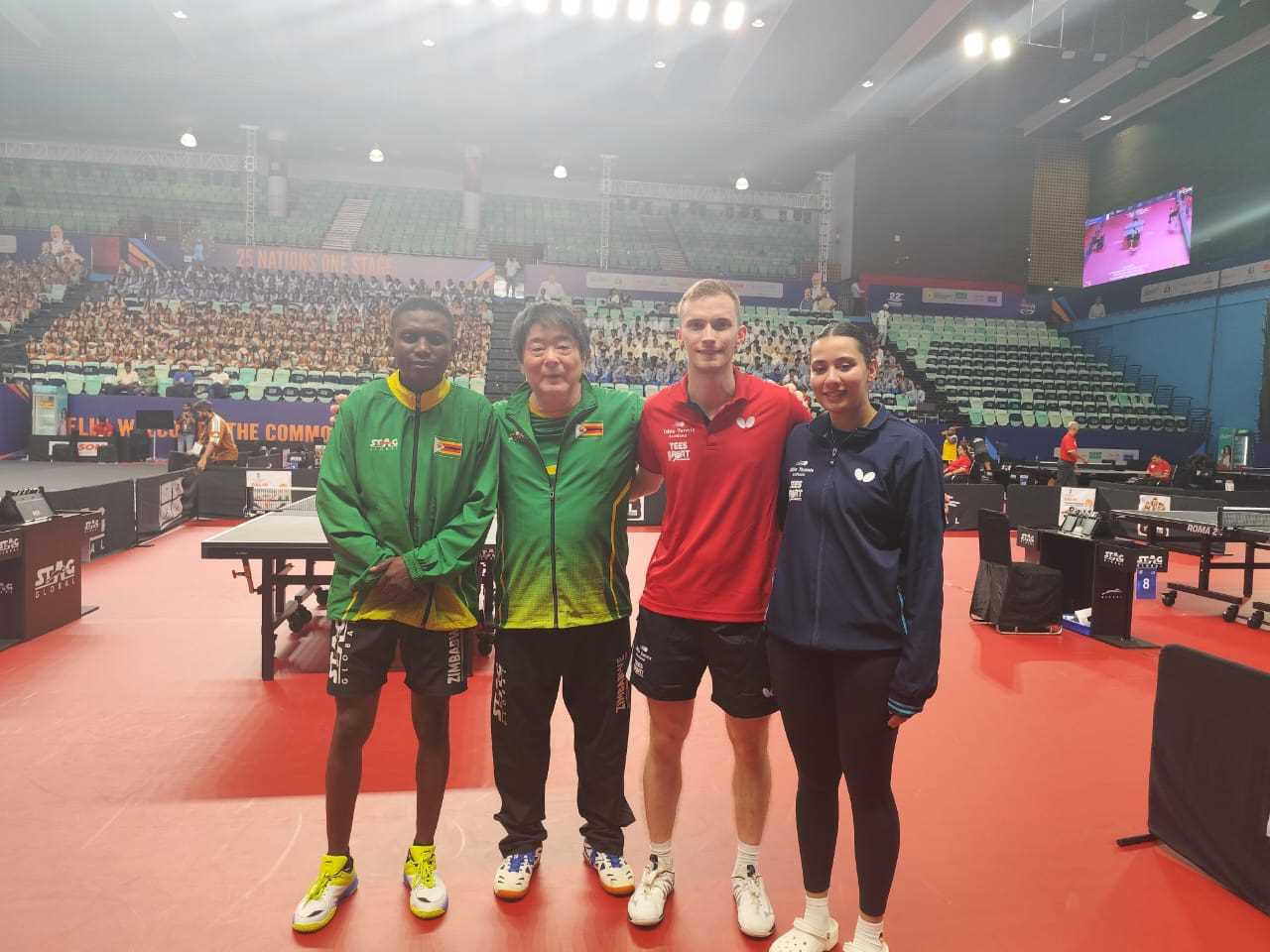
Zimbabwe’s table tennis campaign at the 22nd Commonwealth Table Tennis Championships has produced more than a collection of impressive results. It has offered the clearest indication in decades that the country’s paddlers may be beginning to close the gap on the Commonwealth’s established table tennis nations.
Competing at the championship in New Delhi from July 27 to August 2, Zimbabwe finished ranked 18th in a 25-nation field, but its position on the standings only tells part of the story.
The team’s performances, including an unprecedented eight match winning streak, represented a major milestone for a programme that has historically struggled for sustained exposure at elite international level.
The championships brought together 25 Commonwealth nations at Delhi’s Thyagaraj Stadium across seven competition categories.
Related Stories
The breakthrough came after a year in which Zimbabwean table tennis has increasingly focused on preparation, international exposure and stronger technical structures.
The country had already taken a significant step forward by hosting the Southern Africa Regional Table Tennis Championships in July, its first staging of the event in 31 years. The tournament provided Zimbabwe’s national players with an opportunity to compete against leading regional opposition on home soil before travelling to India.
Chinese coach Wang Liping, who has been central to the national programme, placed particular emphasis on opponent analysis, tactical preparation and match management. Rather than relying solely on technical ability, the Zimbabwe camp studied opponents' previous matches and prepared specific responses to their playing styles.
That approach was visible in one of the team's most important contests. When Tetanda Mumvuma surrendered an early advantage and was pulled back into a difficult game, Wang intervened with a timely timeout, helping the player regain his composure and adjust his tactics. Mumvuma subsequently stabilised his game and closed out the crucial contest 11-7.
Wang's influence had already been evident domestically. In May, Vikram Singh won a seven-round national selection event with a perfect 14 points, while records highlighted the intensity of the new training programme, including extended sessions designed to improve technical and physical conditioning.
Zimbabwe recorded a 3-0 victory over the Falkland Islands, while Tapiwa Musarurwa produced straight set wins against opponents from Barbados and Botswana. Vikram Singh and Brian Chamboko also registered clean-sweep victories against players from Kenya, Namibia and Botswana.
For a developing table tennis nation, such moments are important. They demonstrate not simply that players can win matches against lower-ranked opposition, but that they can create pressure against elite players








Leave Comments