








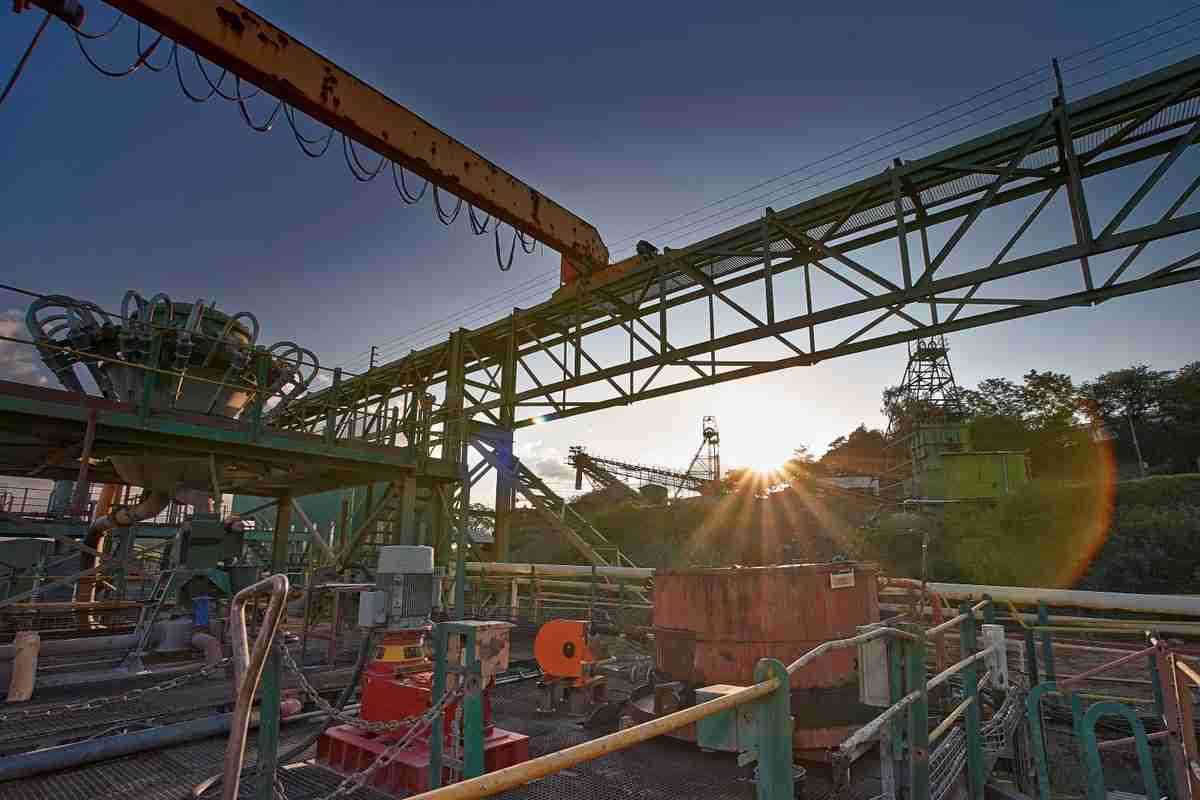
London and New York Stock Exchange-listed Zimbabwean gold miner Caledonia Mining Corporation has expanded its mineral resource base in the country, increasing measured and indicated resources at its Blanket Gold Mine by 22% while identifying a maiden 510,000-ounce resource at its Motapa property.
The developments strengthen Caledonia’s pipeline of gold resources in Zimbabwe and could support the company’s plans to expand production around its existing operations and the under-development Bilboes project.
At Blanket, Caledonia reported 2.178 million ounces of measured and indicated gold resources as at June 30, 2026, up from 1.789 million ounces at December 31, 2023.
The updated resource comprises 17.674 million tonnes grading 3.83 grammes per tonne (g/t) of gold, compared with 15.299 million tonnes grading 3.64 g/t in the previous estimate.
Measured resources increased by 48% to 1.09 million ounces from 737,000 ounces, while indicated resources rose to 1.088 million ounces from 1.052 million ounces.
The increase was attributed to underground development, run-of-mine drilling and long-hole exploration, which allowed the company to convert a significant portion of previously inferred resources into higher-confidence measured and indicated categories.
Blanket’s inferred underground resource consequently declined by 30% to 748,000 ounces from 1.061 million ounces.
Caledonia said the reduction in inferred resources largely reflected the conversion of resources into the measured and indicated categories, rather than depletion alone.
The company said the updated Blanket estimate would form the basis of a revised Life of Mine Plan and a future mineral reserve update.
Caledonia plans to file an updated technical report under Canada's National Instrument 43-101 on SEDAR+ within 45 days. The report is expected to include a restated Life of Mine Plan and a new mineral reserve estimate.
Chief executive officer Mark Learmonth said Caledonia had invested US$3.733 million in deep drilling at Blanket over the past six years following the commissioning of the mine's Central Shaft in 2021.
The drilling programme generated 1.279 million ounces of measured and indicated resources before depletion, representing a discovery cost of US$2.92 per ounce, according to the company.
Caledonia said exploration results indicate that mineralisation continues at depth, with grades and widths generally improving.
A technical study examining options for extending Blanket beyond its current operating depth of 1,100 metres below surface is expected towards the end of 2026.
Caledonia has also established a maiden surface mineral resource at Blanket following trenching and reverse-circulation drilling.
The surface resource contains 30,000 ounces of indicated gold in 1.251 million tonnes grading 0.76 g/t, with a further 14,000 ounces classified as inferred in 492,000 tonnes grading 0.89 g/t.
The company said the programme was focused primarily on shallow oxide and transitional mineralisation that could potentially be processed using lower-cost heap-leach methods.
Metallurgical testing on oxide material has indicated recoveries of up to 67%.
Related Stories
Caledonia plans to prepare a trial heap-leach pad and mine a 10,000-tonne bulk sample, subject to environmental approvals.
If the evaluations are successful and the required approvals are secured, the company said oxide mining and processing could begin in the first half of 2027, targeting a mining rate of 40,000 tonnes per month.
Separately, Caledonia announced a maiden mineral resource estimate for its 100%-owned Motapa property, identifying a combined 510,000 ounces of measured, indicated and inferred gold resources.
The estimate comprises 7.8 million tonnes grading 1.51 g/t and containing 379,000 ounces of measured and indicated resources, together with 2.7 million tonnes grading 1.48 g/t containing 131,000 ounces of inferred resources.
The estimate, prepared in accordance with NI 43-101, is based principally on drilling at Motapa North and uses a cut-off grade of 0.5 g/t.
Caledonia acquired Motapa in November 2022 for US$8.25 million in cash and loan notes, which have since been repaid from internal cash generation.
The company spent US$7.084 million on exploration at the property between 2023 and 2025.
Motapa comprises three main mineralised shear zones, Motapa North, Motapa Central and Motapa South, with Motapa North accounting for most of the current resource.
Motapa North is immediately adjacent to Caledonia's Bilboes Gold Project, raising the possibility of operational synergies between the two properties.
Caledonia said the combined properties could potentially support a larger mining operation or extend Bilboes' planned production profile, although further exploration, metallurgical testing, technical studies and economic assessments would be required before any development decision.
Bilboes is currently under development, with first gold production expected in late 2028. The project has a planned production profile of 1.5 million ounces over a 10.8-year mine life, according to Caledonia's feasibility studies.
The Motapa resource does not include results from the company's 2026 exploration campaign. Exploration continued at Motapa North during the year, while work also commenced at Motapa South and Motapa Central.
Caledonia said exploration at Motapa would continue during the Bilboes construction period.
Learmonth said the Motapa resource demonstrated the value generated through the company's exploration programme and could provide opportunities to expand its operations around Bilboes.
“The identification of 379,000 ounces in the measured and indicated mineral resource
categories, together with a further 131,000 ounces in the inferred mineral resource category, demonstrates the value created by the exploration work completed to date.
"Achieving this at an estimated combined exploration discovery and acquisition cost of approximately US$40.45 per measured and indicated ounce is particularly pleasing," Learmonth stated.







Leave Comments