
ARDA Goes Big on Grain Production Ahead of Drought
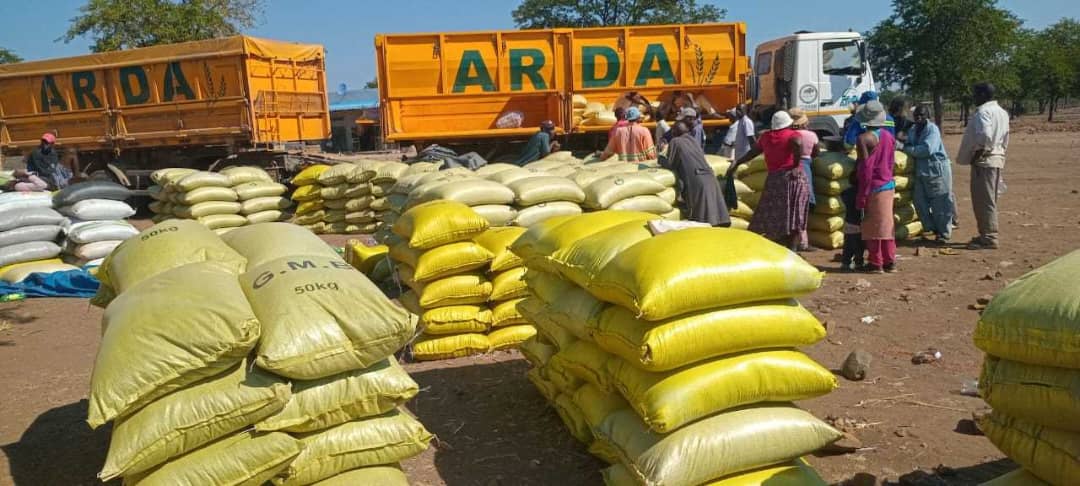
The Agricultural and Rural Development Authority (ARDA) has delivered more than 187,000 tonnes of summer cereals and 60,529 tonnes of winter wheat to the Grain Marketing Board (GMB), as Zimbabwe intensifies efforts to strengthen national food reserves ahead of an anticipated El Niño-induced drought.
The authority has also set an ambitious target of cultivating 100,000 hectares during the 2026/27 summer cropping season, in a major production drive aimed at augmenting the country's Strategic Grain Reserve and cushioning communities against potential food shortages.
ARDA delivered 187,704 metric tonnes of summer cereals from the 2025/26 agricultural season to the GMB.
Of this quantity, 31,293.46 tonnes were allocated to meet immediate milling requirements and support price stabilisation.
The authority has also delivered 60,529.3 tonnes of winter wheat, with harvesting still underway, having commenced two weeks ago.
ARDA said most of the harvested wheat was still on farms, where it was undergoing bagging and grading, while harvesting was yet to be completed in some fields.
The figures underline ARDA's contribution to national food security preparations as Zimbabwe braces for a potentially difficult agricultural season.
Under its 2026/27 summer production programme, ARDA is targeting 100,000 hectares across its estates, A1 and A2 joint venture growers, irrigation scheme business units and clustered smallholder farmers.
Of the targeted hectarage, 60,000 hectares will be under irrigation, while the remaining 40,000 hectares will be planted using climate-smart varieties.
The programme is intended to strengthen domestic cereal production and further build the Strategic Grain Reserve against the threat of below-normal rainfall.
Agriculture, Mechanisation and Water Resources Development Minister Dr Anxious Masuka recently warned that Zimbabwe was almost certain to experience below-normal rainfall during the coming season, with the Meteorological Services Department classifying it as a drought year.
Speaking at the 74th graduation ceremony at Gwebi College of Agriculture, Dr Masuka said the warming of the central South Pacific Ocean associated with El Niño was expected to exceed three degrees Celsius, pointing to a particularly strong weather phenomenon.
“So now we are almost 100 percent certain that we will have below-normal rainfall for Zimbabwe,” he said.
However, the minister assured the nation that the Government was implementing measures to safeguard food security.
He revealed that the GMB had purchased 345,000 tonnes of various cereals by the previous day, exceeding the 328,000 tonnes distributed during the devastating 2024 drought.
“As of yesterday, we had actually purchased at the GMB 345,000 metric tonnes of various cereals. In 2024, when we had the worst drought, we distributed 328,000 metric tonnes,” he said.
“So we are well on our way to ensuring that should there be this unfortunate event, we will have enough of the strategic grain reserve to feed everyone.”
The Government's broader drought preparedness programme includes strengthening national and household grain reserves, promoting climate-smart agriculture, implementing livestock drought mitigation programmes and improving early-warning systems.
Under the livestock intervention, authorities plan to establish drought mitigation centres serving every seven to eight villages. The centres will be equipped with permanent water sources, feeding facilities, livestock sales points and disease-control services.
Dr Masuka also called for improved post-harvest management, raising concern over maize losses that can reach 30 percent after harvesting.
He urged farmers and households to minimise food wastage and embrace innovation to withstand the anticipated weather challenges.
“Let’s invoke the Munhumutapa spirit, that entrepreneurial spirit, that innovation, so that Zimbabwe can come out stronger from this drought,” he said.
Meanwhile, Permanent Secretary in the Ministry of Agriculture, Mechanisation and Water Resources Development, Professor Obert Jiri, has urged farmers against panic planting or abandoning their fields over fears of an El Niño-induced drought.
He said the seasonal forecast should guide preparation rather than trigger premature decisions, adding that farmers needed to conserve soil moisture, diversify crops and take advantage of favourable rainfall whenever it occurred.
“Farmers need to be ready and make the most of every drop of rain,” Prof Jiri said, urging farmers to monitor local weather conditions, assess soil moisture and seek guidance from agricultural extension officers before planting.

About ZimNow Reporter
Staff Writer