
Drying Muvhinzi River Exposes Gold and Decorative Stone Trade
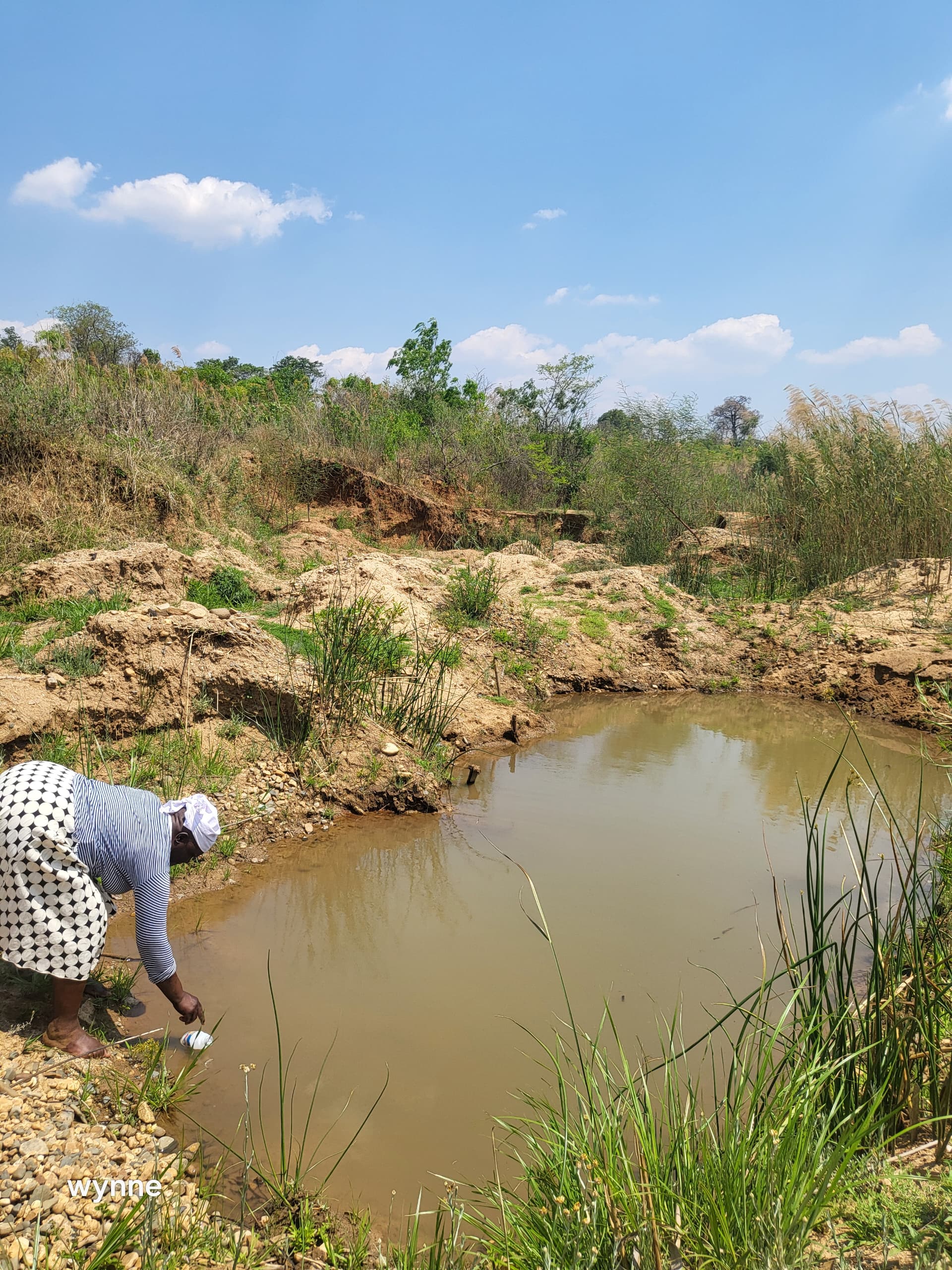
As the dry season lowers water levels in the Muvhinzi River, the exposed riverbed has become more than a changing landscape.
It has become a workplace, a marketplace and, for some residents, a fragile source of income.
Along its banks, collectors gather smooth, rounded stones for landscaping, gardens and fountains. Others dig in search of gold, hoping the receding water has revealed what the river has concealed for months.
The activities have created opportunities, but they have also raised difficult questions about who benefits, who regulates the trade and what the river may lose in the process.
For Edwin (a pseudonym used to protect his identity), the dry season is the busiest time of the year. He has been collecting decorative river pebbles for four years.
“Business is better when the river dries up because I can collect more stones than when there is water,” he said.
“During the rainy season, it is also difficult for vehicles to reach the riverbank because the ground becomes slippery.”
Edwin said buyers include individuals and businesspeople who travel from Harare and Juru Growth Point to purchase the stones. The pebbles are used in home decoration, landscaping and water features, turning what was once ordinary river material into a commodity with a growing urban market.
But the trade remains largely informal. The quantities being removed, the prices charged and the legal requirements governing the commercial collection of decorative stones remain unclear.
The Environmental Management Agency (EMA) was approached for comment on activities at Muvhinzi but had not responded by the time of publication.
The seasonal exposure of the riverbed has changed the rhythm of life along Muvhinzi. When water levels fall, collectors can access stones that are otherwise submerged or difficult to reach. Vehicles can also get closer to the banks, making it easier to load and transport the material.
For people facing limited formal employment opportunities, the river offers a practical livelihood.
A day spent collecting stones can generate income without the capital needed to start a business or the qualifications often required for formal employment.
Yet the same conditions that make collection easier also increase the risk of environmental damage. Every stone removed from a riverbed is part of a natural system that slows water flow, protects riverbanks and provides shelter for small aquatic organisms.
Removing large quantities can disturb sediment movement, alter the river channel and increase erosion.
The concern is not simply that people are collecting stones. It is that the scale of extraction is unknown and that a resource being removed for decoration may be disappearing faster than the river can replace it.
Gold extraction presents a more immediate set of risks. Digging along riverbeds and banks can loosen soil, increase water turbidity and send sediment downstream. Siltation can affect water quality and aquatic habitats, as well as the capacity of a river to carry water during heavy rains.
There is no evidence establishing that mercury or cyanide is being used at Muvhinzi. However, where gold is processed near rivers, poor handling or disposal of such chemicals can introduce harmful substances into water bodies. Even without chemical contamination, excavation can leave pits, destabilise banks and alter the natural flow of a river.
Research on artisanal and small-scale mining in Zimbabwe’s Mzingwane District has documented environmental concerns, including erosion, siltation and water pollution associated with mining activities.
Those findings do not prove that the same damage is occurring at Muvhinzi, but they highlight risks that require a site-specific assessment.
Local headman Marufu said rivers remain natural resources that communities have a responsibility to protect.
“A river is a natural resource that must be protected for present and future generations,” he said.
“The fact that water levels have gone down does not mean that the riverbed is now free for everyone to exploit. Communities depend on these rivers, and whatever we do to the environment today will affect the generations that come after us.”
His warning reflects a broader tension in many rural and peri-urban communities: livelihoods are immediate and visible, while environmental damage often develops gradually and is felt most strongly by those least able to relocate or replace lost water sources.
Zimbabwe’s Environmental Management Act [Chapter 20:27] gives the Minister authority to issue environmental protection orders. Section 114 allows the Minister to require conservation works, restrict activities or prohibit excavation near public streams and water sources where necessary to protect the environment.
The law specifically provides for the preservation and protection of the beds, banks and courses of public streams, as well as sources of water. It also allows restrictions on activities that may damage riverbanks, vegetation, wetlands and adjacent land.
More directly, Statutory Instrument 188 of 2024 prohibits alluvial mining and prospecting for alluvial deposits in or along rivers and public streams. The prohibition applies regardless of whether a person holds a special grant, written authority, environmental impact assessment or other permit that may previously have authorised such activity.
Under the regulations, contraventions can attract a fine of up to level 14, imprisonment for up to 12 months, or both. The instrument also empowers inspectors and police to seize minerals, equipment and vehicles involved in contraventions.
The legal position is clear regarding alluvial gold mining. What remains less clear is whether the commercial removal of decorative pebbles falls under the same restrictions or whether it is regulated through separate environmental, land-use or local authority requirements.
Without clear guidance, collectors, buyers and local leaders may be left to interpret the law themselves, while the river absorbs the consequences.
Rehabilitation must follow extraction
Agriculture, Mechanisation and Water Resources Development Minister Dr Anxious Masuka said in June 2026 that the ban on alluvial mining must be accompanied by the rehabilitation of damaged ecosystems.
EMA Environmental Education and Publicity Manager Amkela Sidange has also called for the continuous rehabilitation of land affected by extractive activities, including prompt backfilling and restoration.
Those principles are especially important where rivers have already been disturbed. Rehabilitation is not simply about filling holes. It can involve stabilising banks, restoring natural channels, removing excess sediment and replanting vegetation that holds soil together.
Zimbabwe’s 2026 riverine rehabilitation framework recognises that damaged rivers may require the backfilling of pits, removal of silt, realignment of channels and bank stabilisation using methods such as stone checks, gabion structures and erosion-control nets. It also stresses that rehabilitation should not become a cover for renewed mineral extraction.
For Muvhinzi, the first step may be a proper assessment: identifying where collection is taking place, measuring the volume of material removed, assessing bank stability and determining whether gold digging is occurring. Only then can authorities distinguish a limited, sustainable livelihood activity from extraction that threatens the river’s long-term health.
A river that feeds livelihoods
The exposed bed of Muvhinzi River tells a story of survival as much as environmental risk. People are not simply taking stones or searching for gold; many are responding to economic pressure by turning to resources immediately available to them.
But a river is not an unlimited quarry. Its stones, gravel, banks and water are part of a system that supports communities long after the proceeds from a single season’s sales have been spent.
The challenge facing Muvhinzi is to find a balance: protecting livelihoods without allowing the river to be degraded beyond recovery. That will require clear rules, enforcement where necessary, community involvement and a serious commitment to rehabilitation.
Until then, each dry season may reveal more than stones and gold. It may reveal how little protection the river has when opportunity arrives before regulation does.

About Patience Muchemwa
Senior Reporter