
Growth Dividend Under Scrutiny as Health, Education Face Funding Questions
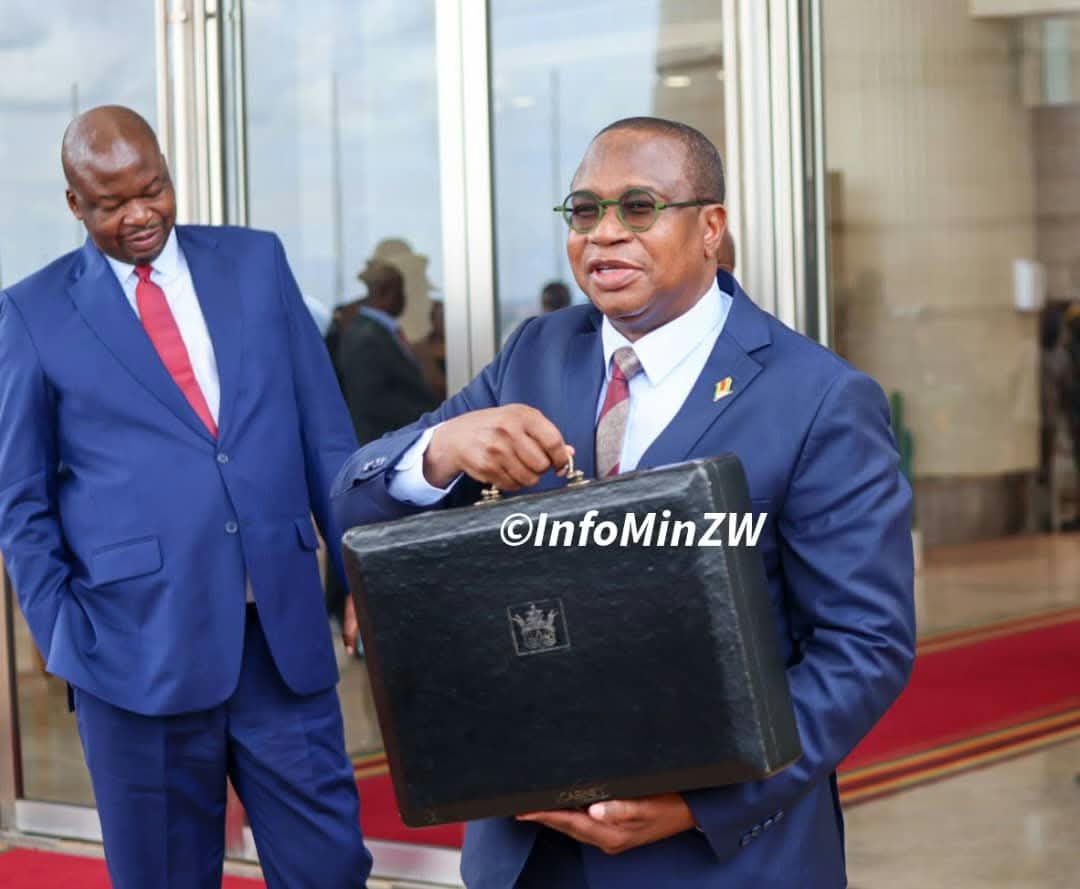
Zimbabwe's projected US$12.5 billion 2027 National Budget has come under scrutiny over whether the country's economic growth and commodity windfall are translating into improved living conditions, with commentators questioning allocations to essential services, the distribution of mineral wealth and the sustainability of Treasury's revenue assumptions.
Finance Minister Mthuli Ncube presented a budget built around economic stability and transformation, projecting economic growth of 3.5% in 2027, down from 5% in 2026 and 8.3% in 2025.
However, the declining growth outlook, coupled with questions about the adequacy of social spending, has revived concerns over the gap between macroeconomic indicators and household realities.
Former legislator Jameson Timba questioned whether the projected growth was delivering tangible benefits to ordinary citizens, particularly in healthcare, education, employment and household purchasing power.
"The 2027 Budget reports economic growth and stability. But where is the citizen's dividend?" Timba asked.
"Growth without improved livelihoods is an incomplete achievement. The citizen must come first."
The figures show mixed movements in allocations to social services, with health receiving a larger nominal allocation while primary education funding remains virtually unchanged from the previous budget.
The Ministry of Health and Child Care has been allocated ZiG35.46 billion in 2027, compared with ZiG30.42 billion in 2026, representing an increase of approximately 16.6%.
Primary and Secondary Education, however, receives ZiG47.70 billion, marginally above the ZiG47.38 billion allocated in 2026, an increase of just 0.7%.
The education allocation is particularly significant given that ZiG46.76 billion was allocated to the same ministry in 2025, meaning the nominal increase over two years has been less than ZiG1 billion.
With ZiG inflation averaging 4% during the first ten months of 2026, the marginal increase in primary education funding raises questions about whether the allocation will preserve the sector's purchasing power, let alone accommodate expanding infrastructure and learning requirements.
The Ministry of Higher and Tertiary Education, Innovation, Science and Technology Development has received ZiG15.04 billion, up from ZiG10.34 billion in 2026, representing an increase of approximately 45.5%.
Social protection has recorded a more substantial increase, with the Ministry of Public Service, Labour and Social Welfare receiving ZiG21.45 billion, compared with ZiG12.67 billion in 2026.
The Ministry of Youth Empowerment, Development and Vocational Training has been allocated ZiG1.86 billion, against ZiG1.67 billion in the previous budget, an increase of approximately 11.6%.
While these increases indicate some expansion in social spending, the allocations alone do not establish whether households will experience improved access to medicines, affordable education, social assistance or employment opportunities.
The question of employment is particularly important given the relatively small allocation to the Ministry of Youth Empowerment in the face of the broader economic challenges confronting young people.
The budget provides for youth participation in the formal economy through vocational training, creative industries and other empowerment programmes, but does not demonstrate how many sustainable jobs the allocation is expected to generate.
The debate has also shifted towards the distribution of Zimbabwe's mineral wealth, with commentator Welldone Masuka questioning why a country endowed with diamonds, platinum and lithium continues to struggle with basic infrastructure and public services.
Masuka argued that the country was failing to translate its mineral resources into broad-based development, contrasting Zimbabwe's mineral wealth with Dubai's infrastructure and Botswana's use of diamond revenues to finance development.
"We don't need a bigger budget. We need a bigger conscience. Until diamonds, platinum and lithium appear in the budget like they appear in the ground, this is not a national budget," he said.
His argument raises questions about the contribution of mining to public finances and the extent to which mineral revenues are being channelled into productive investment.
Treasury's figures show that mineral royalties generated ZiG10.69 billion during the first nine months of 2026, accounting for 4.8% of total tax revenue.
Value Added Tax was the largest contributor at 27.8%, followed by Personal Income Tax at 16.5% and Corporate Income Tax at 12.9%.
The mining sector nevertheless accounted for 16.8% of corporate income tax and 25.3% of customs duty collections, illustrating its wider contribution to the tax system.
The figures complicate the argument that mining is making no contribution to the fiscus, but also raise questions about how much of the sector's overall value is captured through royalties, corporate taxation and other revenue streams.
For 2027, Treasury projects total revenue of ZiG349.5 billion, comprising ZiG335.6 billion in tax revenue and ZiG13.9 billion in non-tax revenue.
Yet the Ministry of Mines and Mining Development has been allocated only ZiG986 million, while the Ministry of Industry and Commerce receives ZiG614 million.
Although these are administrative ministry allocations rather than the total amounts spent on the mining and industrial sectors, they raise questions about the resources available to strengthen mineral governance, beneficiation and domestic industrial capacity.
Treasury says it will continue restricting exports of unprocessed minerals while promoting domestic processing and beneficiation.
However, the budget's ambition to move beyond exporting raw minerals will ultimately be judged by the extent to which Zimbabwe develops domestic processing capacity and retains more value from its mineral production.
Treasury also disclosed that Government made US$229.7 million in payments to three platinum mining houses between January and September 2026.
The payments comprised US$126.3 million in cash and US$103.1 million through tax, duty and infrastructure offsets involving Unki, Mimosa and Zimplats.
The payments were linked to arrears and current obligations associated with Government's Afreximbank loan arrangements, illustrating how financial obligations involving the mineral sector also shape public resource management.
The broader question of whether the commodity windfall can sustain the country's fiscal position was raised by economist Tinashe Murapata, who warned that the 2027 Budget had left important policy weaknesses unresolved.
Murapata argued that Treasury had benefited from higher commodity prices but questioned how the resulting resources were being distributed, particularly against the funding pressures facing the health and education sectors.
He also pointed to the withdrawal of American development assistance and what he described as a US$100 million funding shortfall in the health sector.
Treasury projects development assistance of about US$350 million in 2027, despite acknowledging declining official development assistance flows. However, the budget does not provide a breakdown demonstrating how the projected assistance will address the specific health funding gap raised by Murapata.
He further questioned the sustainability of Treasury's gold price assumptions, particularly its projection of an average price of US$4,250 per ounce in 2027, down from US$4,600 in 2026.
Murapata argued that the assumptions were optimistic, given the market price he cited of approximately US$3,550 per ounce.
Treasury's projection is based on the World Bank's October 2026 commodity outlook, which forecasts an 8% decline in average gold prices in 2027 following a projected 34% increase in 2026.
The concern is that a sharper-than-anticipated decline could weaken mineral receipts, foreign currency inflows and the Government's capacity to sustain expenditure.
Treasury's own assessment acknowledges this exposure, warning that a 25% correction in gold prices could reduce economic growth by approximately 1.5 percentage points and increase the fiscal deficit by around 0.4% of GDP relative to the 2026 position.
Murapata also raised concerns about monetary expansion, particularly the implications of ZiG reserve money growth, arguing that the budget's stability narrative could be undermined if monetary pressures re-emerge.
The issue is significant given Treasury's reliance on continued fiscal and monetary discipline to maintain the exchange rate and price stability it presents as one of its major achievements.
The 2027 Budget projects expenditure of ZiG358.3 billion against revenue of ZiG349.5 billion, resulting in a projected deficit of ZiG8.8 billion, equivalent to 0.5% of GDP.
It also includes a ZiG10.9 billion contingency provision to cushion the economy against potential shocks, particularly the anticipated Super El Niño drought.
Meanwhile, the burden of domestic revenue mobilisation remains another point of contention.
During the first nine months of 2026, tax revenue accounted for 95% of Government receipts, with VAT alone contributing 27.8%.
The Government has proposed increasing the personal income tax-free threshold from US$100 to US$150 and reducing Intermediated Money Transfer Tax rates from 1.5% to 1.25% for ZiG transactions and from 2% to 1.75% for foreign currency transactions.
While the measures offer some relief, they do not fundamentally change the debate over the extent to which ordinary consumers and businesses continue to shoulder the responsibility of financing Government expenditure.

About Oscar Jeke - Reporter
Staff Writer