
How India lifted nearly half a billion people out of poverty in 12 years
India lifted 496 million people out of poverty in 12 years. The Indian Ambassador to Zimbabwe explores what drove this progress and the challenges ahea
A democratic path of development – progress, opportunity and the road ahead
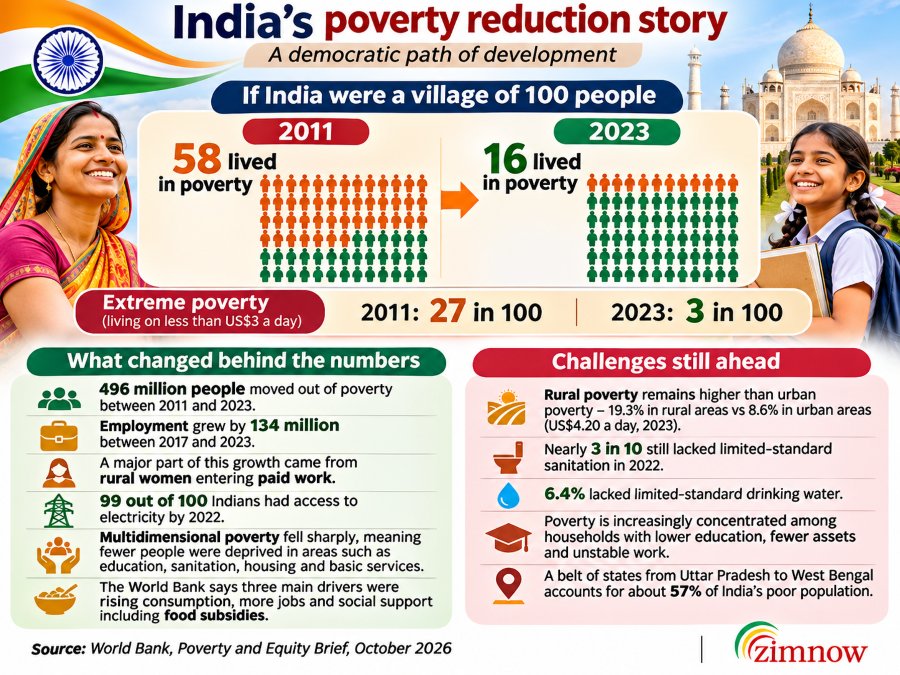
Between 2011 and 2023, an estimated 496 million people in India moved out of poverty. To appreciate the scale of this achievement, consider that in just 12 years, the proportion of Indians living below the lower-middle-income poverty line fell from nearly six in every ten to fewer than two in ten.
It is a remarkable chapter in the development journey of a country that emerged from more than 200 years of colonial rule in 1947 facing widespread poverty, weak infrastructure and severe human development challenges. Life expectancy was just 32 years, literacy stood at approximately 12 percent, and the overwhelming majority of the population depended on agriculture.
Today, India is home to one-sixth of humanity and has emerged as the world's fastest-growing large economy. Throughout its democratic development journey, India has remained mindful of the importance of spreading the gains of economic growth among its people. Our leadership firmly believes that no one should be left behind.
While India's achievements in infrastructure, digital technology and emerging fields such as artificial intelligence attract considerable attention, what often goes unappreciated is the remarkable progress made in alleviating poverty.
The World Bank's October 2026 Poverty and Equity Brief recognises India as having recorded one of the fastest declines in poverty in the world over the past decade.
Beyond the income figures
Between 2011 and 2023, the share of India's population living below the lower-middle-income poverty line of US$4.20 a day fell from 57.7 percent to 16.1 percent. Extreme poverty, measured at US$3 a day, declined from 27.1 percent to just 2.6 percent.
Both thresholds are measured using 2021 purchasing power parity, which takes into account differences in what money can buy in different countries.
However, poverty is not simply about how much money a person has. It is also about whether a family has access to education, electricity, clean water, sanitation and other essentials of a dignified life.
The Oxford Poverty and Human Development Initiative's measure of multidimensional poverty in India declined from 53.8 percent in 2005-06 to 16.4 percent in 2019-21. Using its own measure, the World Bank recorded multidimensional poverty at 15.5 percent in 2022-23.
Although these measures cover different periods and use different methodologies, they point towards a substantial improvement in people's living conditions.
By 2022, 99 out of every 100 Indians had access to electricity. For a household, electricity means children can study after sunset, food can be refrigerated and small enterprises can extend their productive hours.
Challenges remain in other basic services. In 2022, nearly three in ten Indians still lacked sanitation meeting limited-service standards, while 6.4 percent lacked drinking water meeting such standards.
When economic growth reaches the household
What has driven this transformation?
The World Bank identifies three broad factors: rising household consumption, increased employment, particularly among women, and expanded social support, including food subsidies.
Between 2017 and 2023, the number of people in employment increased by about 134 million, nearly twice the increase in the working-age population.
A significant contribution came from rural women entering paid work. For a household previously dependent on a single earner, an additional income can make an important difference to its ability to purchase nutritious food, educate children, meet healthcare costs and build savings.
Social transfers, including food subsidies, have also played an important role in supporting vulnerable households.
Significantly, both rural and urban households experienced substantial improvements in welfare, with faster progress in rural India helping to narrow the gap between the two.
India's experience demonstrates the importance of economic growth translating into tangible improvements in the daily lives of ordinary citizens.
The unfinished task
However, our task is not yet finished, and formidable challenges remain.
Poverty is increasingly concentrated among households with lower levels of education, fewer assets, limited access to stable employment and a higher number of dependants relative to income earners.
Nearly one in five rural Indians remained below the US$4.20 poverty line in 2023, compared with fewer than one in ten urban residents.
A belt of states stretching from Uttar Pradesh to West Bengal accounts for about 57 percent of India's poor population. Creating productive employment opportunities in these regions will be particularly important in the next phase of our development journey.
The challenge is no longer simply to create more jobs, but to create better jobs that offer higher productivity, stronger earnings and greater security.
Increasing women's participation in the workforce, expanding opportunities for young people and creating quality employment outside agriculture in rural areas will be central to sustaining our progress. Steps are already underway to address these concerns.
Building on the gains
The World Bank's assessment should be seen both as an acknowledgement of India's substantial progress and as a guide to the work that remains to be done.
Our experience demonstrates how economic growth, expanding employment and targeted social support can work together to reduce poverty on an unprecedented scale.
The priority now is to ensure that these gains are shared equitably, reaching households and regions where deprivation persists.
Moving people out of poverty is a remarkable achievement. Enabling them to build secure, productive and fulfilling lives is the next imperative.
It is through this continued commitment to inclusive development that India can translate its achievements in poverty reduction into a lasting foundation for widespread and sustainable prosperity.
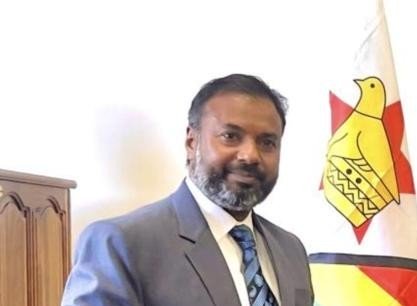
The author is the Ambassador of India to the Republic of Zimbabwe.

About Shri Bramha Kuma
Staff Writer