
Richbasin Mine Under Fire For Riverbed Mining
An investigation has exposed granite mining operations linked to Richbasin Mine extending into the bed of the Mazowe River
Philemon Jambaya and Nyashadzashe Ndoro in MTAWATAWA, Mashonaland East
....EMA yet to establish enforcement action as mining activities raise fresh questions over riverbed protection and rehabilitation drive_
An investigation has exposed granite mining operations linked to Richbasin Mine extending into the bed of the Mazowe River, raising fresh questions over the enforcement of Zimbabwe's riverbed mining prohibition and the environmental accountability of companies operating in the country's extractive industry.
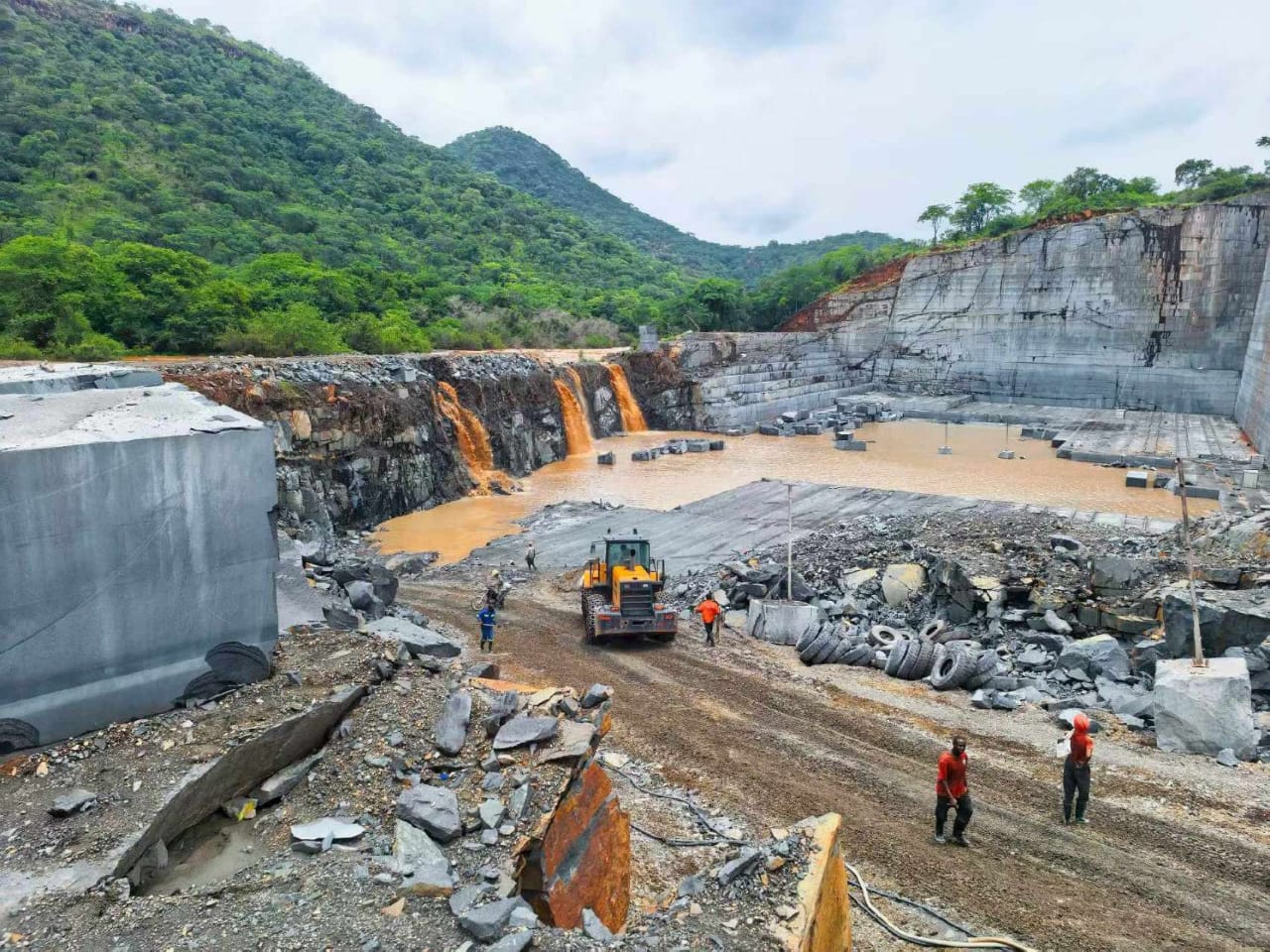
The aerial footage, reviewed as part of an investigation into mining activities along the river, shows exposed bedrock, active excavation and machinery operating within the river channel, with visibly disturbed and turbid water downstream of the mining area.
The developments come as government intensifies efforts to rehabilitate 17 rivers severely degraded by mining activities, with Mazowe among the waterways earmarked for restoration under an emergency intervention programme.
Richbasin, which operates granite extraction and processing activities in the Mtawatawa area, has been promoted as a beneficiary of Zimbabwe's mineral beneficiation drive through its granite cutting and polishing plant in Mutoko.
The facility reportedly processes approximately 70 tonnes of granite daily for export to international markets, including Poland, China, Germany and the United States.
However, the drone footage raises questions about the environmental implications of the company's extraction activities, particularly where mining operations appear to extend into a river system already grappling with extensive degradation.
A separate ground survey of the area also observed makeshift camps, tents and rudimentary mining equipment along the riverbank, with shallow pits left behind by artisanal gold miners operating approximately 10 metres from Richbasin's granite mining operations.
A local villager, who requested anonymity, said the gold panners frequently operated at night before abandoning their tents and excavation pits during the day.
“They come at night, dig the riverbed and leave tents behind,” the villager said. “During the day you can see the pits and the tents. No one is stopping them.”
The presence of artisanal miners alongside the granite extraction operations points to multiple sources of disturbance along the same stretch of the river, complicating efforts to establish accountability and prevent further environmental damage.
Zimbabwe introduced Statutory Instrument 188 of 2024, which prohibits alluvial mining and related prospecting activities in or along rivers and public streams, regardless of previously issued permits or environmental authorisations.
The regulations were introduced following growing concerns over the destruction of river systems through uncontrolled mining, particularly gold panning, which has contributed to extensive siltation, erosion and the disruption of natural waterways.
While the legislation specifically targets alluvial mining, questions have also emerged over the nature and legality of other extraction activities taking place within active river channels.
The distinction is important in the case of Richbasin, given that the operations captured in the footage involve granite extraction rather than conventional gold panning.
The precise legal classification of the activities, including whether they fall within the prohibition under SI 188 or contravene other environmental and mining regulations, requires clarification from the relevant authorities.
Nevertheless, the presence of heavy machinery and excavation within the river channel raises serious environmental questions, particularly given the Government's position that further degradation of affected waterways must be prevented.
Environmental Management Agency (EMA) spokesperson Amkela Sidange said the agency was looking into reports of mining activities along the river.
“I still need to check with the local office in that area on efforts made to address the said riverbed mining,” Sidange said.
Her response comes amid concerns over whether existing enforcement mechanisms are being adequately deployed to address mining activities in environmentally sensitive areas.
Under SI 188 of 2024, authorities are empowered to take enforcement action against prohibited alluvial mining, including the seizure of minerals, equipment and vehicles involved in contraventions, subject to the applicable legal procedures.
The government has also strengthened its response to environmental degradation through a nationwide river rehabilitation programme, following the declaration of a state of disaster covering 17 river systems damaged by mining activities.
The Mazowe River is among the affected waterways, alongside the Murowodzi River, which has also experienced extensive environmental disturbance.
In February 2026, a Government delegation led by Deputy Chief Secretary in the Office of the President and Cabinet, Engineer Amos Marawa, visited a five-kilometre pilot rehabilitation project along the Murowodzi River, between Mazowe and Glendale, to assess its potential for replication across the country.
The project, spearheaded by Prevail International, had addressed approximately three kilometres of the most severely damaged sections at the time of the assessment, according to the contractor.
It had also created employment for 40 local residents.
EMA, which participated in the assessment, welcomed the restoration initiative but emphasised the importance of continuous rehabilitation, particularly within the extractive industry, where prompt backfilling and restoration of disturbed land can reduce the scale and cost of environmental damage.
The government subsequently extended the state of disaster declaration to allow additional time for rehabilitation works that had not been completed to the satisfaction of the inter-ministerial committee overseeing the programme.
However, the reported mining activities at Mtawatawa raise questions about the sustainability of such interventions if extraction continues to disturb sections of the same river systems targeted for restoration.
The environmental implications of granite mining extend beyond the immediate excavation site.
Quarrying activities can expose loose soil and rock material, increase sediment loads in waterways and destabilise riverbanks, particularly where excavation takes place close to or within river channels.
Dust generated during drilling, blasting, crushing and stone processing can also contribute to environmental pollution, while fuel and lubricant leaks from heavy machinery present additional risks to water quality.
Research into the environmental effects of quarrying has documented the potential for sedimentation, erosion, habitat destruction and contamination of aquatic ecosystems.
The Minerals Marketing Corporation of Zimbabwe has previously raised concerns over the environmental footprint of granite extraction, including vegetation clearing, rubble dumping, disruption of natural river flows and pollution, calling for stronger enforcement of environmental regulations.
The consequences of upstream mining activities are particularly significant for the Mazowe River, which supports agricultural production, irrigation and other livelihoods in surrounding communities.
Mazowe Dam's water levels have also come under pressure, with figures reported in February 2026 placing the reservoir at 11.3 percent capacity, against a national average of 90.5 percent.
A subsequent Government assessment reportedly placed the dam at 14.2 percent, with extensive siltation, mining and deforestation cited among the factors contributing to the deteriorating conditions.
The Zimbabwe Agricultural Think Tank has also raised concerns over upstream mining activities and their contribution to siltation and disruptions to natural hydrological flows.
The water challenges have implications for agricultural production in Mazowe District, which planted 16,660 hectares of wheat during the previous season, the highest area in Mashonaland Central.
The district has since been forced to reduce its wheat planting target to 12,000 hectares amid concerns over water availability.
Against this background, further disturbance of the Mazowe River could undermine efforts to restore the waterway and protect the livelihoods of communities dependent on its resources.
Richbasin's operations also bring into focus the broader challenge of balancing mineral beneficiation and economic development with environmental protection.
The company's Mutoko cutting and polishing plant has been presented as an example of domestic value addition, with its operations supporting the Government's drive to process minerals locally rather than exporting raw materials.
The facility has attracted visits from Government officials and foreign delegations as part of efforts to showcase Zimbabwe's investment opportunities in the granite industry.
However, mineral beneficiation cannot be pursued at the expense of environmental compliance, particularly where extraction activities potentially affect public water resources and surrounding communities.
The Mutoko North legislator has previously criticised granite mining companies over environmental and community obligations, including failure to rehabilitate roads and adequately invest in communities hosting their operations.
Meanwhile, authorities have also sought to introduce more structured arrangements for artisanal miners elsewhere in Mtawatawa.
At Ball Mine, an initiative involving the Zimbabwe Miners Federation and a Chinese investor has reportedly brought hundreds of artisanal miners into a more regulated mining framework, with arrangements including a police post and a Fidelity Gold Refinery office.
Such initiatives demonstrate the potential for improving oversight and security within the artisanal mining sector.
However, formalisation does not exempt operators from environmental requirements, particularly where mining activities take place in prohibited or environmentally sensitive locations.
The situation at Mtawatawa therefore presents authorities with a two-pronged enforcement challenge: addressing illegal gold panning along the Mazowe River while establishing whether granite extraction activities within the river channel comply with the country's mining and environmental laws.
With the Government investing in the rehabilitation of degraded waterways, the effectiveness of the programme will ultimately depend on its ability to prevent further environmental damage while holding responsible operators accountable.
The drone footage has brought the activities at Mtawatawa into sharper focus. What remains unclear is whether the relevant authorities had authorised the excavation visible in the riverbed, what environmental safeguards were in place and whether any enforcement action has been taken.
For the communities dependent on the Mazowe River, the issue extends beyond competing mining interests. It is about protecting a critical water resource whose continued degradation threatens agriculture, livelihoods and the long-term sustainability of the surrounding environment.

About Philemon Jambaya
Editor