
The Packaging Is Perfect
The packs were neatly wrapped. That is the first thing to say about the pavement butchery in Chitungwiza
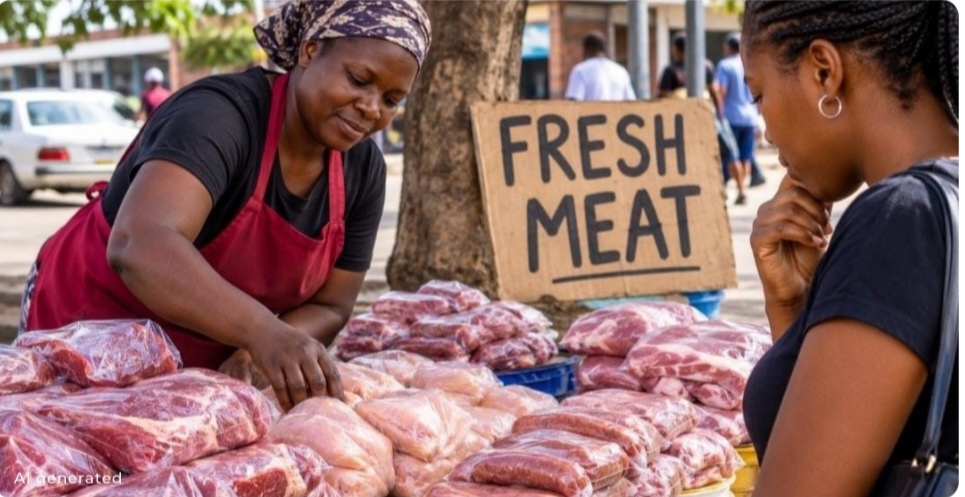
The packs were neatly wrapped. That is the first thing to say about the pavement butchery in Chitungwiza.
Beef, chicken, sausages and pork sat in rows on top of buckets. What the buckets held was not clear. There was no refrigeration. There was no scale. Nobody had weighed any of it.
It was well after working hours. No police were in sight.
Take a vendor and call her Mai Tariro. She is a composite, but she is not hard to find. She wraps well. She arranges well. She wants the customer back on Friday.
Her care is real. It is also beside the point.
Wrapping tells a buyer that someone paid attention. It does not say where the animal was slaughtered or who inspected the meat before it was cut. Those answers sit upstream. The buyer sees the wrapping and fills in the rest.
The pavement does the job inspection is meant to do. It does so on trust.
This trade is not permitted. Under the Public Health Act, meat may be sold only if the animal was slaughtered at a registered abattoir and passed as fit by an inspector. Nothing on that pavement showed that either had happened.
There is also a legal way to sell on the street. The government charges vendors to trade from designated points. Pavements are not designated points. The vendor at a designated point pays for her place. Mai Tariro pays nothing. She sells outside the arrangement, beside people who are inside it.
So the rule exists and the trade continues. Both are true at once.
The rule had gone home for the day. The trade had not.
Mai Tariro did not create this. She found a gap between what the rules require and what anyone enforces, and she set up in it. A raid would remove her and leave the demand. Tolerance leaves both in place. Neither is a policy.
Meanwhile, the buyer is the only inspector on duty. She checks the colour. She checks the smell. She asks if it is fresh, and the vendor says it is. Both of them mean it.
At the end of the day, Mai Tariro will cover what is left and set it back on the buckets. The buckets will keep what they hold.
Simbarashe Namusi is a media expert writing in his personal capacity.

About Audrey Galawu - Assistant Editor
Staff Writer