









The United Nations Development Programme says more than 1.1 million smallholder farmers benefited from the first phase of Zimbabwe’s Resilience Building Fund, as the agency moves to scale up climate adaptation, food security, and natural resource management initiatives under the programme’s second phase.
In a statement issued during a joint assessment mission with government officials and development partners, UNDP said the second phase builds directly on the progress recorded since the programme’s launch, with a stronger focus on strengthening vulnerable rural communities against climate shocks.
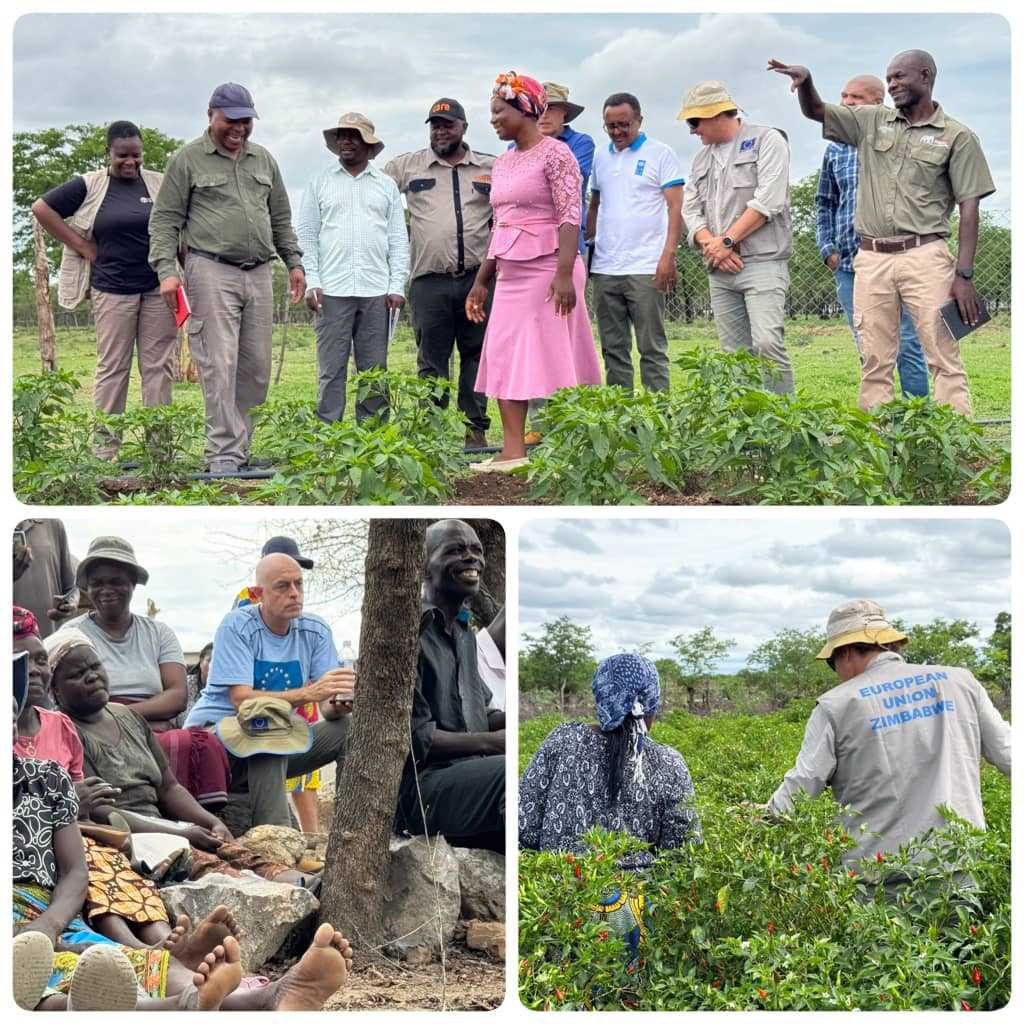
UNDP noted that partnerships with the European Union Delegation to Zimbabwe, CARE Zimbabwe, and several other implementing organisations had been central to Phase One’s success. The joint mission is currently assessing the rollout and impact of ongoing resilience-building projects across various districts.
One standout success is in communities around Gonarezhou National Park, where small-scale farmers—among them a grower identified as Evelyn—have transformed chilli production into a lucrative climate-smart livelihood.
Related Stories
According to UNDP, some farmers are earning up to US$6,000 in a single season through chilli exports supported by conservation-linked value chains.
UNDP added that surplus chilli from the same crop is also being used to mitigate human–wildlife conflict by deterring elephants from raiding crops. The model, implemented in partnership with the Gonarezhou Conservation Trust and Kacholo, is expected to be replicated in other districts to promote both income generation and conservation.
The agency said the second phase of the RBF will intensify investments in sustainable natural resource management, community-based climate adaptation, and disaster-risk reduction—areas it described as critical for safeguarding rural livelihoods in the face of worsening climate variability.
“Strengthening resilience ensures that no one is left behind, including those in hard-to-reach areas,” UNDP said, noting that the mission’s second day had already revealed “inspiring stories of transformation” from participating communities.
The Resilience Building Fund remains one of Zimbabwe’s largest multi-partner climate adaptation initiatives, pooling support from government, international donors, and civil society to strengthen long-term livelihood security in climate-vulnerable regions.









Leave Comments