










Rutendo Mazhindu | Reporter
Most people imagine sabhukus as elderly custodians of land and lineage, not a digital startup founder and boss. At an age where many are still chasing city rent, Shaun Chitsiga is building an ecosystem: farms, orchards, digital infrastructure, livestock, climate-smart agriculture, now an award-nominated model of community development.
Shaun, who leads his village as Sabhuku, has become a disruptor. He didn’t return to kumusha to retire, he returned early, deliberately, to create.
📌Nominee — Mash Central Achievers Awards 2025
📌 Founder — Bizani Media (bizani.co.zw)
📌 Installer of Starlink Internet for entire village
This is the rural future Gen Z didn’t see coming.
One of Shaun’s most defining decisions was installing Starlink, not just for himself, but free for the whole village.
It means schoolchildren research online. Farmers check weather patterns. Families video-call diaspora relatives. And remote work, once a privilege of the city, is now possible from rural enclaves.
With connectivity embedded into a farming community, Shaun’s project hints at something bigger:
Could Zimbabwe’s future gig economy grow from rural land instead of urban concrete?
Young software developers, designers, marketers and remote workers might not need Avondale or Borrowdale. They may choose Madziwa, Dotito, Chiweshe, Mt Darwin, if connectivity follows land.
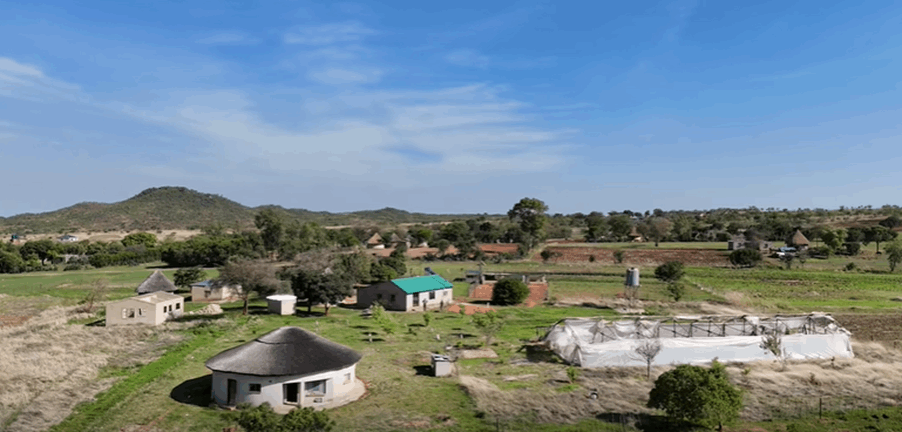
Shaun is already living that thesis getting the last laugh on the jokes about those who leave town for the villages.
Instead of viewing kumusha living as admitting defeat, Shaun says more young people should see the potential.
"Rural areas offer many opportunities especially in productive sectors like farming and mining. Unfortunately, some people still perceive going back kumusha as ‘kupera’.”
But he warns that one has to plan and marshall resources, not to drift in with nothing and expect miracles.
“Start with what you have. Most Zimbabweans have an ancestry or tribal land. Go there, build relationships with your kinsmen and get a piece of land to settle. A rural kitchen hut can be built for less than $150, that could be your start. While we aspire to have fancy buildings, amenities like solar etc, we have to be humble enough to start small. For example my homestead has been years in the making and it took combined family effort and a long time,” said Shaun.
Related Stories
His model is an economic strategy. Food from the land reduces household costs. Surplus from the land generates income. Labour stays local. Wealth circulates. Value adds.
“Savings come in the food you produce which we don't have to buy anymore. We sell the excess and make a bit of money to pay workers and buy inputs.”
Shaun insists that something priceless still lives kumusha, something that those in the cities have forgotten.
“Simple norms like greeting each other have eroded. I see people who live in the same gated communities in the city who don't even speak to each other… and kumusha such simple values are still highly valued.”
Neighbours speak. Families assist. Strangers become kin. The world is loud but kumusha is warm.
Chitsiga says he is establishing a multi-generational estate, an impossible option for most young people is the obtaining city property economics.
“For me rural life is my retirement and legacy. It’s better to start early when you have energy… I don’t think I’d be able to afford a 4 hectare estate in town with additional 8 hectares productive farmland.”
By treating land like a start-up, not a fallback plan, Shaun is reversing Zimbabwe’s hierarchy of aspiration.
Shaun believes tech adoption is the game changer that the young bring to the rural areas.
“We’re adopting modern farming methods like paddocking, agroforestry and conservation agriculture. Young people have a key role to play because they are tech savvy.”
And this is where his media background and tech literacy matter, digital culture does not need to abandon rural identity. It can live there. Grow there. Look cool there.
He goes back to the land, but refuses to go backwards.
Shaun Chitsiga is not a case of “pega mudhara” sabhuku. He is the prototype of a connected, productive, community-driven rural future.
Nature + Tech.
Livestock + Wi-Fi.
Egg incubators + online learning.
A sabhuku with Starlink and an award nomination to prove rural innovation is no longer fringe.
Zimbabwe could soon learn that the next big tech-creative wave may come from villages with Wi-Fi connectivity signal and seedlings.










Leave Comments