





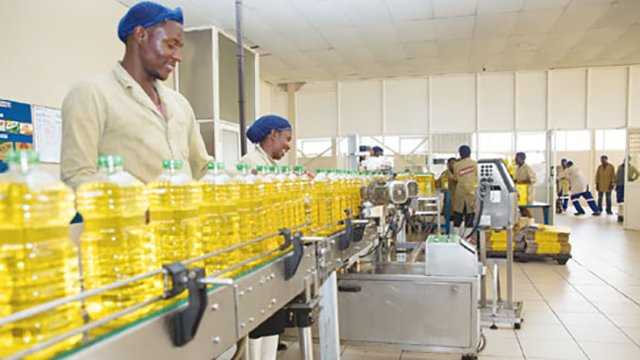
Several manufacturing projects registered under the Zimbabwe Investment and Development Agency are failing to progress beyond approval stages, raising fresh questions over policy execution and institutional accountability in the country’s industrialisation drive.
According to the ZIDA projects document, a significant number of manufacturing investments remain at feasibility, planning or early development stages, despite being approved and publicly announced as part of Zimbabwe’s re-industrialisation agenda.
ZIDA notes that while investor interest in manufacturing remains strong, “a number of projects have experienced delays in implementation due to funding constraints, lengthy approval processes and challenges in securing off-take agreements.”
The document shows that food processing, agro-manufacturing, pharmaceuticals, steel fabrication and consumer goods projects dominate the manufacturing pipeline, but many have yet to reach construction or production phases. Several projects approved between 2022 and 2024 are still listed as “awaiting financial closure” or “pending fulfilment of pre-implementation conditions.”
ZIDA states that “access to long-term and affordable financing remains a key impediment to project execution, particularly for capital-intensive manufacturing ventures,” with local financing conditions failing to match the scale required for industrial projects.
Policy coordination gaps are also highlighted as a constraint. The agency acknowledges that “delays in permits, licensing and inter-agency clearances continue to affect project timelines,” despite reforms intended to streamline investment processes under the one-stop investment framework.
Related Stories
The document further concedes that some approved projects stalled after initial registration, noting that “a number of investors have not proceeded to implementation following approval, citing changes in market conditions and cost structures.”
In the manufacturing sector, this has resulted in a widening gap between announced investment figures and actual factory development on the ground. ZIDA records several projects as “approved” but still lacking evidence of site development, equipment importation or workforce mobilisation.
ZIDA also flags foreign currency availability as a recurring issue, stating that “foreign exchange constraints have affected the procurement of machinery and raw materials critical for manufacturing start-up and expansion.”
Despite these challenges, the agency maintains that the manufacturing sector remains a priority, describing it as “central to value addition, import substitution and employment creation.”
However, the document makes clear that without faster implementation, the sector’s contribution will remain below potential.
The stalled projects raise broader accountability questions around whether existing investment policies are translating into operational factories, jobs and exports, or remaining largely on paper.







Leave Comments