






Simbarashe Namusi
Zimbabwe’s problem is no longer scarcity. It is selective abundance.
There is rarely enough money for civil servants’ salaries. None for meaningful salary reviews, none for consistent BEAM support, none for public hospitals that increasingly function as referral points rather than treatment centres.
Nurses are told to be patient. Teachers are told to be patriotic. Patients are told to bring their own gloves.
Yet money appears, reliably and without delay, for luxury.
New vehicles are added to government fleets while health workers struggle to report for duty. International travel is funded with little hesitation while schools send children home over unpaid fees.
Conferences are hosted in five-star hotels as public hospitals run out of basic drugs.
This contradiction is neither hidden nor exceptional. It has become routine.
This is where Zimbabwe’s selective scarcity is most visible. The state pleads fiscal constraint when confronted with social obligations but displays flexibility when comfort, prestige and power are involved.
Each budget cycle repeats familiar language. Resources are limited. The fiscus is under pressure. Belts must be tightened. The belts being tightened, however, are rarely those closest to authority. They belong to the teacher earning in a rapidly eroding local currency, the nurse whose salary no longer reliably covers transport, and the student waiting for BEAM support that often arrives after arrears have already accumulated.
At the top, scarcity appears to apply differently.
In recent years, the cost of a single high-end government vehicle has, in some cases, rivalled what an average nurse earns over several years. That comparison, drawn from publicly reported procurement patterns and salary scales, helps explain why frustration persists despite repeated claims of austerity.
Related Stories
Zimbabweans do not need complex economic models to understand priorities. They can see them reflected in spending choices.
Luxury vehicles are defended as “tools of work”. Foreign travel is framed as “re-engagement”. Allowances are quietly expanded while salary negotiations stall for months. The standard justification is that governance requires these expenditures.
What is rarely explained, with any clarity, is why governance appears to require comfort, while service delivery is expected to survive on sacrifice.
No modern state can function without administration, mobility or diplomacy. The issue is not the existence of such spending, but its scale, timing and insulation from the austerity imposed elsewhere.
That selective logic filters downward.
When hospitals request funding, they are told to innovate. When schools appeal for support, communities are encouraged to contribute. When workers demand living wages, they are reminded of national constraints. Yet when the political class requires convenience or prestige, those same constraints seem to dissolve.
The result is not only economic strain. It is moral imbalance.
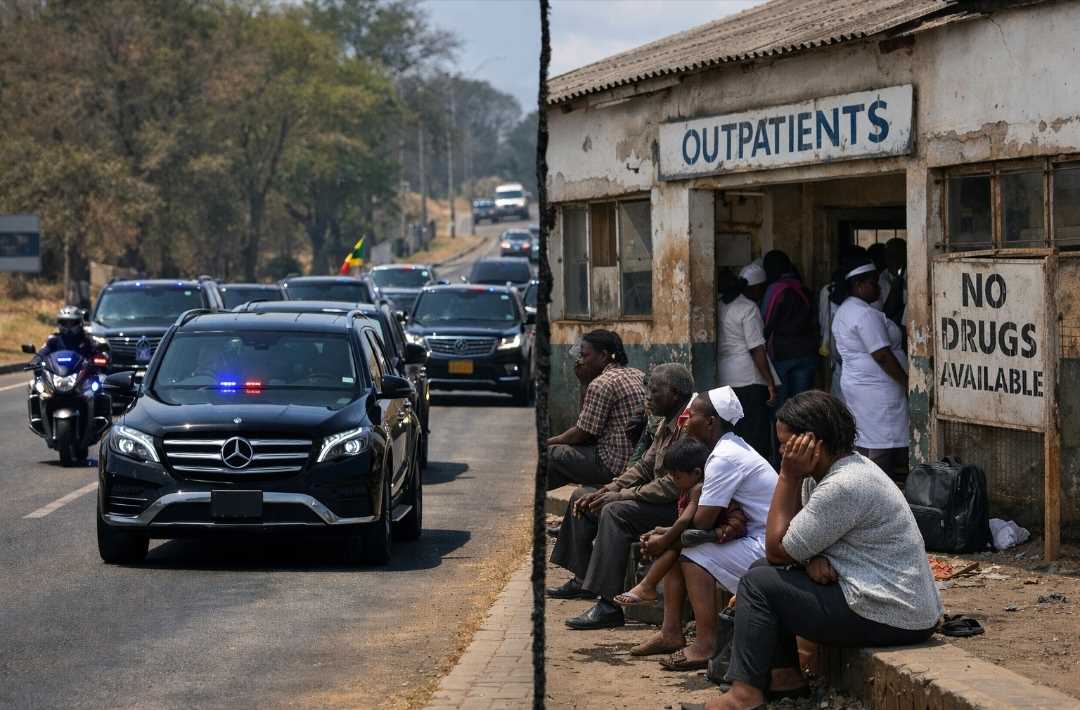
Zimbabweans are not angry because there is no money. They are angry because they can observe where available resources are consistently directed. They see official convoys pass clinics with broken equipment. They read of new acquisitions while BEAM beneficiaries quietly drop out of school. They are lectured on austerity by leaders whose personal exposure to its effects appears minimal.
This pattern is not accidental. It reflects political choices about what, and who, the state prioritises.
Selective scarcity sends a clear signal about value and worth. It suggests that prestige is non-negotiable, while welfare is conditional. It teaches workers that loyalty is expected without reciprocity. It teaches the poor that survival is treated as an individual responsibility rather than a shared national obligation.
Over time, this erodes the social contract. A state that repeatedly prioritises luxury over basics gradually withdraws from its role as guarantor of public welfare. What remains is a government increasingly focused on sustaining itself.
Zimbabwe does not lack resources alone. It lacks alignment between public spending and social need. Until that changes, salary negotiations will continue to feel ceremonial, hospitals will remain under-equipped, and BEAM will remain a promise that arrives too late.
Scarcity in Zimbabwe is not primarily about what is unaffordable. It is about what is considered worth affording.
Simbarashe Namusi is a peace, leadership and governance scholar as well as a media expert. He writes in his personal capacity.










Leave Comments