






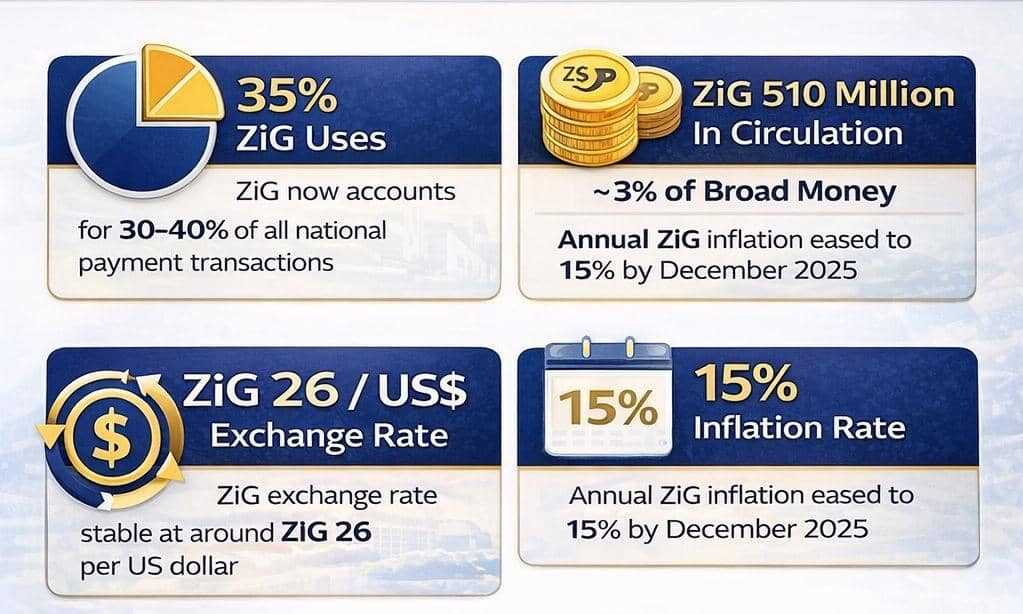
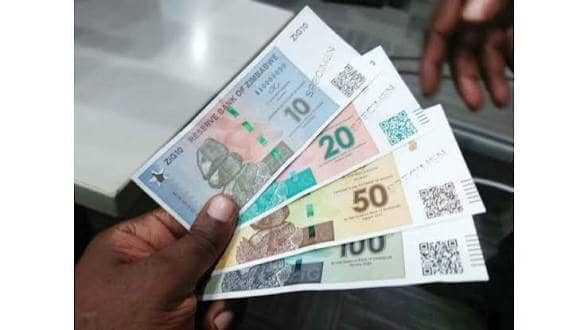
The Reserve Bank of Zimbabwe says the Zimbabwe Gold currency is increasingly being used in the economy, now accounting for between 30 and 40 percent of total national payment system transactions, pointing to growing acceptance in day-to-day payments and domestic trade.
According to the central bank’s key numbers, “ZiG now accounts for 30–40% of all national payment transactions,” with usage currently estimated at 35 percent.
RBZ data also shows that ZiG 510 million is in circulation, representing “~3% of Broad Money,” underscoring the central bank’s tight control over liquidity as part of its currency stabilisation strategy.
On price stability, the RBZ reports that “Annual ZiG inflation eased to 15% by December 2025,” a marked moderation compared to earlier inflationary pressures associated with previous local currencies.
Exchange rate stability has been highlighted as a key anchor of the new currency. The central bank says the “ZiG exchange rate [is] stable at around ZiG 26 per US dollar,” a level it has broadly maintained since the currency’s introduction.
Despite the reported gains in usage and stability, the expansion of ZiG transactions has coincided with complaints of shortages in the market, particularly of physical notes. Businesses and consumers have raised concerns over limited access to ZiG cash, even as electronic transactions using the currency continue to rise.
Related Stories
This has created a gap between digital usage and physical availability, forcing some traders to continue pricing goods and services in foreign currency, especially in the informal sector.
The RBZ has previously maintained that controlling the volume of ZiG in circulation is deliberate, aimed at preventing excess liquidity and protecting the currency from inflationary pressures that undermined earlier local units.
Unlike previous Zimbabwean currencies, which were largely undermined by excess issuance and weak reserve backing, ZiG was introduced with a defined value anchor linked to gold and foreign currency reserves.
Earlier currencies rapidly lost value as confidence eroded, feeding parallel market activity and inflation. ZiG, by contrast, has been characterised by restricted supply, a stable reference exchange rate, and slower inflation, as reflected in the RBZ’s own figures.
While challenges around availability and confidence persist, the data shows ZiG has so far avoided the rapid depreciation that defined earlier local currency regimes, even as Zimbabwe remains partially dollarised.
The central bank says sustaining this trajectory will depend on continued monetary discipline, improved circulation of physical notes and wider acceptance across all sectors of the economy.









Leave Comments