









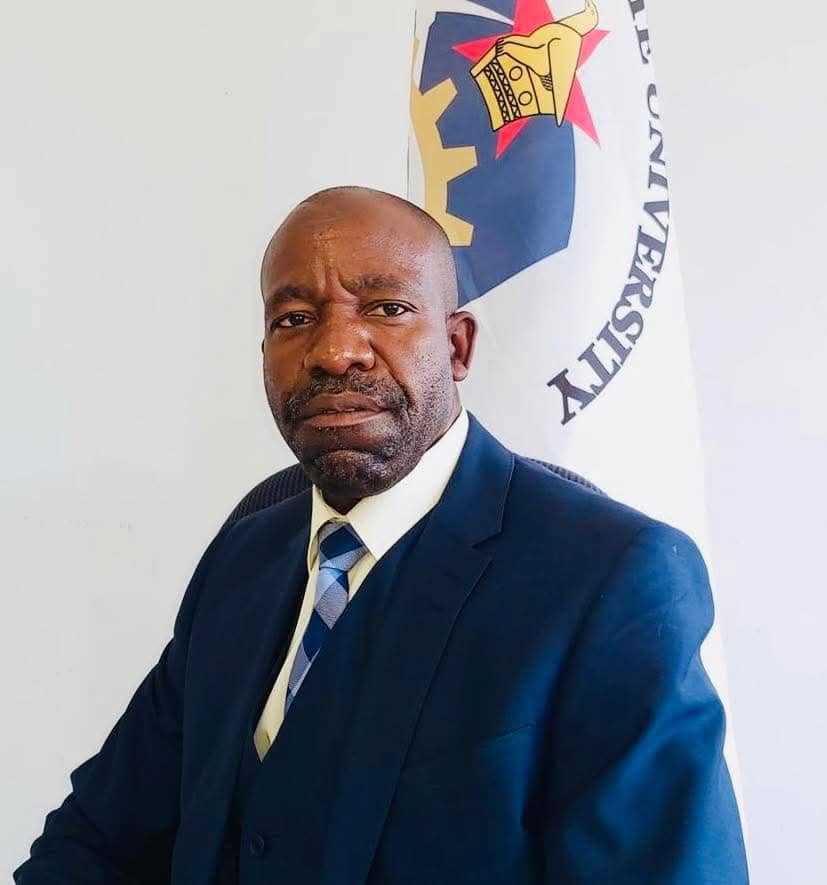
The appointment of Dr Busani Moyo as Acting Pro Vice-Chancellor has cast fresh light on the growing influence of agricultural training institutions in producing national leaders who straddle academia and food production.
Moyo, an alumnus of Esigodini Agricultural College, said his rise to senior university leadership was anchored in the technical grounding he received at the college more than three decades ago.
“Esigodini was a true eye-opener for me. In any journey, the first step determines the destination.
EAC was that vital first step; it provided the foundation and the cornerstone for everything I have achieved in my professional life,” he said.
His career path has renewed debate on the relevance of vocational and agricultural colleges at a time when Zimbabwe is pushing for skills-driven growth and food security. Moyo enrolled at Esigodini in 1993, completing a Certificate in Agriculture in 1996, before joining the Department of Veterinary Services, where he worked his way up from Veterinary Extension Assistant to Animal Health Inspector.
While in government service, he pursued further studies, obtaining a Diploma in Animal Health and Production from Mazowe Veterinary College and later a BSc in Agricultural Management through the Zimbabwe Open University. He later joined the Department of Livestock Production and Development as a District Livestock Specialist before transitioning into full-time research.
Related Stories
Moyo went on to earn an MSc in Agriculture and a PhD in Animal Science from the University of Fort Hare, credentials that propelled him into academia. His academic journey included senior roles at Solusi University and later at Gwanda State University, where he became Founding Chairperson of the Department of Animal Science, Founding Executive Dean of the Faculty of Agriculture and, in March 2025, Acting Pro Vice-Chancellor.
Beyond the lecture room, Moyo continues to practise what he teaches. On his farm in Mbalabala, Umzingwane District, he records average maize yields of seven tonnes per hectare and runs a beef herd with a 70 percent calving rate, achievements he attributes to applying scientific research on the ground.
“I believe in research that speaks to the soil and the farmer,” he said, adding that academic knowledge must translate into measurable productivity.
He urged young people to view agricultural training as a pathway to leadership rather than a fallback option.
“EAC exists to bridge the gap in farming knowledge and create technically oriented experts. I encourage students to take this course wholeheartedly,” Moyo said.
“Employ an EAC graduate if you want a truly productive and skilled workforce.”









Leave Comments