









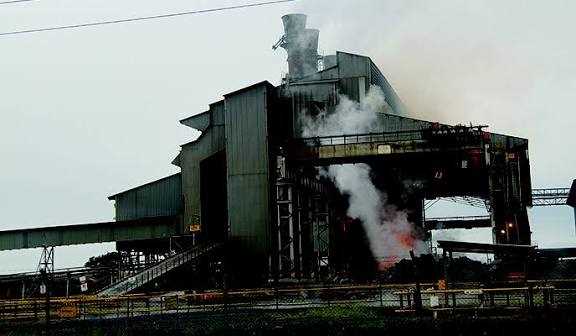
The High Court has dismissed an interpleader application by Chinazim International Smelting Company (Private) Limited, ruling that assets it claimed ownership of were lawfully attached in execution of a judgment in favour of Zimasco (Private) Limited.
Justice Munamato Mutevedzi found that the claimant had failed to prove ownership of property attached by the Sheriff of the High Court following a judgment obtained by Zimasco against Chinazim International Minerals Corporation (Private) Limited under case number HC3201/17.
The matter arose after the Sheriff, acting on Zimasco’s instructions, attached a wide range of vehicles, machinery and equipment at a chrome processing plant.
The attached property included trucks, front-end loaders, excavators, generators, a weighbridge, chrome ore and a chrome wash plant.
Chinazim International Smelting Company subsequently laid claim to all the attached goods, arguing that it was a separate legal entity from the judgment debtor and that it had purchased the property from Chinazim International Minerals Corporation in July 2018.
This prompted the Sheriff to institute interpleader proceedings in terms of the High Court Rules.
In opposing the claim, Zimasco argued that the claimant and the judgment debtor formed part of the same economic entity, controlled by related individuals, and that the interpleader claim was a collusive attempt to frustrate the execution of a valid court order.
Zimasco further submitted that similar claims by related entities over the same property had already been dismissed by the High Court in earlier interpleader proceedings in 2025.
Related Stories
Justice Mutevedzi held that the claimant failed to rebut the presumption of ownership arising from the fact that the property was attached while in the possession of the judgment debtor.
The court noted that the Sheriff’s return showed that the assets were pointed out by an employee of the judgment debtor, creating a presumption that they belonged to it.
The court also found that the agreement of sale relied upon by the claimant was unreliable. Evidence from the Central Vehicle Registry showed that several vehicles listed in the purported 2018 sale agreement were either imported or registered years later, while others remained registered in the name of the judgment debtor.
The court concluded that the agreement of sale was fabricated and designed to defeat execution.
In addition, the court accepted Zimasco’s argument that previous High Court decisions declaring the same property executable constituted judgments in rem, binding on all parties. As a result, the claimant was estopped from bringing a fresh claim over the assets.
“The claimant was not only estopped from pitching this claim to the property but, even if it had not been so estopped, it failed to prove ownership on a balance of probabilities,” Justice Mutevedzi ruled.
The court dismissed the interpleader claim, declared the attached goods executable, and ordered Chinazim International Smelting Company to pay costs for both the Sheriff and Zimasco on the attorney-and-client scale, citing what it described as reprehensible conduct aimed at frustrating the course of justice.
The ruling clears the way for Zimasco to proceed with execution of the judgment using the attached assets.







Leave Comments