






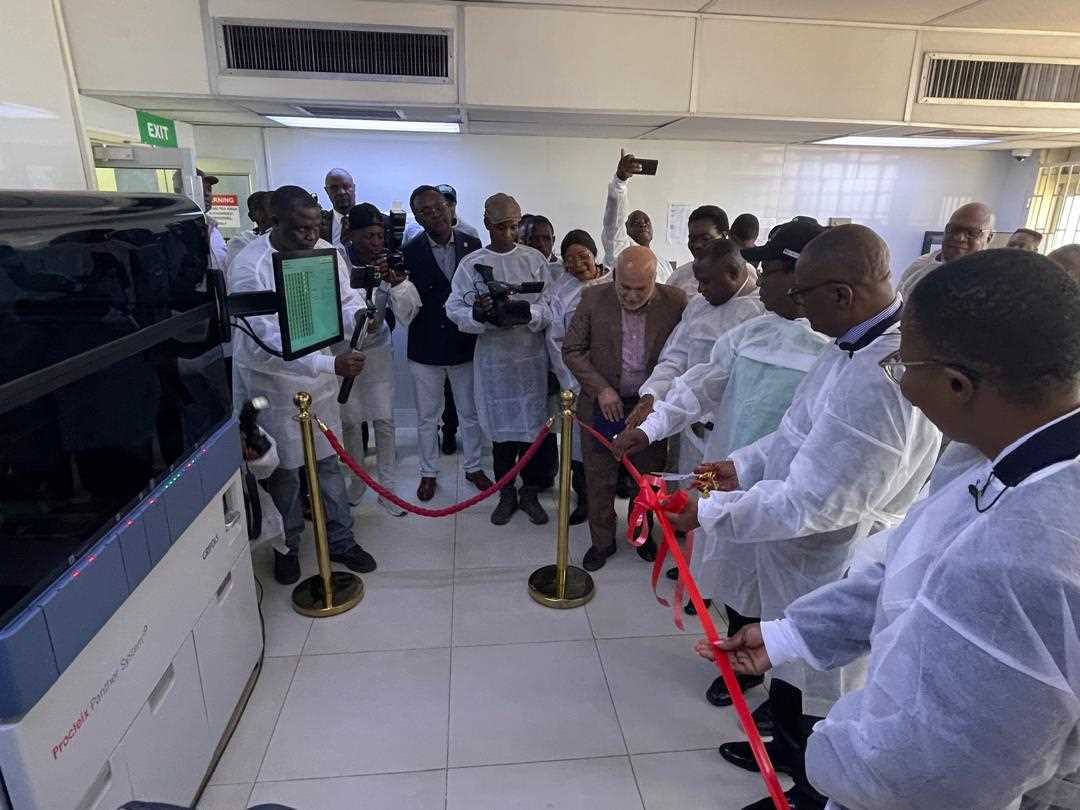
The Ministry of Health and Child Care has commissioned a Nucleic Acid Testing machine at the National Blood Service Zimbabwe, a move expected to significantly enhance the safety of blood transfusions across the country.
The advanced technology enables the early detection of viral genetic material, allowing infections such as HIV, Hepatitis B and Hepatitis C to be identified within days of exposure. This shortens the diagnostic window and markedly reduces the risk of transfusion-transmitted infections.
Speaking at the commissioning ceremony, Health and Child Care Minister Douglas Mombeshora said the milestone demonstrates Zimbabwe’s commitment to harnessing innovation to strengthen HIV prevention efforts and build a resilient health system.
“Today, with the introduction of nucleic acid testing, Zimbabwe takes a decisive step forward in ensuring that every unit of blood transfused in our health facilities meets the highest standards of safety that modern technology can provide,” Mombeshora said.
“Nucleic acid testing builds on our strong foundation by detecting viral genetic material much earlier, dramatically reducing the diagnostic window and minimising the risk of infection transmission. With this technology, HIV infections occurring within 48 to 72 hours can now be identified, long before conventional methods would detect them,” he added.
The minister said the technology complements existing screening systems and reinforces the country’s commitment to providing safe blood.
Related Stories
“Safe blood is the backbone of any health system. It sustains maternal and newborn care, trauma and emergency services, paediatric care, surgery, oncology and renal treatment. Blood safety is non-negotiable, and the introduction of nucleic acid testing is a game-changer,” Mombeshora said.
National AIDS Council chief executive Bernard Madzima said supporting the acquisition of the NAT machine was a clear public health priority.
“It was a straightforward decision for us. Both management and the board recognised its importance. When NBSZ approached us for support to acquire nucleic acid testing equipment, we knew this was what the country needed,” Madzima said.
“We entered into this collaboration and will continue to support them until they are fully self-sustaining,” he added.
On the sidelines of the event, National Blood Service Zimbabwe chief executive Lucy Marowa described the machine as transformative for blood screening.
“It detects genetic material, meaning it identifies a virus for exactly what it is. There is no ambiguity,” Marowa said.
“When we test blood samples, the system uses probes—short pieces of DNA or RNA—that search for matching genetic material in the blood. If genetic material is detected, it means the virus is actually present,” she explained.
Health authorities say the commissioning of the NAT machine places Zimbabwe among countries using cutting-edge technology to safeguard blood supplies, strengthening patient safety and public confidence in the national transfusion system.








Leave Comments