





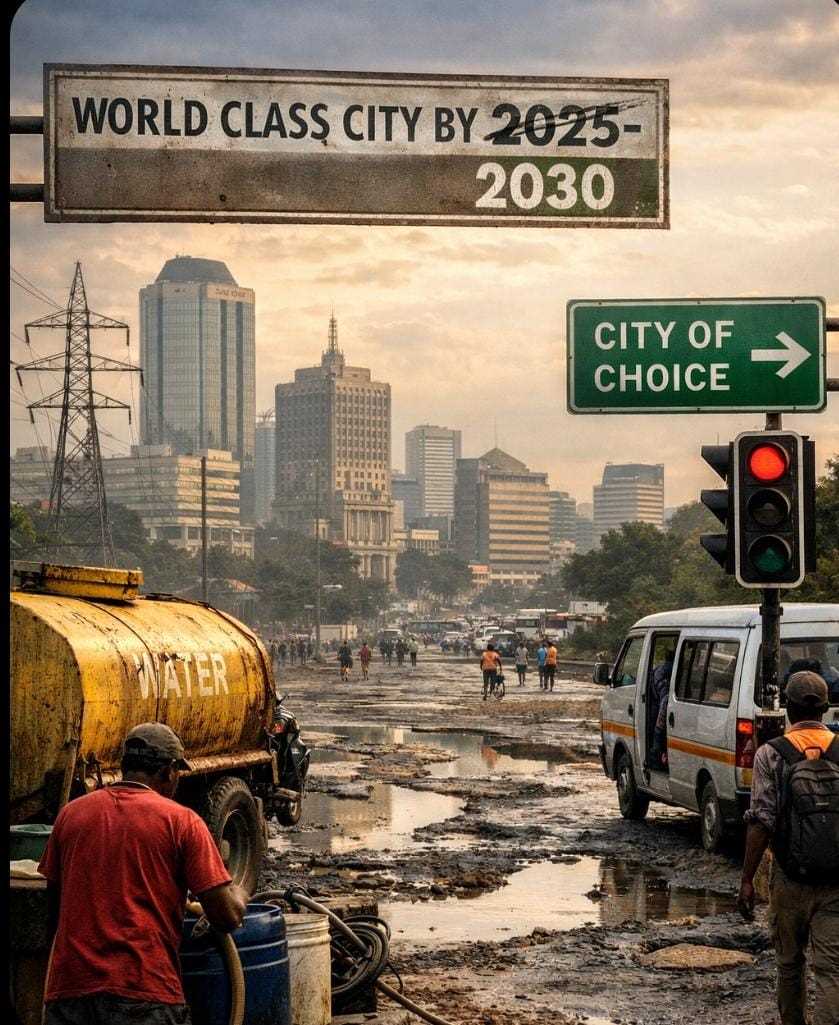
For years, Harare had a date with the future. Municipal strategies and official messaging promised it with confident simplicity: a world-class city by 2025. Ordered streets, reliable services, investment confidence — it sounded close enough to picture and far enough to excuse the present.
Then 2025 arrived. Harare did not.
The language has since softened: a world-class city of choice by 2030. No dramatic announcement, no formal admission of failure — just a quiet recalibration. Zimbabwe rarely cancels deadlines; it relocates them. The aspiration survives, only on a more accommodating calendar.
This shift reveals more than a timeline adjustment. It exposes how Harare has tried to modernise — planning vertically while living horizontally. The city spoke in skylines while residents negotiated pipelines. Long before smart traffic systems, motorists memorised which intersections function without lights.
Before investment districts, households invested in boreholes. Before the modern metropolis arrived, water bowsers were already filling the gaps.
Each rainy season provides the city’s most honest audit. After the first downpour, routes change, travel times stretch and roads renegotiate their shape. Commuters do not consult urban design — they improvise it. In those moments, Harare is less a planned space than a coordinated understanding among its residents. A world-class city is not judged by its best day, but by an ordinary Tuesday after rain.
Related Stories
The phrase “city of choice” is the most revealing evolution. Harare is no longer assumed; it must persuade. Satellite towns offer controlled services, private developments promise predictability, remote work detaches income from geography, and migration — internal or external — remains a constant option. A city of choice competes through reliability, not branding.
Urban loyalty is practical. Residents tolerate shortages more easily than uncertainty. They adapt to rationing but struggle with unpredictability. When services function intermittently, people reorganise their lives around independence from the city itself. Boreholes replace municipal confidence, generators replace grid trust, and private transport replaces planning. Gradually, the city becomes a backdrop — somewhere one lives, but no longer relies on.
That is the quiet cost of moving deadlines: not outrage, but detachment.
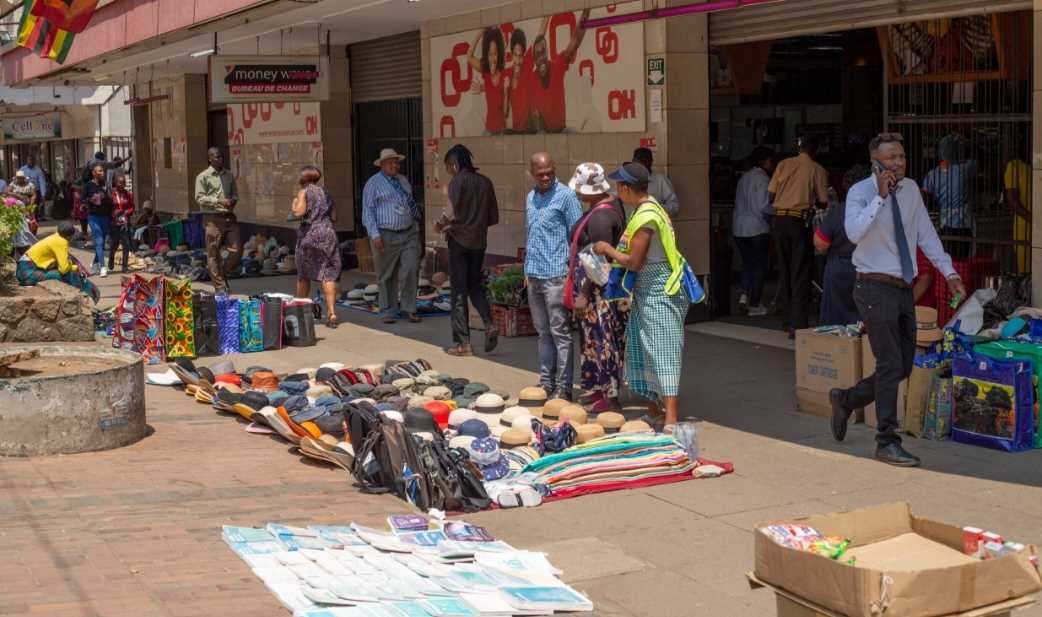
Yet Harare retains a stubborn civic pulse. Markets reorganise by morning, neighbourhoods maintain familiarity, and debate about the city never fades. Complaints — in queues, kombis and online — are not dysfunction, but expectation. Residents still believe improvement should arrive within their lifetime.
Cities rarely become world-class through declarations. They reach that point the day routine stops requiring contingency plans: when traffic lights are trusted, refuse collection is scheduled, and water availability is assumed rather than monitored.
2030 will come, just as 2025 did. The question is whether Harare will have reduced how much planning citizens must do simply to live ordinary lives. A genuine city of choice is not selected in policy documents or branding exercises. It is chosen every morning by people deciding that staying requires less effort than leaving.
Harare’s promise has not disappeared. It has changed from a slogan into a test — one measured not in speeches, but in the ease of a normal day.









Leave Comments