









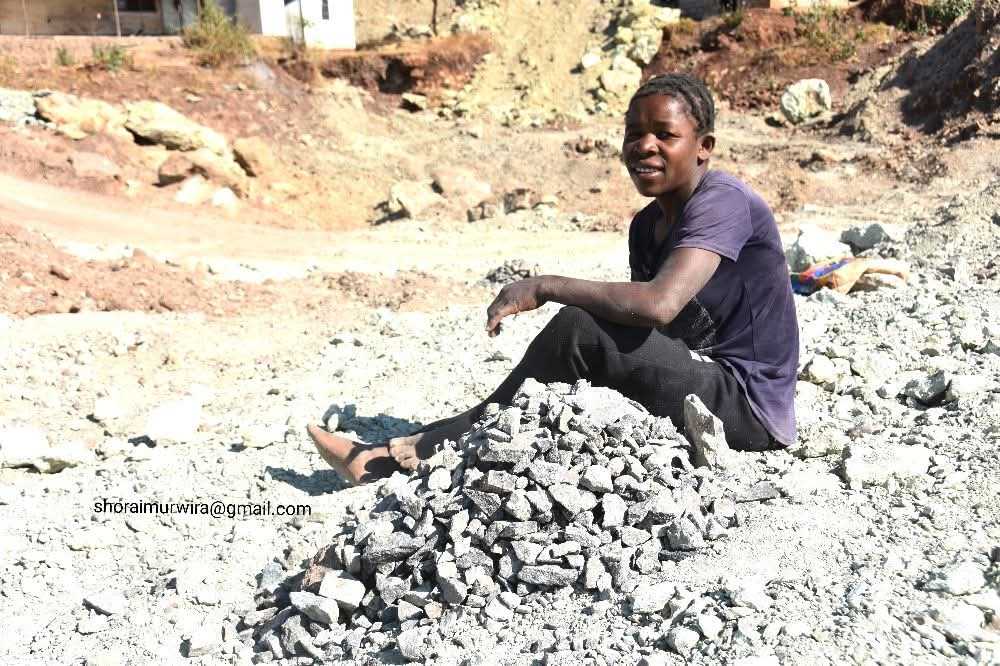
The rapid expansion of lithium mining in Zimbabwe is bringing investment and global attention, but a new report warns that many rural women living near mining sites are paying a heavy social and economic price.
A Gender Impact Assessment by the Zimbabwe Environmental Law Organisation (ZELO) highlights how women in mining-affected communities are experiencing displacement, loss of farmland and worsening livelihoods linked to lithium extraction.
The research focused on major lithium developments in Kamativi and Insiza districts, where the Kamativi Lithium Mining Company and the Zulu Lithium Mining Company operate. The study also examined artisanal and small-scale mining activities in Insiza and Mberengwa.
According to ZELO, women are particularly vulnerable when mining projects displace communities because they rely heavily on land for subsistence farming and household income.
“For many women, land is their primary source of food, income and social security. When they are displaced, they lose not only their homes but also their main livelihoods,” the organisation said.
While some mining companies have introduced relocation and compensation programmes, the report notes that these measures often fail to capture the real impact of displacement on women.
Interviews with affected communities revealed that compensation offered to displaced women frequently does not reflect the full value of the land or the wider social and economic consequences of losing it.
As a result, many women are forced to turn to informal or low-paying work to sustain their households.
Related Stories
ZELO also pointed to legal challenges that make communities vulnerable when mining projects are introduced.
“Under the current legal framework, mining rights are prioritised over land rights, meaning women can be displaced without adequate compensation. Very few women hold mining claims, which limits their ability to benefit from mineral resources discovered on land they previously used for farming,” the report noted.
The assessment further found that relocation often pushes families from fertile farmland to more arid areas where agriculture is less productive, making it harder to rebuild livelihoods.
Environmental degradation linked to mining activities is also increasing the burden on women, particularly in rural households where they are responsible for collecting water and firewood.
ZELO said deforestation and water depletion in mining areas are making these tasks more difficult.
The report also warns that economic pressures caused by displacement are pushing some women and girls toward dangerous coping strategies.
“Displacement has pushed some women and female youths towards alternative means of survival such as prostitution,” the report said.
At the same time, some boys are reportedly leaving school to work in artisanal mining operations in an attempt to support their families.
ZELO says the findings highlight the need for stronger safeguards to protect communities affected by mining and ensure women are included in negotiations over relocation and compensation.










Leave Comments