









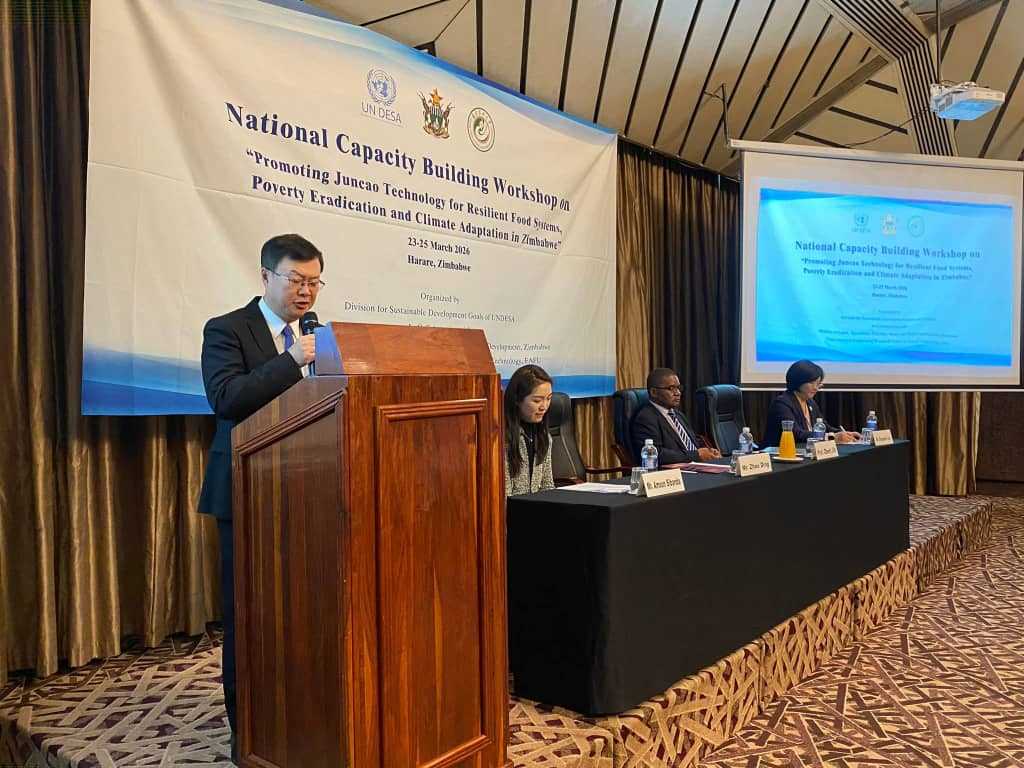
Zimbabwe is scaling up the adoption of Juncao technology as part of a broader strategy to transform agriculture into a high-value, climate-resilient sector anchored on a projected US$15.8 billion livestock economy.
The technology is now being integrated into national agricultural systems under the Agriculture Food Systems and Rural Transformation Strategy 2 (AFSRTS 2: 2026–2030), with a focus on improving productivity, strengthening value chains, and driving rural industrialisation.
Permanent Secretary in the Ministry of Lands, Agriculture, Fisheries, Water and Rural Development, Professor Obert Jiri, said sustained agricultural transformation remains critical to Zimbabwe’s economic growth.
“Agriculture is the bedrock of our economic growth. No nation has successfully transitioned to middle-income status without a fundamental transformation of its agricultural productivity,” said Prof Jiri.
“Juncao technology is a powerful tool to help us achieve just that.”
He said the shift reflects a long-term approach to making agriculture commercially viable and resilient across all sectors.
Related Stories
“We are not just adopting a new crop; we are ensuring that agriculture remains a viable, profitable business at every level, everywhere, and every day,” he said.
Juncao, a Chinese-developed high-protein grass, is being used to support both livestock feeding and mushroom production, offering a sustainable alternative for year-round cultivation while reducing dependence on traditional inputs such as timber.
Zimbabwe’s mushroom industry, currently producing about 855 metric tonnes, is expected to benefit from increased efficiency. Meanwhile, the livestock sector is targeting growth from 5.7 million to 6.6 million cattle, alongside a 75 percent increase in milk production.
Chinese Ambassador to Zimbabwe, Zhou Ding, said the programme is already contributing to improved livelihoods and agricultural productivity.
“Today, Juncao has taken deep roots on Zimbabwean soil, growing into a ‘grass of prosperity’ for local farmers,” he said.
The technology has been rolled out across nine provinces, with 69 demonstration sites and more than 50,000 seedlings distributed, positioning it as a key tool in addressing feed shortages and climate shocks, particularly in drier regions of the country.
Juncao is increasingly being viewed not only as a climate solution, but also as a commercial pathway for farmers, supporting income generation, food security, and long-term agricultural sustainability.







Leave Comments