







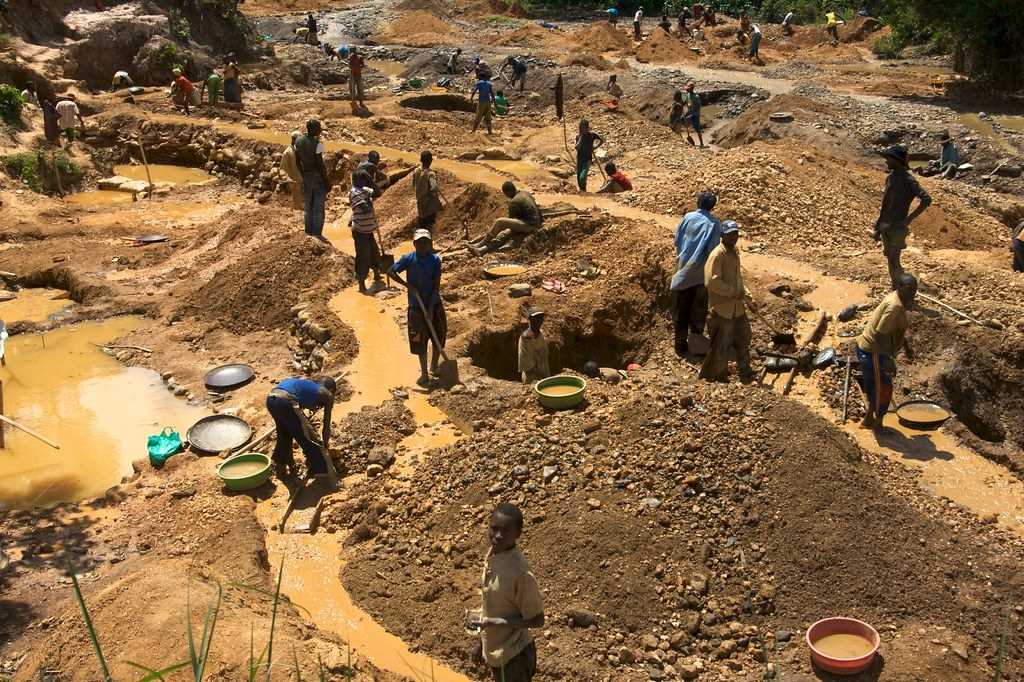
The Ministry of Mines and Mining Development has reserved Zimbabwe’s small and medium-scale gold mining sector exclusively for citizens and locally owned entities, while simultaneously introducing new controls over strategic and critical minerals as government moves to tighten regulation of the country’s extractive sector.
In a policy statement issued Thursday, government said foreign participation in small-scale gold mining would no longer be permitted, citing growing concerns over unsustainable mining practices, environmental degradation and conflicts involving foreign investors, communities and local miners.
“Government hereby announces the following policy measures regarding participation in Zimbabwe’s small-scale gold mining sector.”
“With immediate effect, the small-scale gold mining sector in Zimbabwe is reserved exclusively for Zimbabwean citizens and Zimbabwean citizen wholly owned entities.”
Under the new framework, foreign individuals and foreign-controlled firms will be barred from acquiring, controlling or operating mining titles classified under the small-scale gold mining category. The policy also prohibits indirect participation through joint ventures, syndicates, partnerships or nominee arrangements designed to circumvent ownership restrictions.
Government defined small and medium-scale gold mining operations as projects producing up to 20 kilograms of gold per month or involving capital investment of up to US$15 million. Mining activities exceeding those thresholds will fall under medium or large-scale mining frameworks where foreign investment participation remains permissible.
Authorities said all operators in the sector must regularise and re-register operations with the ministry before January 1, 2027, with the process requiring disclosure of ownership structures, financing arrangements, production levels and compliance with environmental, tax and labour regulations.
Related Stories
Foreign investors currently operating within the small-scale sector have been directed to scale up production or recapitalise operations beyond the prescribed thresholds before the deadline in order to qualify under large-scale mining categories.
The ministry said the policy was intended to promote sustainable mining practices, improve accountability and ensure Zimbabwe’s mineral wealth contributes more directly to citizen empowerment and national economic development.
“Government is concerned about a lot of unsustainable mechanized, nonstandard mining practices by foreign investors in the small-scale mining sector. A lot of conflicts between foreign investors, the community, local miners and farmers have been observed,” the statement said.
The measures come as gold remains Zimbabwe’s largest foreign currency earner, with small-scale miners contributing more than 60 percent of the country’s official gold deliveries in recent years. However, the sector has also faced persistent challenges linked to smuggling, unsafe mining methods, environmental damage and disputes over ownership structures.
In a parallel announcement, the ministry declared a broad list of minerals as critical, special critical and strategic resources under a revised mineral classification framework designed to strengthen state oversight and local beneficiation.
Minerals classified as critical include lithium, nickel, cobalt, graphite, copper, chrome, platinum group metals, manganese and rare earth elements, while metallurgical coal was designated a special critical mineral. Gold, diamonds, coal, iron ore and oil and gas were listed among strategic minerals.
The ministry said the classifications were based on global demand trends, supply chain vulnerabilities, beneficiation potential and the minerals’ strategic economic importance to Zimbabwe’s industrialisation agenda.
Under the new framework, the state will hold mandatory minimum shareholding interests in critical mineral projects through designated special purpose vehicles, while exports of raw or unbeneficiated critical minerals will require ministerial approval under transitional plans tied to local value addition commitments.







Leave Comments