





There was a time when Zimbabwe represented certainty.
A good education meant opportunity. A formal job meant stability. Cities functioned with relative predictability. Public institutions carried authority. Parents genuinely believed their children would inherit a better future than the one they had known.
Today, much of that certainty has disappeared.
What remains is a complicated national relationship between hope and exhaustion — a country where citizens continue surviving, building, laughing, and adapting, while increasingly questioning whether Zimbabwe itself still believes in its own future.
This may be the most important national conversation the country is avoiding.
Not whether Zimbabweans love their country. Most still do. Patriotism remains deeply embedded in the national psyche. Zimbabweans defend their culture passionately, celebrate their achievements loudly, and carry their identity proudly across the world.
The real question is different: do Zimbabweans still believe this country can consistently work for ordinary people?
Increasingly, the answer appears uncertain.
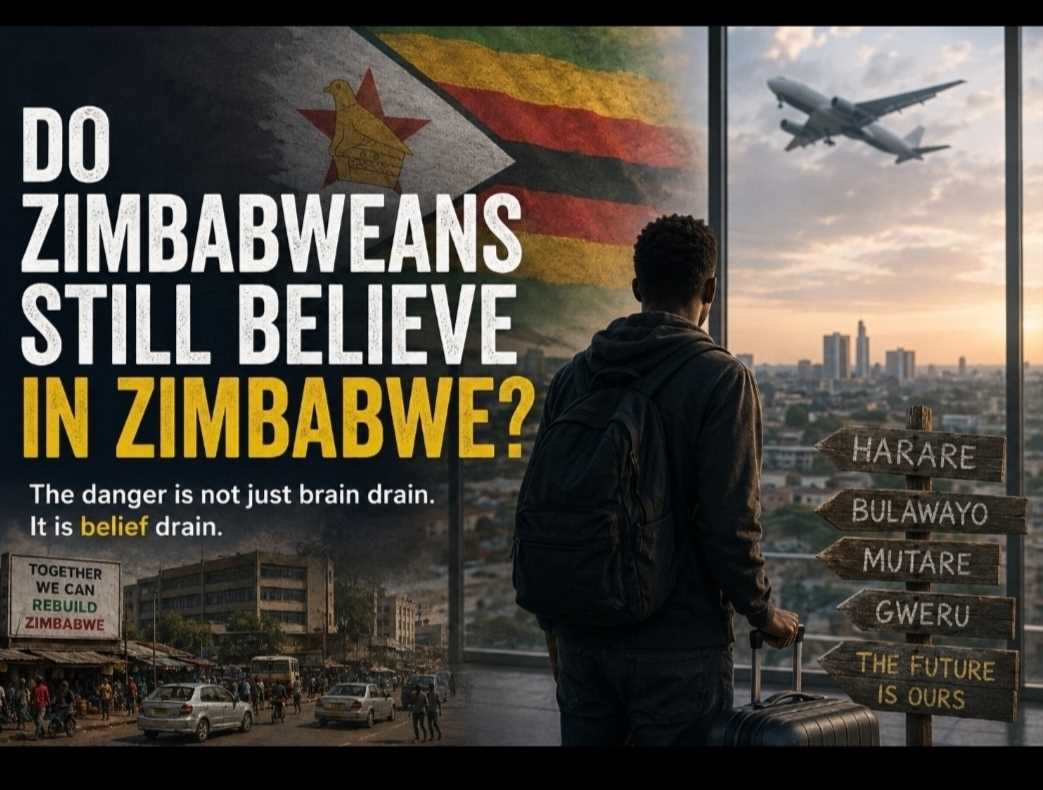
One only has to observe the aspirations of young people. For many graduates today, success is no longer imagined inside Zimbabwe but beyond its borders. South Africa, the United Kingdom, Australia, Canada, and the Gulf states have become symbols of possibility in ways Harare, Bulawayo, Mutare, or Gweru no longer fully represent.
Migration has evolved from an economic decision into a psychological one.
At Robert Gabriel Mugabe International Airport, departure lounges increasingly resemble extensions of family living rooms — emotional farewells, whispered prayers, and promises to “come back one day.” Leaving is now often associated with ambition itself.
The troubling part is not merely the number of people leaving; it is how normalised departure has become. Families now prepare children for emigration with the same seriousness previous generations reserved for university education or home ownership.
A passport has quietly become one of Zimbabwe’s most desired status symbols.
Yet even among those who leave, Zimbabwe rarely disappears emotionally. Diaspora communities continue paying school fees, covering medical bills, funding funerals, and financing construction projects back home. Families survive because relatives abroad continue carrying enormous financial responsibilities through remittances.
This creates a paradoxical nation: citizens increasingly lose confidence in the country’s systems while simultaneously remaining emotionally tied to the country itself.
Zimbabweans may doubt the state, but many have not entirely abandoned the idea of Zimbabwe.
That distinction matters.
Related Stories
Because belief in a nation is not sustained through slogans alone. It is sustained when citizens can reasonably connect effort with reward, competence with opportunity, and sacrifice with progress.
When those links weaken repeatedly, cynicism quietly replaces optimism.
This is visible in everyday life. Young professionals no longer assume qualifications alone guarantee upward mobility. Small business owners often operate with permanent uncertainty. Citizens adapt to power cuts, water shortages, poor roads, and economic instability with remarkable resilience, but adaptation should not be mistaken for confidence.
People survive systems they no longer fully trust.
That reality shapes national psychology in profound ways.
A society that loses faith in its institutions eventually begins privatising hope. Citizens stop expecting functioning public systems and instead retreat into individual survival strategies: side hustles, diaspora connections, private schools, private transport, private healthcare, backup plans, and informal networks.
Over time, national belonging becomes increasingly transactional.
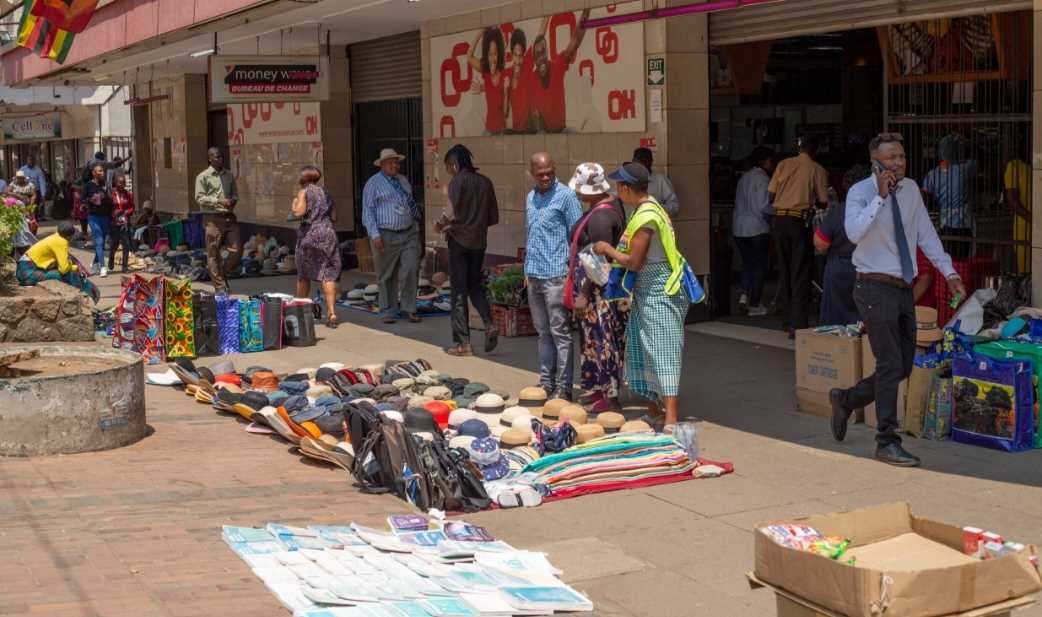
Zimbabweans have become exceptionally skilled at coping. The informal economy reflects both remarkable ingenuity and deep institutional failure. Vendors, cross-border traders, freelancers, transport operators, and small entrepreneurs continue sustaining families under extremely difficult conditions.
But resilience has limits.
No nation can endlessly depend on the emotional endurance of its citizens while offering diminishing certainty in return.
And yet, despite everything, Zimbabweans continue displaying flashes of belief.
One sees it during sporting victories, cultural celebrations, local business success stories, or moments of national unity after tragedy. One hears it in conversations about rebuilding industries, restoring cities, reviving agriculture, or modernising infrastructure. Even criticism itself often emerges from frustrated hope rather than complete detachment.
People rarely argue passionately about countries they have entirely given up on.
Zimbabwe’s challenge, therefore, is not simply economic. It is psychological.
A nation cannot sustainably progress if its citizens increasingly associate their dreams with departure instead of participation. Once talented young people begin viewing emigration as the primary route to dignity, stability, and fulfilment, the country risks slowly outsourcing its future.
The danger is not just brain drain. It is belief drain.
Restoring national confidence will require more than speeches about patriotism or resilience. Citizens need visible reasons to trust that competence matters, institutions can function, and long-term effort inside Zimbabwe can still produce meaningful reward.
Zimbabwe still possesses immense human talent, cultural strength, and economic potential. But nations are ultimately sustained by collective belief. A country can survive economic hardship. What it struggles to survive is the moment its people stop imagining their future inside it.
Simbarashe Namusi is a peace, leadership, and governance scholar, as well as a media expert writing in his personal capacity.









Leave Comments