







Washington’s detailed indictment of Chinese mining practices in Africa raises real concerns. But Africa should not mistake a declared colonialist state’s self-serving solution for a guide to its own future.
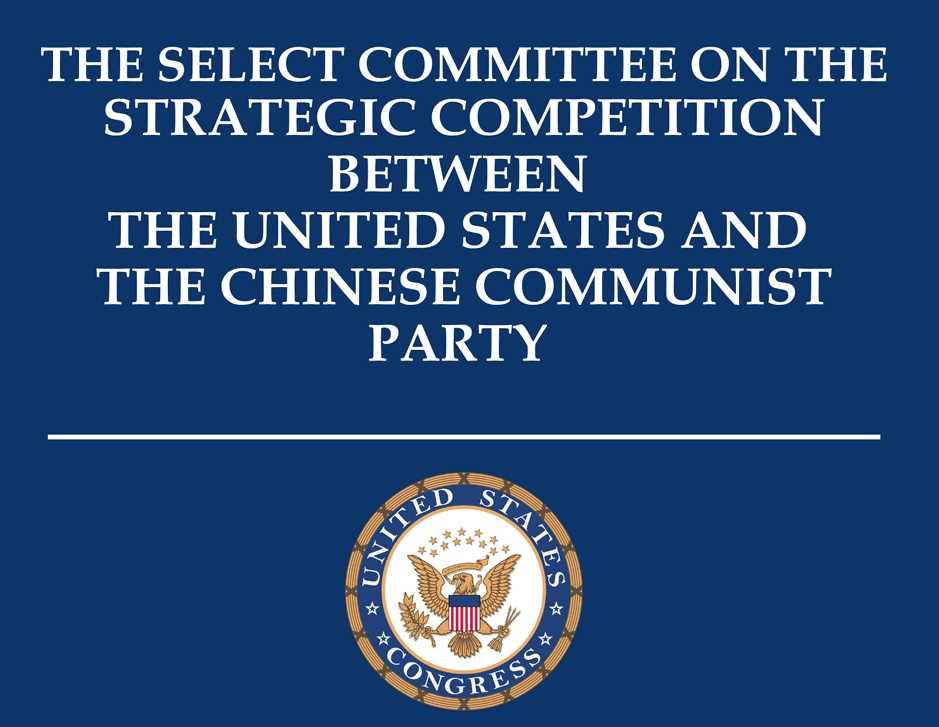
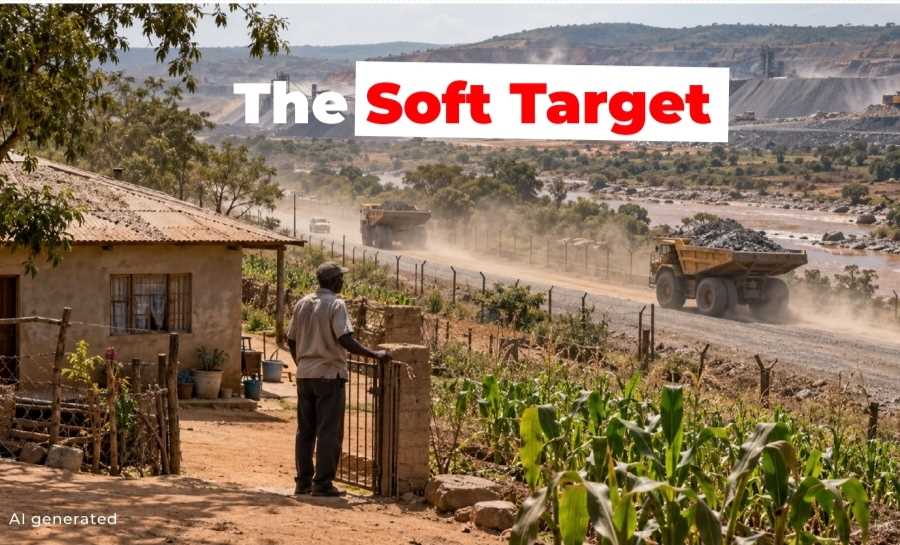
The latest United States report on Chinese mining operations is detailed, unsettling, and deeply troubling. It documents environmental damage, labour concerns, weak regulation, and communities that feel short-changed by extractive activity.
Although the report is exclusively based on reports of US funded agents like Farai Maguwu’s CRNG and deliberately skewered to ignore all positives about China’s presence in Africa, the issues raised are real and deserve scrutiny. They demand action from African governments, regulators, and investors alike.
But the report does something else, which is where its fatal errors lie. First, it ignores all the roads, railways, airports, power stations, schools, access to water, jobs, industries, exports and other developments impacting on ordinary Africans daily through Chinese presence on the continent. And it secondly, it positions the US as a hero moving in to save Africa offering itself as better partner.
The arrogance and assumption of stupidity on the part of Africans is astounding. The report is patronising and assumes that Africans will swallow the clearly biased report without deploying any independent thought process. That Africans cannot figure out that the US feels outcompeted by China and is looking for an underhand manner to overcome the perceived defeat. That Africas will accept the US version without considering that if the United States is coming in as a better alternative to China, then its own damning record in Africa must be part of the same conversation.
Take the Democratic Republic of Congo cited in the document. Its minerals-for-infrastructure deal with Chinese firms included ambitious promises of roads, hospitals, and railways in exchange for access to copper and cobalt. Questions have come up about transparency, who benefited, and whether the country secured fair value from its resources.
There is no need to defend flawed deals. Africa must openly own what happens when contracts are not tightly structured, when enforcement is weak, and when value is not carefully protected. Exactly the same weaknesses that the US is proposing to exploit in DRC, as its proposal is also just to extract, with no talk of investing in meaningful industrialisation, just a paper-thin PR job.
Then if one is to talk about history of the countries on the continent, Nigeria stands as a case that cannot be ignored. Decades of oil extraction by US companies and other Western nations have generated enormous wealth for the companies, yet the Niger Delta communities live with polluted waterways, degraded land, and livelihoods that have steadily eroded. Oil spills and gas flaring have left long scars on both the environment and public health. Efforts to clean up have often been slow and incomplete.
The region has experienced unending conflict linked to resource control, heavy security presence around oil installations, and persistent tension between communities and operators. Worst of all, Nigeria has fuel shortages and its own refinery is starved of the commodity which is exported to the West and reimported as a refined product.
But in the report, the US ignores such glaring examples of its naked exploitation of Africa.
Seen in this light, the difference between competing global players becomes less about virtue and more about method. China has a policy of not interfering in sovereign matters. The US strategically deploys claims of human rights championship as cover for neo colonialism. The report is clear that the underlying objectives are centred securing access to resources with the hypocritical concern for Africa just a cover.
Related Stories
Africa’s mistake has been entering partnerships without defining and defending its own terms. That is where the conversation must shift. No one owes Africa development or anything else. Africa must ensure that it capitalises on its resources for its own development.
Zimbabwe’s decision to restrict the export of raw lithium and push for beneficiation is an important step. It signals a refusal to remain a supplier of unprocessed materials. It speaks to a desire to capture more value locally, to create jobs, and to build industrial capacity. It reflects a growing awareness that exporting raw resources while importing finished products is a cycle that must be broken.
But beneficiation on its own is not a complete strategy. Processing minerals without owning the technology that defines their highest value still leaves Africa in a dependent position. The real advantage in lithium lies in battery chemistry, in energy storage systems, and in the technologies that shape global energy transitions. Without investment in research, innovation, and technical skills, beneficiation is just a middle step that still feeds value outward.
Africa’s long-term strength will come from controlling not only its resources, but also the knowledge that transforms those resources into high-value products. In addition, Africa needs clear short term, midterm and long-term strategies that are clearly stated.
This requires thinking beyond national policies and moving toward continental coordination. Individual countries negotiating in isolation will always face stronger counterparts. A fragmented approach limits bargaining power and reduces the ability to shape global markets. That is how some African countries defied all logic to sign “America First” deals in exchange for paltry sums that will probably be used to colonise their economies, rather than bring any meaningful development.
A different path is possible. A coordinated African approach to resources could see production pooled and processed at scale, supported by dedicated shared infrastructure and common standards. The key is to make resource nationalism make economic sense for the operators.
A network of research institutions across the continent could focus on battery technology and energy storage, ensuring that Africa participates in shaping the industries of the future rather than supplying them from the margins. In the same way, oil-producing countries could deepen cooperation around refining and distribution, reducing reliance on imported fuel and stabilising supply across borders.
These undertakings require capital, discipline, and political will. They also require a shift in mindset from short-term gains to long-term positioning.
The choice facing Africa is not between China and the United States. It is between continuing to react to external interests or beginning to define its own.
External partners will always pursue their interests. That is logical and will not change. What can change is how Africa engages with them. Clear rules, firm enforcement, strategic investment in knowledge, and a willingness to act collectively can reshape outcomes in ways that no single partnership ever will.
The report from the United States should be read, understood, and taken seriously where it raises valid concerns. But it must never be mistaken for a roadmap. It’s a case of the wrong doctor, incorrectly diagnosing the malaise and offering a very expensive, painful, and ineffective medication regime.








Leave Comments