









By Simbarashe Namusi
Zimbabwe has always had a complicated relationship with sacrifice.
We celebrate it. We romanticise it. We endure through it. From teachers and nurses to civil servants and vendors, the country has mastered the language of endurance. Tinoshingirira. We push through somehow.
But every now and then, someone says something that inadvertently exposes a deeper truth about Zimbabwe.
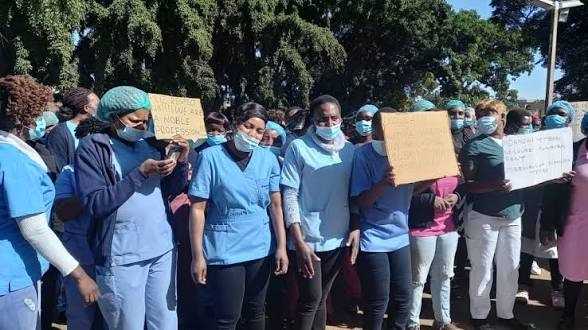
Last week, Deputy Health Minister Sleiman Timios Kwidini reportedly told nurses that “only God can reward a nurse.” The statement came at a time when nurses across the country were battling low salaries, difficult working conditions, staff shortages and growing frustration over the state of the public health system.
The minister was likely trying to praise nurses for their dedication. In another context, the statement might even have sounded noble. But in today’s Zimbabwe, it landed differently.
Because for many nurses, the issue is no longer appreciation. It is survival.
It is rent. Transport money. School fees. Groceries. It is the emotional exhaustion of working long shifts in under-resourced hospitals while watching the cost of living rise faster than salaries.
And perhaps that is why the statement touched such a nerve. It unintentionally captured something many Zimbabweans already feel: that the country increasingly expects essential workers to survive on sacrifice, patriotism and prayer.
Zimbabwe has slowly developed a dangerous habit of treating professionals like saints instead of workers.
We praise them endlessly because paying them properly has become politically and economically difficult. Gratitude becomes currency. Applause becomes policy. Patriotism becomes compensation.
A nurse is called a hero but struggles to feed a family.
A teacher is told he is shaping the nation but cannot comfortably afford transport to work.
A doctor is praised for dedication while hospitals run short of medicines and basic equipment.
At some point, motivational speeches begin to sound less like encouragement and more like apologies.
And perhaps that is why another recent public moment unsettled many Zimbabweans. Videos circulated online showing nurses dancing for cash prizes and food hampers during a donation event organised by Tino Tungwarara.
Predictably, social media split into familiar camps. Some praised the gesture and the generosity behind it. Others criticised the optics of trained healthcare professionals dancing publicly for US$100 prizes and food hampers.
But perhaps the real issue lies deeper than either side admitted.
The problem is not charity itself. Zimbabweans survive because people help one another. Donations matter. Food hampers matter. Acts of kindness matter, especially in difficult economic times.
The real question is why trained healthcare professionals increasingly find themselves dependent on public goodwill, donations and symbolic gestures in the first place.
Somewhere along the way, Zimbabwe stopped being shocked by things that should shock us.
We now celebrate coping mechanisms rather than demand functioning systems.
Related Stories
We applaud resilience because accountability feels too far away.
We have become so accustomed to crisis management that survival itself has started to look normal.
There was something deeply uncomfortable about watching nurses—people entrusted with saving lives—competing for small cash prizes in front of cameras. Not because they lacked dignity, but because the situation itself reflected a country where professional dignity is slowly being replaced by performative survival.
And perhaps that is the deeper tragedy.
Zimbabwe does not lack hardworking nurses. In fact, Zimbabwean nurses are respected across the region and beyond. Many leave for the United Kingdom, Australia, Namibia and other countries because their skills are valuable and in demand.
The country trains competent professionals.
What it increasingly struggles to do, however, is retain them with dignity.
That is why statements such as “only God can reward a nurse” become dangerous, even when they are well-intentioned. They risk normalising suffering. They risk turning economic hardship into something spiritual and unavoidable rather than something political and fixable.
Yes, nurses deserve appreciation. They deserve recognition. They deserve respect.
But above all, they deserve salaries that reflect the value of their work.
Because patriotism cannot pay rent.
Prayer cannot replace functioning hospitals.
And gratitude cannot substitute for a living wage.
This is bigger than one minister’s statement or one donation event. It is about a national culture that increasingly confuses appreciation with justice.
A country cannot build a healthcare system on applause, prayers and food hampers alone.
At some point, symbolism runs out.
Zimbabwe’s nurses do not need miracles.
They need dignity. They need functioning hospitals. They need salaries that allow them to live, not merely survive.
Zimbabwe’s nurses do not need to be reminded that their work is noble. They live that reality every day.
What they need is a healthcare system that values them beyond words, beyond applause and beyond symbolic gestures.
Because when a country relies on sacrifice to sustain essential services, it eventually reaches a point where there is nothing left to sacrifice.
And when that happens, the people who leave are often the very people the nation can least afford to lose.
Simbarashe Namusi is a peace, leadership and governance scholar, as well as a media practitioner, writing in his personal capacity.










Leave Comments