



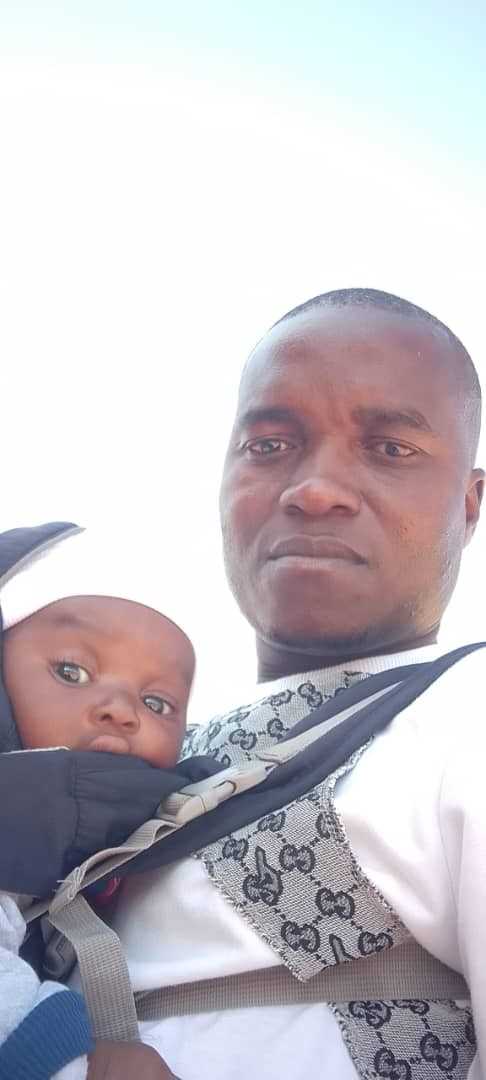
Two-month-old Ayani shifts quietly in his father’s arms, unaware that his arrival represents something Simbarashe Chadiwa once feared prison had taken from him forever: the chance to build a family in freedom.
Nearly a decade after he was condemned as a child rapist for an offence the complainant now says he did not commit, Chadiwa is embracing fatherhood, marriage and a fresh beginning in the quiet rural community of Gokwe.
But behind the happiness of his new life lies an unresolved and painful contradiction. Chadiwa is free, but he has never been legally cleared. Although the woman whose childhood testimony helped secure his conviction has publicly withdrawn the allegation, no court has overturned the judgment.
Chadiwa left prison on April 19, 2024, through the presidential amnesty announced to commemorate Zimbabwe’s 44th Independence anniversary. There has been no successful appeal, retrial or judicial review. He therefore remains, in law and on record, a convicted rapist.
A childhood allegation withdrawn
Zim Now first reported Chadiwa’s case in September 2022, while he was still serving an 18-year prison sentence. The complainant said she had been 10 years old when she implicated him and had acted under pressure from her mother.
According to the account she later gave, Chadiwa and a friend had visited the family homestead because the friend wanted to see a maid with whom he was romantically involved. After the girl’s mother returned from Botswana and found her daughter limping, she allegedly pressured the child to identify Chadiwa as the person responsible.
When the complainant first recanted pubicly, the Prosecutor-General’s Office cautioned that her statement would not automatically secure Chadiwa’s freedom. An affidavit and a formal legal process would be required to place the new evidence before the courts. Chadiwa remained behind bars until he became one of the prisoners released under the 2024 presidential amnesty.
Life begins again
Today, in Mairosi Village under Chief Gumbero in Gokwe, Chadiwa is rebuilding brick by brick what prison walls once threatened to destroy. He is now married to Christabell Kudziwe.
“Ndakaita zvekunokumbira kwaMutare kumusha kwake. After everything that happened, God blessed me with a woman who accepted me for who I am and never judged me by my past,” Chadiwa said during an interview in Gokwe. “She believed my story when many people did not. That alone gave me the courage to believe that life could begin again.”
Watching Chadiwa gently cradle his infant son presents a picture few would have imagined when he was serving what appeared destined to be a lengthy prison sentence. His joy is deepened by his efforts to reconnect with his first child, 11-year-old Ashiel, who was born before his incarceration.
For Chadiwa, fatherhood is both a blessing and a reminder of what imprisonment took from him. “Every time I look at my children, I remember the years I lost,” he said. “I missed watching my first child grow up. I missed birthdays, her first day at school and so many moments a father should never miss. Those memories hurt, but they also remind me that I still have a chance to be there for them now.”
Learning how to be free
The road back into society was not as simple as walking through an open prison gate. After nine years in a highly regulated environment, ordinary choices felt unfamiliar. Freedoms that most people barely notice became daily adjustments.
“Prison changes you,” Chadiwa said. “Everything is controlled. You wake up at a certain time, eat at a certain time and sleep at a certain time. Suddenly you come home and nobody is ringing a bell to tell you what to do.”
Even sleeping became difficult. “In prison you get used to certain routines. At home I would wake up thinking I had overslept or expecting someone to shout instructions. My eating habits had changed. Socialising was another challenge because I had been away from people for so long. I had to learn how to become part of society again.”
There were moments when life outside prison appeared more intimidating than the world he had left behind. “People think that once the prison gates open everything becomes normal. It does not happen like that,” he said.
“Your mind has to adjust. You have to learn to trust people again. You have to learn how to interact freely. You have to rebuild confidence because prison can make you feel disconnected from society.”
Rehabilitation behind the walls
Despite the years he lost, Chadiwa acknowledges the role played by Zimbabwe Prisons and Correctional Service officers in preparing inmates for eventual release.
“People often only see prison as punishment, but there is another side which many do not know. There are officers who genuinely want inmates to leave prison as better people. They teach discipline and responsibility. They encourage people to work and prepare themselves for life outside,” he said.
The rehabilitation programmes gave him something to hold onto during the long years when his prospects of freedom appeared remote.
“They helped me understand that life would continue one day. They taught us not to lose hope. I appreciate the correctional role they played because, without that preparation, adjusting to freedom would have been even more difficult.”
Related Stories
But rehabilitation cannot answer the larger question surrounding his case.
It may help a prisoner adjust to society. It cannot return nine years, overturn a conviction or restore a damaged name.
Work as a road back to dignity
After his release, Chadiwa refused to remain idle. He accepted an opportunity to work at a relative’s small-scale mine. The physically demanding work provided routine, purpose and a way to begin supporting his family.
“When I started working at the mine, it was not just about money. It gave me dignity again. I wanted to earn an honest living. I wanted to prove to myself that despite everything that had happened, I could still stand on my own feet.”
Each day’s labour carried him a little further from the helplessness of prison. The earnings helped him contribute towards his marriage, support his household and begin constructing a future that had once appeared impossible.
The mining work has, however, become inconsistent, leaving the young family facing financial uncertainty. Chadiwa is now looking for a viable opportunity.
“I am not asking for luxury. I only want an opportunity to work again. If I can return to the mine, resources permitting, and continue earning a living, I will be able to look after my family. I believe in working for what I have.”
Who repairs a life damaged by the courts?
Chadiwa’s case raises questions extending beyond his personal struggle.
- What legal remedy is available when the principal witness withdraws the allegation that secured a conviction?
- Can a conviction be reopened years later when the person accused of coercing a child witness has died?
- Who compensates a person who has served years in prison if fresh evidence eventually proves that a serious miscarriage of justice occurred?
- And what happens when an amnesty restores physical freedom without clearing the prisoner’s name?
Zimbabwe’s Criminal Law Code makes it an offence to deliberately supply false information to a public authority. Depending on the circumstances, knowingly giving false evidence under oath or interfering with the administration of justice may also amount to perjury or defeating or obstructing the course of justice.
When evidence is knowingly manufactured, the consequences can be devastating. The accused may lose freedom, employment, family relationships and social standing. Even after release, the stigma attached to a sexual offence conviction can continue long after the prison sentence ends.
Zimbabwe does not routinely publish consolidated statistics showing how many criminal convictions are overturned because of newly discovered evidence, how many years affected prisoners have served or how many later receive compensation.
Article 14(6) of the International Covenant on Civil and Political Rights provides for compensation according to law in such circumstances. Zimbabwe is a party to the covenant, but applying that protection to an individual case depends on the facts and available domestic legal procedures.
A lawyer said Chadiwa’s position is complicated because his conviction has not been overturned and his release resulted from a general amnesty rather than an individual finding that he was wrongly convicted.
“Before compensation can realistically be considered, he will first have to persuade a court to reopen the case and formally clear his name. Until that happens, the law continues to treat the conviction as valid,” the lawyer said.
Choosing hope
Bitterness would be understandable after everything Chadiwa has endured. He remembers repeatedly asking God why his life had taken such a devastating turn.
“Sometimes life becomes so difficult that you ask God why it is happening to you. I asked those questions many times,” he recalls.
Yet he has chosen forgiveness and faith as his path forward. “But today I realise that God has a purpose for every person. We may not understand it immediately, but eventually His plan becomes clear.”
For nearly a decade, society knew Chadiwa through the label attached to his conviction. Today he is rebuilding a new name, as Christabell’s husband, Ayani and Ashiel’s father and a hardworking villager determined to provide for his family.
Neighbours in Mairosi Village are gradually getting to know the man behind the old allegations. He tills the land, dreams of returning to mining and spends his evenings with a family he once feared he would never have. As Ayani sleeps in his arms and Ashiel slowly rebuilds a relationship with the father she barely knew, despair is giving way to something stronger.
His message extends beyond former prisoners to anyone trying to recover from life-changing loss.
“Your current circumstances are not your final destination,” he said. “You can fall, you can be disappointed and you can lose almost everything, but you can still rise again. Do not allow pain to destroy your future. Pick yourself up. Keep believing. Keep praying.”



Leave Comments