









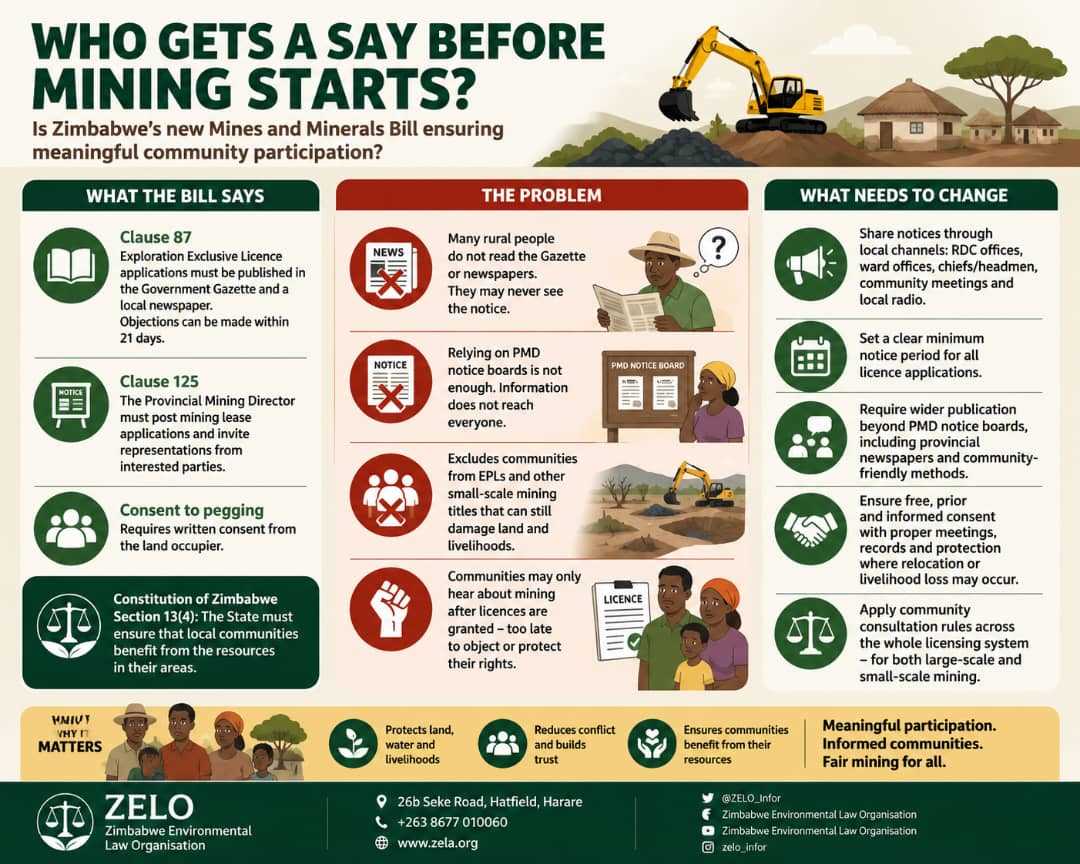
Communities living in Zimbabwe's mineral-rich areas could still find themselves learning about mining projects only after key decisions have already been made, despite provisions in the proposed Mines and Minerals Bill that seek to improve public participation.
A review of the Bill by the Zimbabwe Environmental Law Organisation argues that while the legislation introduces opportunities for communities to participate during applications for Exploration Exclusive Licences and mining leases, the proposed consultation process remains too weak for many rural communities, where access to newspapers and the Government Gazette is limited.
Under Clause 87, applications for Exploration Exclusive Licences must be published in the Government Gazette and a local newspaper, while interested parties have 21 days to lodge objections. Clause 125 also requires the Provincial Mining Director to post mining lease applications and invite representations from affected parties. However, ZELO argues that these notification methods fail to reflect how information is accessed in many rural communities.
"The Bill should require notices to be shared through local channels such as Rural District Council offices, ward offices, chiefs and headmen, local meetings, and local radio," the organisation says, arguing that broader communication would ensure communities are informed before mining rights are granted.
The concerns come as Parliament prepares for public hearings on the Bill, with civil society organisations encouraging mining-affected communities to understand the legislation before participating in the consultation process.
Legal expert Clever Mandizvidza recently urged communities to actively participate in the legislative process, saying: "This is our opportunity to shape a law that will affect communities for generations. People must speak out during the public hearings."
Related Stories
ZELO says the problem extends beyond Exploration Exclusive Licences. According to its analysis, the Bill does not provide the same consultation requirements for Exclusive Prospecting Licences and other smaller mining titles, even though these operations can still affect farmland, grazing land, water sources and rural livelihoods.
"The Bill should require publication and community notice for EPLs and all other licences... Community consultation rules should apply across the whole licensing system, so community rights are protected whether the miner is 'small' or 'large'," the organisation recommends.
In a recent public awareness campaign on the proposed law, ZELO argued that "meaningful public participation begins with access to information," saying communities cannot effectively contribute to public hearings if they do not understand the Bill or receive information about mining applications in time.
The organisation has also warned that relying mainly on Gazette notices, newspapers and Provincial Mining Director notice boards risks excluding many rural Zimbabweans. In its latest public education campaign, ZELO noted that "many rural communities never see these notices. This means decisions can be made without people even knowing." It added that communities are calling for information to be disseminated through traditional leaders, community meetings and local radio to ensure "real consultation and fair decision-making."
The issue goes beyond information sharing. Mining governance specialists argue that consultation is often the first opportunity for communities to negotiate compensation, raise environmental concerns, protect sacred cultural sites and influence how mining projects are implemented.
ZELO Executive Director Mutuso Dhliwayo has previously argued that weaknesses in mining governance stem less from the country's mineral wealth than from legal and policy gaps. Speaking ahead of the parliamentary process, he said the objective is to help communities identify weaknesses in the Bill before it becomes law and acknowledged that while the legislation contains positive reforms, further strengthening is still needed.
"At least this Bill is moving in the right direction," he said, while urging all stakeholders to participate in the public hearings.
For communities living in Zimbabwe's mining districts, the central issue no longer questions whether consultation exists in the law. It is whether that consultation will be meaningful enough to ensure people know about mining projects before licences are granted, rather than after excavators have already arrived.





Leave Comments