







Zimbabwe has launched a new National Action Plan for Children (2026–2030) and a National Child Online Protection Policy, with Government and development partners warning that rising child labour, online abuse, climate shocks and violence against children require stronger investment and coordinated action to safeguard the country's youngest citizens.
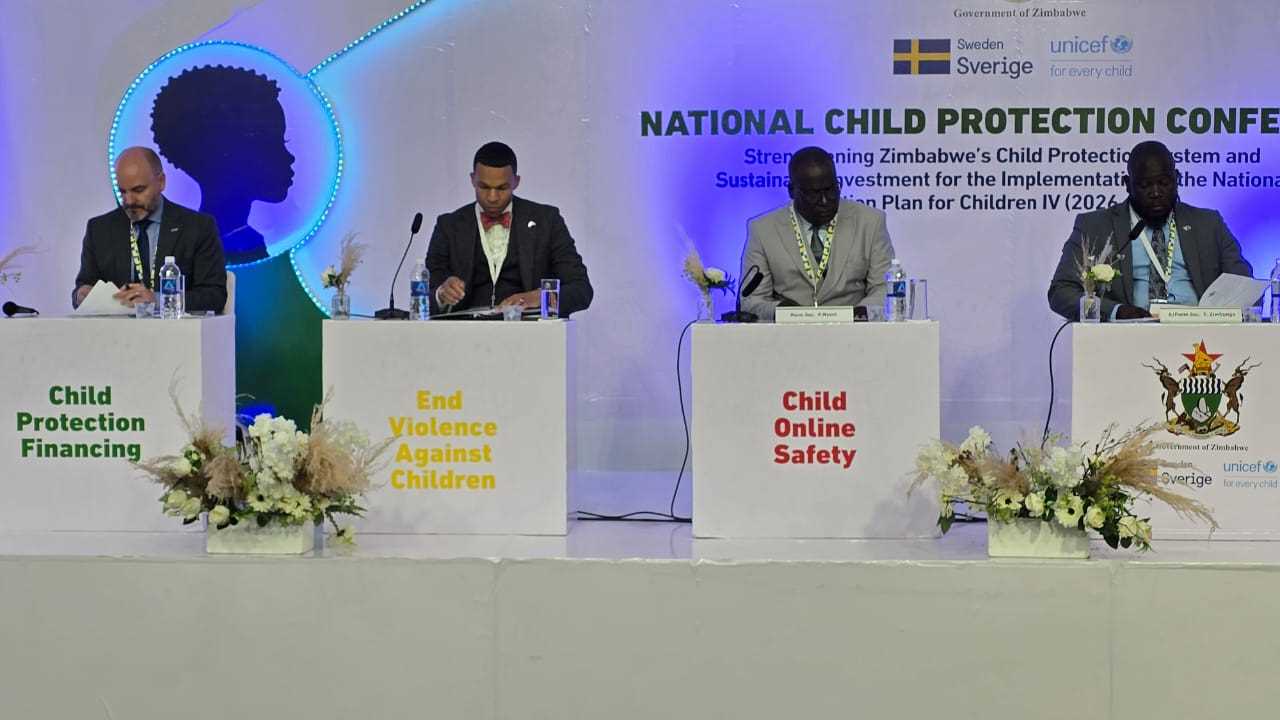
The twin policies were unveiled at the National Child Protection Conference organised by the Ministry of Public Service, Labour and Social Services, bringing together Government officials, the United Nations Children's Fund, development partners and child protection practitioners to map out Zimbabwe's child protection priorities for the next five years.
Permanent Secretary Tawanda Nyamhunga said although Zimbabwe had made significant progress under the previous National Action Plan introduced in 2017, children were now facing increasingly complex and evolving threats.
"While immense progress has been made since 2017, children face complex, evolving risks like child labour, climate shocks and digital abuse."
Nyamhunga said the new National Action Plan establishes a five-pillar framework aimed at expanding inclusive social services, ending violence against children and strengthening families' capacity to care for and protect children.
He said Zimbabwe must also rethink how it finances child protection.
“We must shift the paradigm, moving from viewing child protection as a mere social expenditure to treating it as a vital national investment. Through stronger domestic financing and partnerships, we can build a safer future." Nyamhunga stated.
The launch comes as Zimbabwe continues to confront mounting child protection challenges driven by economic pressures, climate-induced disasters, migration and the rapid expansion of digital technologies, which have exposed children to new forms of exploitation and abuse. The introduction of a dedicated National Child Online Protection Policy reflects growing concern over cyberbullying, online grooming, sexual exploitation and other digital risks affecting children.
Government's latest strategy seeks to move beyond responding to abuse after it occurs by placing greater emphasis on prevention, stronger family support systems, improved coordination among institutions and increased domestic financing for child protection services.
Related Stories
United Nations Children's Fund Zimbabwe Deputy Representative Fiachra McAsey said protecting children should be viewed as a long-term national investment rather than a cost.
“Investing in child protection is one of the smartest investments a country can make,” McAsey stated.
McAsey called for stronger domestic investment, resilient child protection systems and coordinated action to ensure every child grows up in a safe environment.
United Nations Children's Fund Senior Adviser for Child Protection and Migration in Africa Nankali Maksud urged African governments to intervene earlier, strengthen protection systems and increase financing for child protection programmes.
"Protect earlier. Build stronger systems. Finance Africa's future. Africa's greatest resource is its children."
Sweden's Chargé d'Affaires to Zimbabwe David Diaby reaffirmed his country's commitment to supporting children's rights in Zimbabwe despite changes to Sweden's diplomatic presence in the country.
"Child protection is not just a cost; it is an investment."
The National Action Plan for Children will guide Zimbabwe's child protection interventions between 2026 and 2030, replacing the previous framework that has been in place since 2017. While the Government has confirmed the launch of both policies and outlined their strategic objectives, details on implementation timelines, funding commitments and institutional responsibilities are yet to be made public.
The new framework comes against a backdrop of increasing concern over child labour, violence against children, climate-related vulnerabilities and the growing risks associated with children's use of digital platforms.






Leave Comments