







In rural Hwedza, a youth digital skills project built around Starlink is raising the question of whether connectivity can help rewire village economies.
Fungisai Zhanje- Correspondent
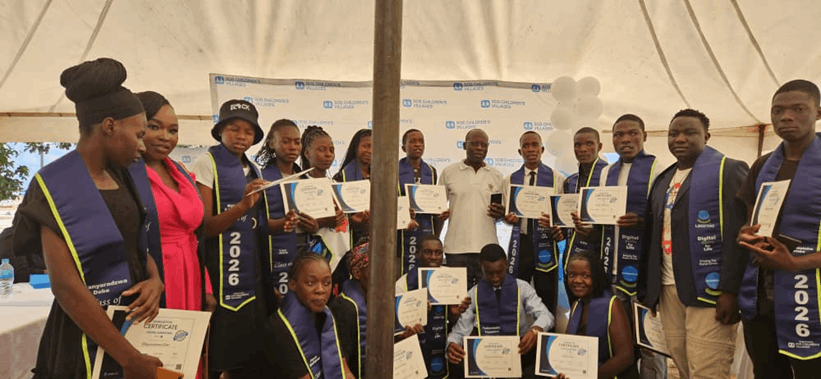
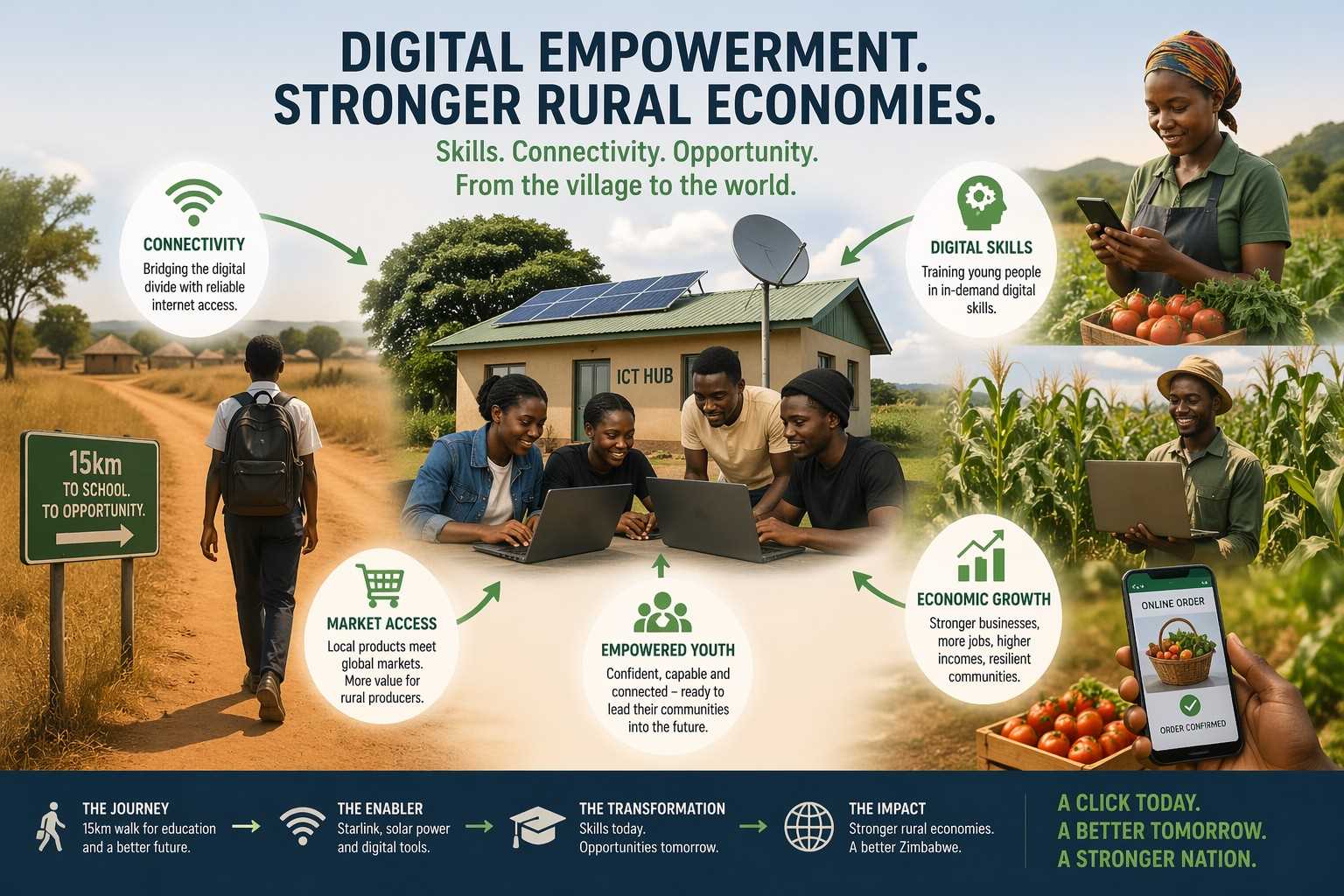
For five months, some young people in Hwedza walked 15 kilometres for internet access, leaving home before sunrise to cross red dust roads. They arrived at Tongogara Secondary School in Ward 4, carrying notebooks, fatigue and a stubborn belief that digital skills might widen lives that geography had long narrowed.
Nearly 40 enrolled in a digital marketing programme. Distance, funerals, family obligations and the hard mathematics of survival thinned the class to about 20. Those who remained may have stumbled into a model of rural economic renewal.
At one level, the story is simple. SOS Children’s Villages Zimbabwe, working with Learnio Academy and government structures, helped establish a functioning ICT hub at the school with basics of ten computers, a 5.6 kVA solar system, a printer, a projector and a Starlink kit. What emerged in Tongogara was a small piece of economic infrastructure.
The strongest reading of the Hwedza story is developmental. Zimbabwe has spent years talking about bridging the digital divide. The Ministry of ICT says its mission is to provide ICT facilities and services that are modern, accessible and affordable, and specifically highlights equitable access for disadvantaged groups and rural communities.
Its current projects page says the National Digital Ambassadors programme aims to capacitate about 1.5 million Zimbabweans with essential digital skills. The Smart Zimbabwe 2030 Master Plan also frames ICTs as part of reducing the rural-urban digital divide. In other words, Tongogara looks like policy finally touching soil.
There is also a second Zimbabwean echo worth noting. In 2025, Teach For Zimbabwe described how a donated Starlink kit transformed a remote school in Binga, breaking through years of digital exclusion. Tongogara’s project is more explicitly tied to skills, employability and enterprise. But together, the two examples suggest something larger than isolated charity. They show that when rural connectivity arrives with devices, power and training, the impact can move quickly from symbolism to usable capability.
The most compelling part of the Hwedza experiment is the bridge it creates between digital training and rural production. Over 70% of Zimbabweans still depend on agriculture, and in districts such as Hwedza that often means smallholder farmers and Village Business Units selling into thin local markets or to middlemen who capture the best margins.
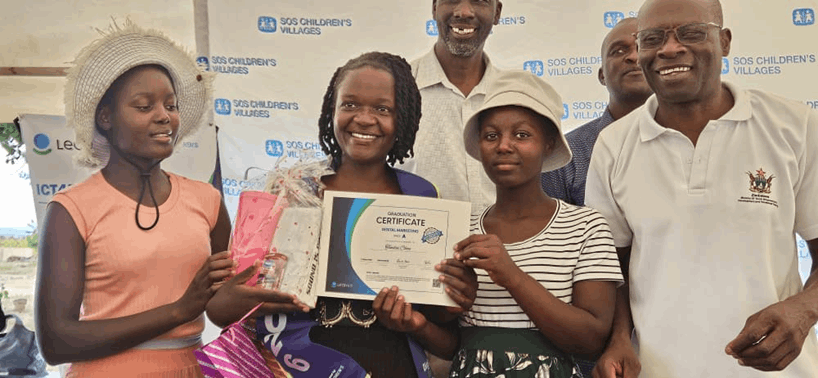
A digitally trained 19-year-old in such an environment can become the missing local commercial layer. She can photograph tomatoes for online listings, manage a Facebook page for a poultry project, compare prices, track demand, design fliers, respond to buyers, and slowly pull a household enterprise into a wider market. That is the practical meaning of digital inclusion when it lands in a farming community.
Related Stories
There are regional signposts for this kind of thinking, even if the models are not exact replicas. In Botswana, an ITU-backed roadmap on smallholder agribusiness argued that digital transformation can improve agricultural efficiency and resilience and proposed a phased pathway from a pilot to a marketplace and cloud-based ecosystem for smallholders.
Its core insight was refreshingly unsentimental: low digital penetration does not mean rural producers have no place in digital systems. It means the system must start with a minimum viable service and build outward. Tongogara looks like that first rung.
Zambia offers a different but useful comparison. Under its National Youth Skills Empowerment Programme, the government said it would shift empowerment “from handouts to skills, financial provision and business support services”, with training rolled out across constituencies through registered institutions.
Hwedza’s model sits neatly within that same regional logic: give young people usable skills close to where they live, and treat them as economic actors, not waiting-room citizens.
The SADC Digital Transformation Strategy sets a 2030 target under which 80% of youth should have basic digital skills and 50% should have advanced digital skills. It also calls for support to member states in developing digital literacy action plans that include youth not in employment, education or training, and explicitly links digital transformation to sectors such as agriculture, education and the wider economy.
Another strand of the strategy focuses on affordable broadband and digital inclusion, with model policies and support for implementation. For a story like Hwedza, this matters because it lifts the initiative out of the feel-good category and sits squarely within what the region says it wants to become.
Even the older SADC Protocol on Science, Technology and Innovation still speaks directly to the moment. Its objectives include fostering cooperation and promoting the development, transfer and mastery of science, technology and innovation in member states, as well as promoting the development and harmonisation of science, technology and innovation policies in the region. Tongogara is obviously a tiny local story compared with the grand vocabulary of regional integration. But that is exactly why it is interesting. It shows what “transfer and mastery” looks like when it is not trapped in conference documents.
The challenge now is to avoid wasting the lesson. Rural ICT hubs do not become transformative merely because a Starlink dish is mounted and certificates are handed out. They become transformative when the skills are linked to market pathways, paid gigs, local enterprise, agricultural value chains and follow-on mentoring.
Tongogara’s headmistress made the most practical plea of the day when she urged authorities to consider the graduates for data-capturing and ICT-related work. If district councils, schools, extension services, cooperatives and small businesses start using these young people as digital service providers, Hwedza will have created the beginnings of a village-facing digital labour force.
As the graduates walked home into the dusk, they still faced the same distance, the same dust and the same rural economy that has long punished ambition by making opportunity expensive to reach.
But the distance between Ward 4 and the wider market had narrowed. In development work, that is often how real change first appears. As a small stubborn bridge built between an old livelihood and a new tool.








Leave Comments