








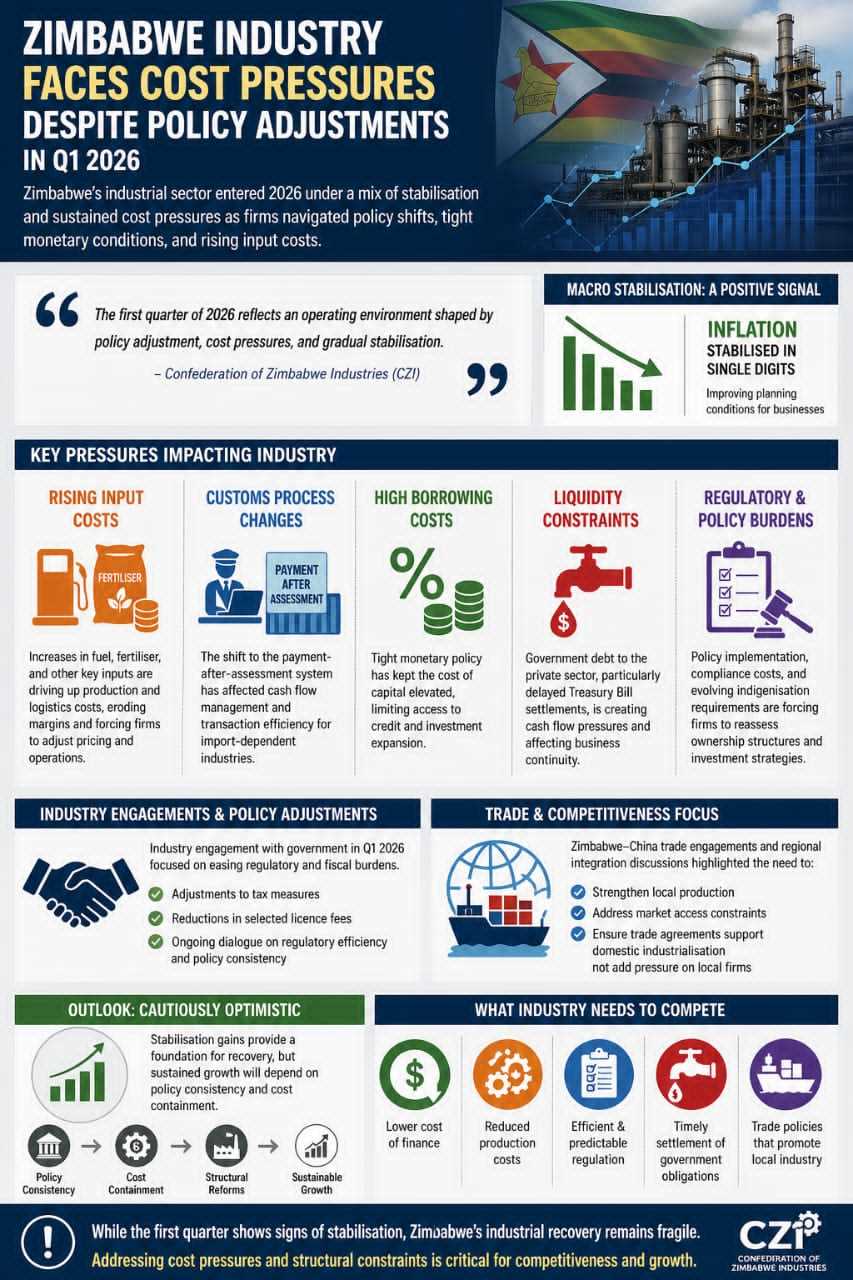
Zimbabwe’s industrial sector entered 2026 under a mix of stabilisation and sustained cost pressures, as firms navigated policy shifts, tight monetary conditions, and rising input costs that continue to weigh on production and competitiveness. Data from the Confederation of Zimbabwe Industries shows that while inflation has stabilised into single digits, the broader operating environment remains constrained by high borrowing costs and liquidity challenges.
CZI noted that “the first quarter of 2026 reflects an operating environment shaped by policy adjustment, cost pressures, and gradual stabilisation,” highlighting the dual reality of macroeconomic improvement alongside persistent structural challenges. While lower inflation has improved planning conditions for businesses, tight monetary policy has kept the cost of capital elevated, limiting access to credit and investment expansion.
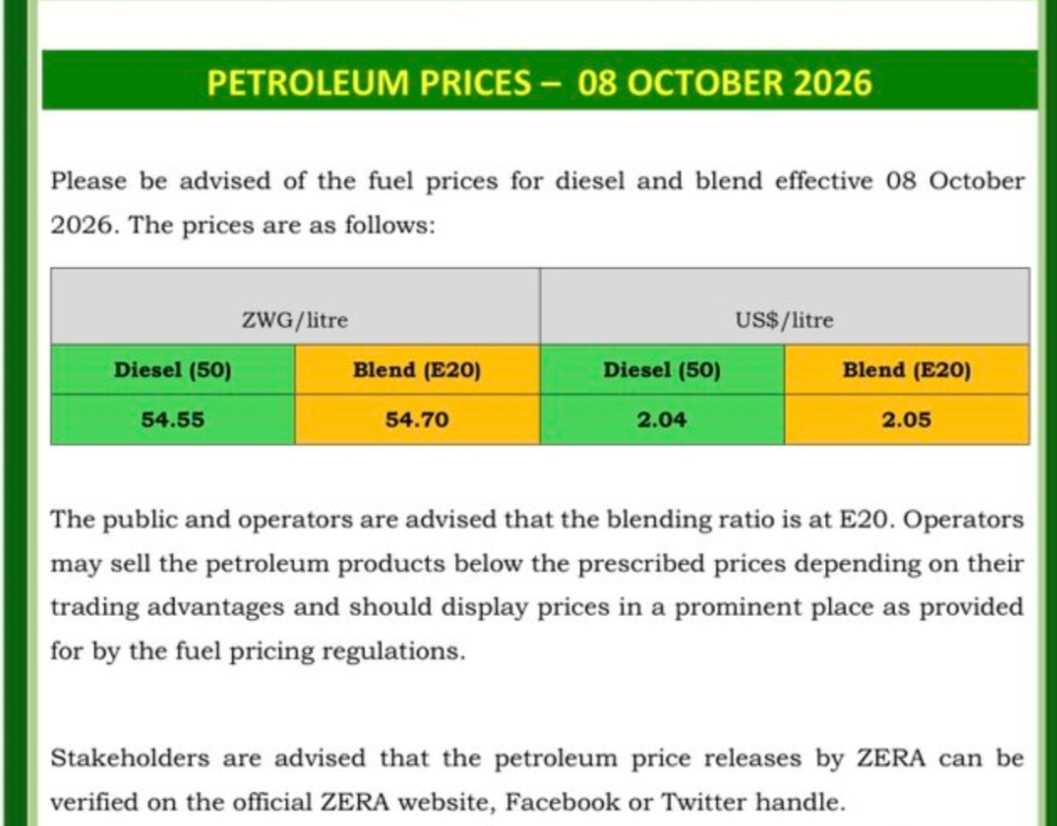
Rising input costs remain a central concern across sectors. Increases in fuel, fertiliser, and other key inputs have continued to drive up production and logistics costs, eroding margins and forcing firms to adjust pricing and operations. These pressures are compounded by changes in customs processes, particularly the shift to the payment-after-assessment system, which has affected cash flow management and transaction efficiency for import-dependent industries.
Industry engagement with government during the quarter focused on easing regulatory and fiscal burdens, including adjustments to tax measures and reductions in selected licence fees.
Related Stories
However, businesses continue to face operational challenges linked to policy implementation, regulatory compliance, and evolving indigenisation requirements, which have required firms to reassess ownership structures and investment strategies.
Government debt to the private sector, particularly delayed Treasury Bill settlements, has created cash flow pressures for firms, limiting their ability to sustain operations and invest in production. CZI engagements highlighted concerns that these delays are directly affecting business continuity, especially among manufacturers reliant on timely payments.
Despite these challenges, industry continues to push for value addition and improved competitiveness, particularly in the context of ongoing trade negotiations and regional integration.
Consultations around Zimbabwe–China trade engagements underscored the need to strengthen local production, address market access constraints, and ensure that trade agreements support domestic industrialisation rather than increase pressure on local firms.
The outlook for the sector remains cautiously optimistic but heavily dependent on policy consistency and cost containment.









Leave Comments