







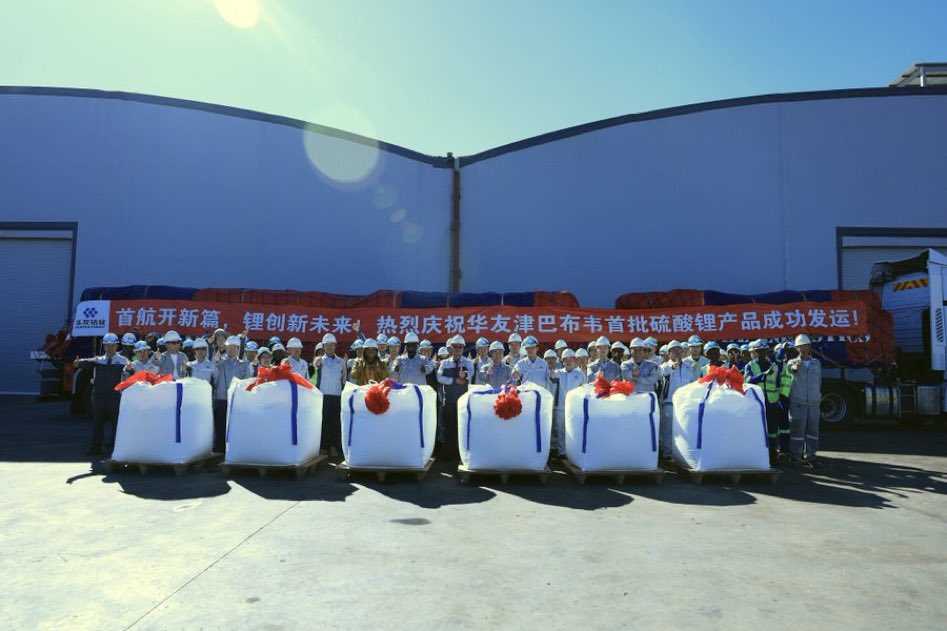
Zimbabwe has recorded its first export of lithium sulphate from Prospect Lithium’s US$400 million Arcadia Mine plant, marking a significant shift in the country’s position within the global battery minerals value chain and signalling the emergence of localised lithium chemical production.
“This inaugural shipment represents the first lithium salt ever produced in Zimbabwe and across Africa, marking a major step forward in regional mineral beneficiation and industrialisation,” Prospect Lithium said, underscoring the symbolic and industrial significance of the development.
The Arcadia project confirms a transition from exporting raw lithium ore and concentrates toward higher-value lithium chemicals, a step aligned with government policy changes introduced after Zimbabwe banned raw lithium exports. At the time, the policy shift was aimed at forcing downstream processing rather than allowing continued export of unbeneficiated ore.
Since then, policy has progressively tightened around value addition.
Related Stories
Government has signaled that from 2027, miners are expected to export lithium in sulphate form, a more refined product used in battery materials. A 10 percent export tax on concentrates has also been introduced to discourage low-value exports and accelerate beneficiation, while export restrictions imposed in February have been partially relaxed through quota allocations as producers adjust their processing capacity.
The Arcadia milestone therefore represents early compliance with this policy trajectory, with Zimbabwe now positioning itself within the mid-stream segment of the lithium value chain rather than remaining a raw materials exporter. The shift is particularly significant given the rapid expansion of global demand for lithium chemicals, driven by electric vehicle and energy storage markets.
Zimbabwe’s lithium sector has attracted increasing Chinese investment, with Arcadia operated by Prospect Lithium Zimbabwe, a subsidiary of Zhejiang Huayou Cobalt. This reflects regional trends in which Chinese firms are playing a dominant role in Africa’s battery minerals supply chains, particularly in extraction and early-stage processing.
Government has framed the beneficiation drive as a structural economic shift aimed at increasing domestic value capture, foreign currency earnings, and industrial development. However, the transition also places pressure on miners to invest heavily in processing infrastructure, which is capital-intensive and sensitive to global lithium price volatility.








Leave Comments