







Zimbabwe’s economy remained in positive territory through 2025, but slowing growth in the final quarter of the year points to weakening momentum despite strong contributions from mining, manufacturing, and trade sectors.
Latest figures from Zimbabwe National Statistics Agency show that year-on-year GDP growth decelerated to 7.04% in the fourth quarter of 2025, down from 10.65% recorded in the third quarter. The slowdown marks the first notable moderation after a period of strong quarterly expansion earlier in the year.
ZimStat said, “Zimbabwe’s year-on-year GDP growth rate slowed to 7.04% in Q4 2025, down from 10.65% recorded in Q3 2025.” The agency added that despite the slowdown, “Zimbabwe maintained positive economic growth throughout 2025.”
According to the agency, quarterly GDP growth trends for 2025 stood at 3.25% in Q1, before accelerating sharply to 11.45% in Q2 and 10.65% in Q3, prior to easing in the final quarter. While the economy maintained positive growth across all four quarters, the declining pace suggests underlying constraints may be beginning to weigh on economic activity.
The data also reinforces the increasingly dominant role of extractive industries within Zimbabwe’s economic structure.
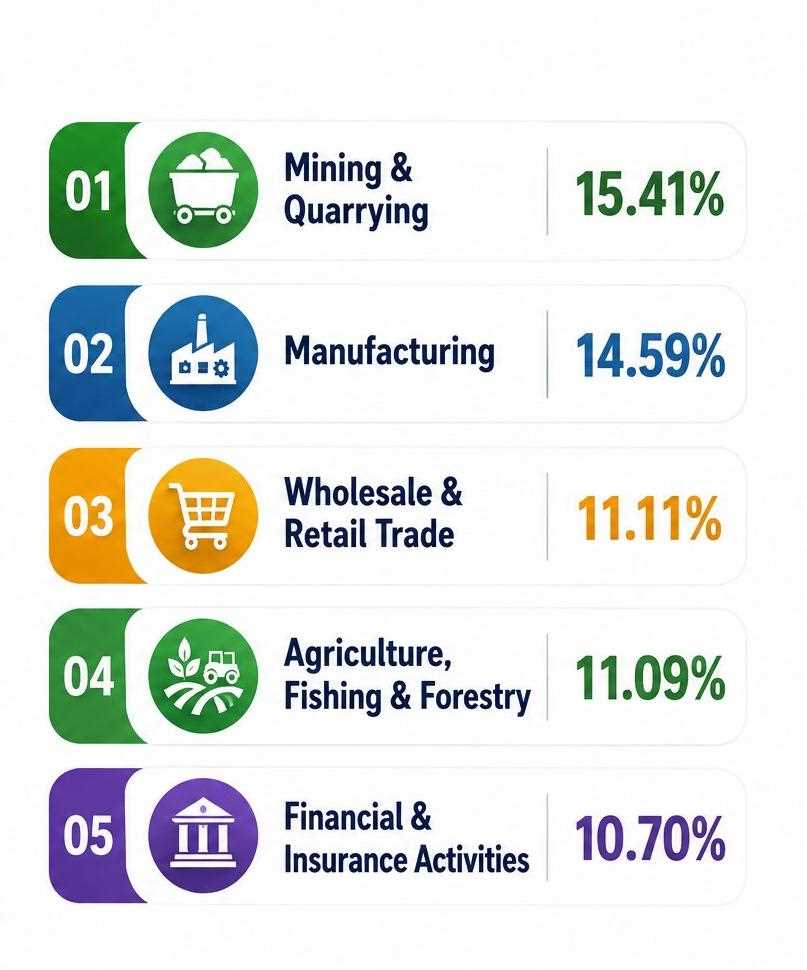
ZimStat stated that the “top contributing industries to GDP at constant prices in Q4 2025” were led by “Mining & Quarrying: 15.41%,” followed by “Manufacturing: 14.59%,” “Wholesale & Retail Trade: 11.11%,” “Agriculture, Fishing & Forestry: 11.09%,” and “Financial & Insurance Activities: 10.70%.”
Related Stories
The dominance of mining reflects Zimbabwe’s continued dependence on mineral exports as a primary driver of growth, foreign currency generation, and industrial activity. Rising gold, lithium, and platinum sector investments have increasingly shifted the economy toward extractive production, particularly as manufacturing and agriculture continue facing structural constraints.
However, the figures also expose the economy’s uneven composition. While mining leads GDP contributions, the sector remains capital-intensive and generates fewer broad-based employment benefits compared to agriculture or manufacturing. This creates a disconnect between headline growth figures and lived economic realities, particularly in urban and rural communities where informality and unemployment remain widespread.
The slowdown in Q4 may also indicate growing pressure from high operating costs, currency instability, constrained consumer demand, and energy shortages, factors that have continued to affect productive sectors despite broader macroeconomic stabilisation efforts.
Manufacturing’s 14.59% contribution remains significant given the sector’s long-term decline over the past two decades. However, industrial recovery remains fragile, with many firms still operating below full capacity due to imported input costs, electricity disruptions, and limited access to affordable financing.
Meanwhile, agriculture’s contribution of 11.09% highlights both resilience and vulnerability within the sector. While improved rainfall conditions supported production during parts of 2025, agriculture remains highly exposed to climate variability, irrigation limitations, and declining soil productivity. The sector’s relatively smaller share compared to mining also reflects Zimbabwe’s gradual structural shift away from agriculture as the primary economic anchor.
The strong showing by wholesale and retail trade further reinforces the growing role of commerce and informal market activity within the economy. Much of Zimbabwe’s economic circulation increasingly occurs through trading activity rather than high-value industrial production, a trend that reflects both adaptability and underlying industrial weakness.
Financial and insurance activities contributing 10.70% suggests continued expansion within the banking and financial services sector, although critics argue parts of the sector remain more connected to transactional and speculative activity than productive investment financing.










Leave Comments