








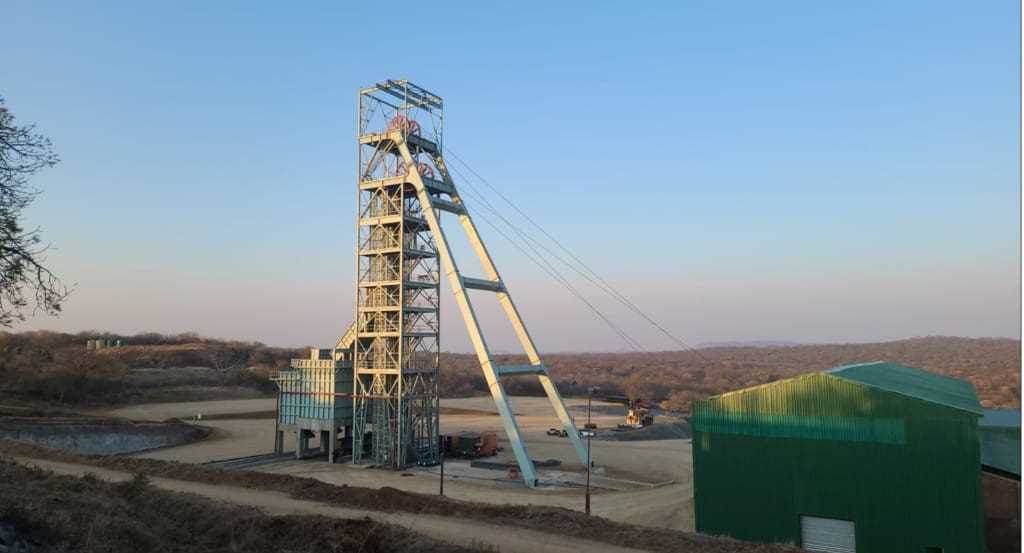
Climate change is emerging as a strategic business risk for Zimbabwe's mining sector, with Caledonia Mining signalling that future investment decisions at Blanket Mine will increasingly be guided by climate scenario planning rather than production targets alone.
The company's 2025 Global Reporting Initiative Index shows climate change and energy management among its five most material sustainability issues, reflecting a shift in how mining companies are preparing for increasingly volatile weather patterns, tighter environmental regulations and changing investor expectations.
While the report acknowledges that the company has not yet published a comprehensive climate transition plan or greenhouse gas reduction targets, it says these will become a key focus from 2026. Caledonia plans to develop climate scenario analysis and expand climate-related risk metrics in line with the International Financial Reporting Standards' IFRS S2 climate disclosure framework.
The company states that the work is intended to improve its understanding of "how different climate pathways may affect Caledonia's assets, operations and host communities" and support the refinement of mitigation and adaptation strategies.
The shift comes as mining companies worldwide increasingly incorporate climate risks into boardroom decision-making, with institutional investors demanding evidence that operations can withstand prolonged droughts, flooding, energy disruptions and tightening emissions regulations.
For Zimbabwe, where mining contributes more than 75 percent of export earnings and remains the country's largest foreign currency generator, climate resilience is becoming a strategic economic issue rather than solely an environmental concern.
The report suggests that climate considerations will increasingly influence operational expenditure, infrastructure investment and long-term mine planning at Blanket Mine, Zimbabwe's largest producing underground gold mine.
Related Stories
Evidence of these risks has already begun to emerge. Caledonia disclosed that unusually heavy rainfall in December 2025 pushed Return Water Dam 1 to its design capacity, forcing a controlled discharge into Return Water Dam 2 after approval from the Environmental Management Agency. The company said continuous monitoring and water quality testing were undertaken throughout the event.
Although managed without reported environmental harm, the incident highlights how increasingly unpredictable weather events are testing mining infrastructure that was designed under different climatic assumptions.
0
The GRI Index also reveals that several climate-related disclosures remain incomplete, including emissions intensity, mine-specific greenhouse gas reporting and carbon reduction targets. Caledonia says these gaps will be addressed as it strengthens reporting under the latest GRI Mining Standard and IFRS S2 requirements.
Economist Gift Mugano said climate resilience is no longer simply an environmental obligation but an economic necessity for Zimbabwe's extractive sector.
"Climate change is increasingly becoming a cost issue for mining. It affects productivity, infrastructure, insurance costs, energy security and access to international capital. Investors are now asking whether mines can remain profitable under future climate scenarios, not just under current operating conditions."
Mugano said mining companies that fail to demonstrate climate preparedness could find themselves at a disadvantage when competing for international investment.
"Global financiers are integrating climate risk into lending and investment decisions. Compliance with frameworks such as IFRS S2 is therefore becoming a competitiveness issue rather than merely a reporting exercise."
The direction taken by Caledonia mirrors a trend across the global mining industry, where major producers are embedding climate scenario analysis into corporate strategy following recommendations of the former Task Force on Climate-related Financial Disclosures, now incorporated into IFRS S2.







Leave Comments