







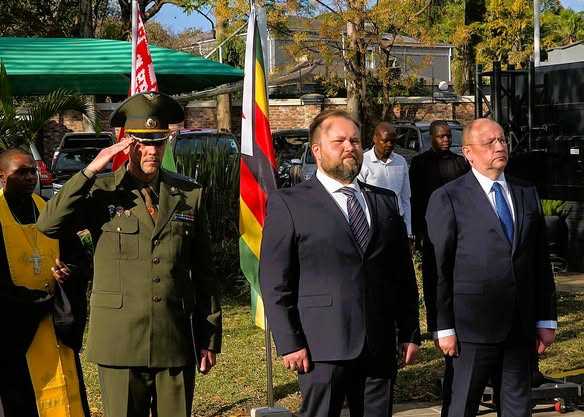
A ceremony marking one of Belarus’ darkest national memories became a wider call for peace, dialogue and respect for sovereignty on Monday, as diplomats and invited guests gathered at the Embassy of the Republic of Belarus in Harare.
The embassy hosted the commemoration of the Day of National Memory of the Victims of the Great Patriotic War and the Genocide of the Belarusian People, observed annually on 22 June, the date Nazi Germany invaded the Soviet Union in 1941.
For Belarus, through generations, the date recalls the destruction of cities and villages, mass killings, occupation and the loss of more than three million lives, about a third of the country’s population at the time.
In Zimbabwe, where national memory is also closely tied to the struggle against colonial rule and the fight for sovereignty, the ceremony carried a familiar message: peace is not an abstract diplomatic phrase. It is often built from the memory of what occupation, war and domination cost ordinary people.
Delivering the keynote address, Belarus Ambassador to Zimbabwe Yury Nikalaichyk said remembrance remains central to Belarusian identity and foreign policy.
“The memory of the participants and victims of the Great Patriotic War for Belarus is a sacred message to future generations to preserve peace,” he said.
He said historical memory should not be used to deepen hostility, but to warn future generations against the return of hatred, aggression and global conflict.
The ceremony brought together diplomats, government officials, members of the diplomatic corps, religious leaders and invited guests. It opened with a moment of silence in honour of those who died during the war.
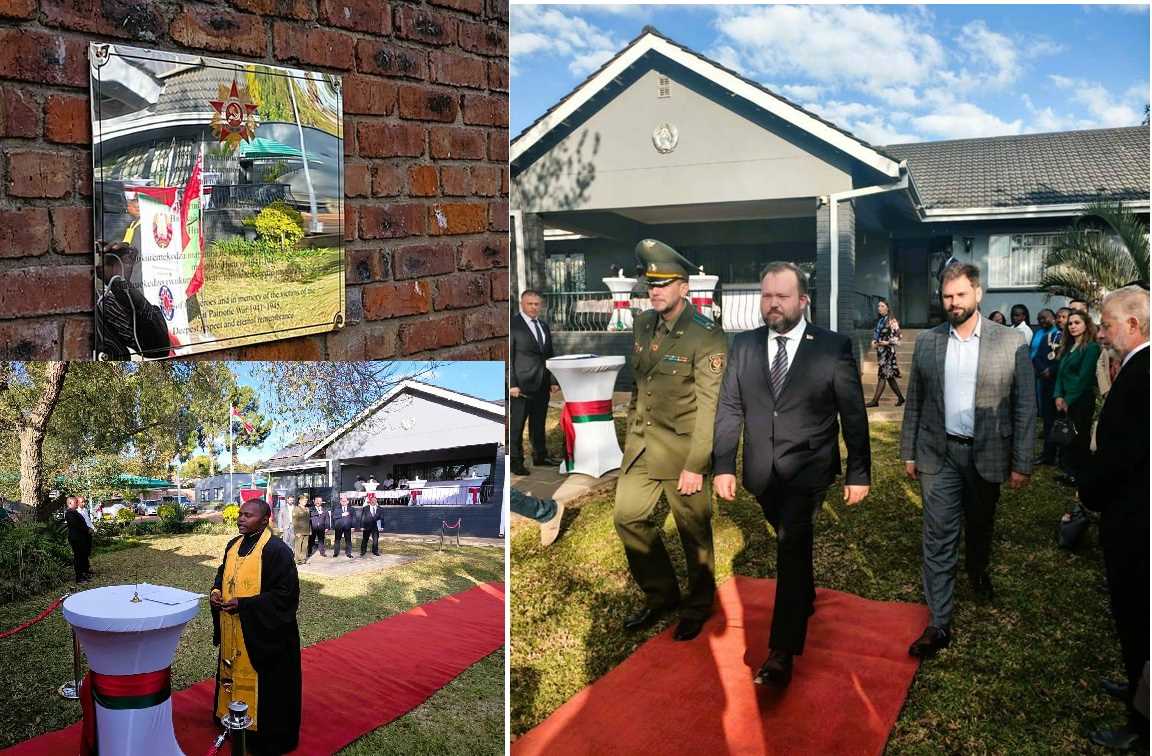
As part of the commemoration, a memorial plaque was unveiled at the embassy, symbolising Belarus’ commitment to preserving historical truth and promoting peace-oriented diplomacy.
Nikalaichyk also warned against rising global militarisation, saying the weakening of dialogue and arms control mechanisms threatens international stability.
“The chance for peace is not lost,” he said, stressing the need for mutual respect and cooperation among states, even where disagreements exist.
His message landed at a time when the world is again marked by open wars, geopolitical confrontation, sanctions, military build-ups and growing mistrust between power blocs. Against that background, the Harare ceremony presented remembrance not only as national mourning, but as a diplomatic language for urging restraint.
Russian Federation Ambassador-designate to Zimbabwe Sergey Berdnikov also addressed the gathering, describing 22 June as one of the most tragic dates in Russian history.
He paid tribute to the estimated 27 million Soviet citizens who died during the war, saying remembrance must serve as a moral guard against extremism, hatred and historical distortion.
“Their sacrifice is eternal, but their legacy is sacred. To forget their struggle would be a betrayal of the very essence of peace and justice,” he said.
A local priest of the Russian Orthodox Church, the first Zimbabwean to be so ordained, Emillian Shumba, led prayers for the fallen, adding a spiritual dimension to the ceremony and reflecting on the human cost of war across generations.
Master of ceremonies Roman Koyz highlighted wartime resistance movements, including the defence of Brest Fortress, which he described as an enduring symbol of courage and sacrifice under occupation.
Across the speeches, one message stood out: historical memory should not trap nations in the past, but help them defend peace in the present.
For Zimbabwean audiences, the commemoration also offered a reminder that nations emerging from painful histories often place sovereignty, dignity and remembrance at the centre of their diplomacy.
The ceremony ended with a reception, but its core message had already been made clear: remembering the dead is not only an act of mourning. It is also a warning to the living.
All images Embassy of Belarus in Zimbabwe








Leave Comments