






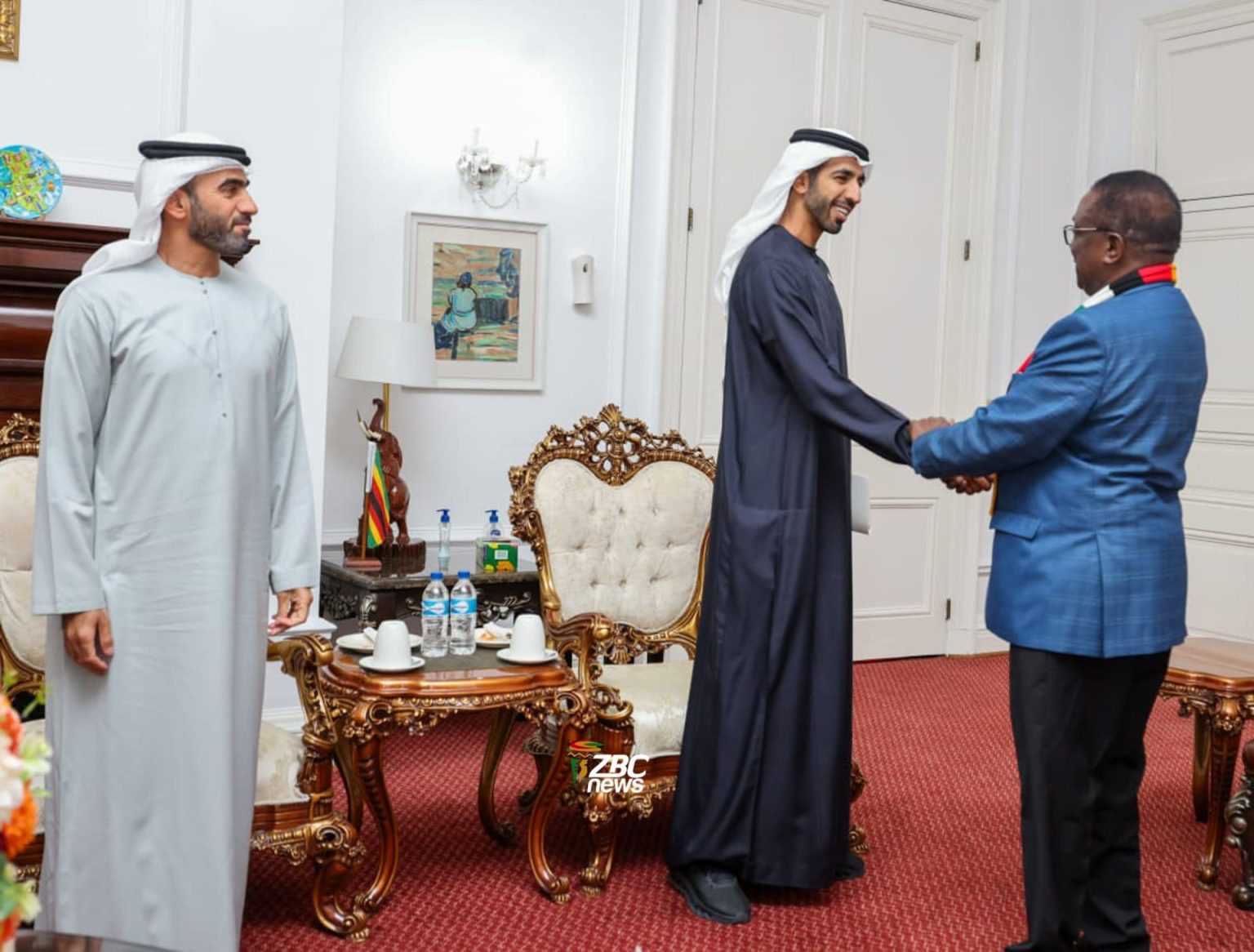
Following high-level diplomatic engagements at State House over the weekend, Zimbabwe and the United Arab Emirates (UAE) are moving quickly to finalize a Comprehensive Economic Partnership Agreement aimed at locking in a surge in bilateral trade.
The bilateral agreement comes on the heels of discussions between President Emmerson Mnangagwa and the visiting UAE Minister of State in the Ministry of Foreign Affairs, His Excellency Sheikh Shakhbout, where official figures showed trade between the two nations has jumped by 74 percent over the past two years.
Speaking after the closed-door bilateral meeting, Minister of Foreign Affairs and International Trade, Professor Amon Murwira, confirmed that technical negotiations for the trade pact are now well advanced.
“We are looking forward to the completion of our comprehensive economic trade agreement between Zimbabwe and the UAE, and everything is on course,” Prof. Murwira said.
Related Stories
Prof. Murwira highlighted that the direct dialogue between H.E. Sheikh Shakhbout and President Mnangagwa served to review and consolidate economic ties that have expanded rapidly under Harare's foreign policy thrust.
“Our trade relations have grown astronomically over the past few years,” Prof. Murwira added. “Our economic linkages are excellent. H.E. Sheikh Shakhbout was paying a courtesy visit to the President to update him about the state of our economic relations, which can be characterized as excellent.”
The UAE has emerged as one of Zimbabwe's premier export destinations, particularly for precious metals, minerals, and horticultural products. Government officials attribute the upward trajectory to the administration’s "Zimbabwe is Open for Business" drive, noting that the policy framework is yielding similar gains across other strategic markets, including a 38 percent increase in trade with the European Union alongside steady growth in commerce with China.
With the comprehensive agreement near finalization, trade authorities expect export receipts to maintain a strong upward path as direct market access and bilateral investment frameworks are formalized.






Leave Comments