









By Munyaradzi Blessing Doma
Zimbabwe must now move beyond wheat self-sufficiency and focus on developing better seed varieties that respond to changing climatic conditions, diseases and consumer demands.
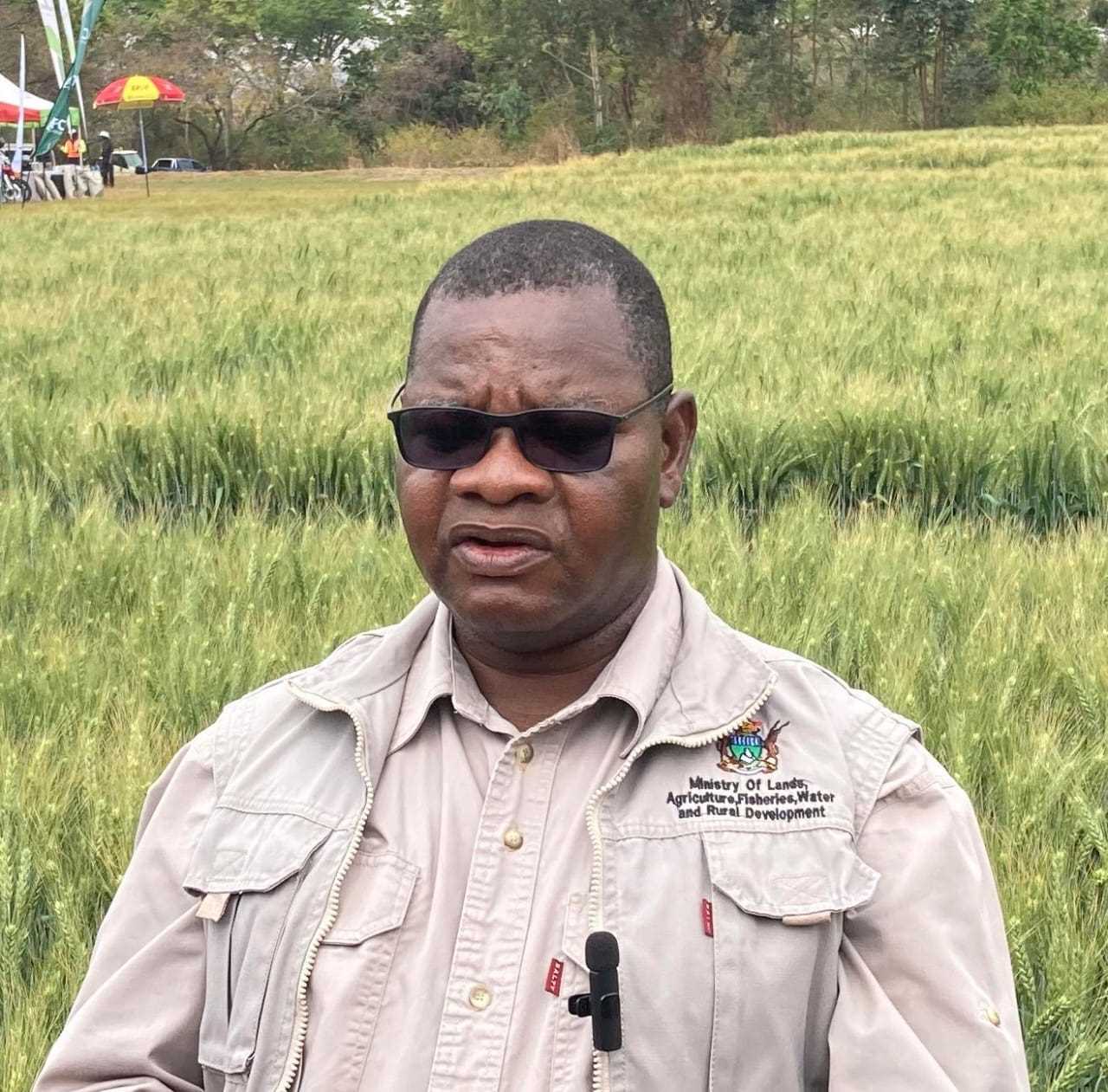
Permanent Secretary in the Ministry of Agriculture, Mechanisation and Water Resources Development Professor Obert Jiri said this at the Seed Co Wheat Field Day held at Rattray Arnold Research Station along Shamva Road on Tuesday.
Prof Jiri said the country’s achievement of wheat self-sufficiency should now be consolidated through the production of high-quality and resilient varieties.
“With our wheat prowess, both in the country, of course we are now wheat self-sufficient as a country. In Africa, we are one of the only two countries that are self-sufficient in wheat production,” he said.
“Certainly, where we are now going is to consolidate that position by producing better-quality varieties which are resistant to diseases, which respond well to our climate, and which respond well to the resources that we put in, and, of course, which answer the questions of our customers.”
Prof Jiri said the development of varieties that respond to consumer preferences was also important, citing the demand for whiter flour as an example.
“In the last two years, we had a challenge with the colour of our wheat grain, where consumers wanted whiter flour, which is why we now have companies that have responded, including Seed Co here. We have responded by now producing white-flour varieties of wheat,” he said.
He said wheat breeders should continue developing varieties that meet the requirements of farmers, millers, bakers and consumers.
“It’s critical because we only produce this wheat for our consumers, and it’s critical that we respond from time to time to what the consumers demand, the product they need,” Prof Jiri said.
He said producing suitable local varieties would also help Zimbabwe reduce its reliance on imported wheat.
“One of the key elements that, as Government, we look at is the need to avoid imports of wheat at all costs. We want our farmers to be well supported and to grow the wheat that we consume,” he said.
Related Stories
“When we have good varieties which produce the quality that our bakers require, we then avoid supporting farmers from beyond our borders, which is why it’s critical that we continue to have our breeders producing the quality and the varieties that our customers require in this country.”
The field day, held under the theme “SC W9104: Growing Zimbabwe’s Wheat Future – Driving Economic Growth and Food Security,” brought together farmers, millers, bakers and other stakeholders in the wheat value chain.
Seed Co Managing Director Felistas Ndawi-Gurajena said the event provided an important platform for stakeholders to connect science, research and farming.
“Today is more than a field day. It is a meeting point between science and farming, between research and enterprise, and between the achievements of yesterday and the possibilities of tomorrow,” she said.
Ndawi-Gurajena said farmers remained at the centre of Seed Co’s breeding and innovation programmes.
“Our responsibility is not simply to sell seed. It is to develop solutions that help farmers turn land, water, labour and capital into sustainable productivity and profit,” she said.
She said Seed Co’s wheat breeding programme, which has been running since 1981, had contributed to Zimbabwe’s wheat self-sufficiency through successive generations of varieties.
The programme has produced varieties including SC Scarlet, SC Scholar, SC Scepter, SC Shine, SC Stallion, SC Sekuru, SC Sky, SC Scan, SC Nduna, SC Select and SC Serena.
Ndawi-Gurajena said the programme had now advanced to the newly launched white-flour variety, SC W9104, developed in response to new disease strains, climate variability and changing customer preferences.
“Our customer-centric approach means listening carefully to farmers, understanding their production realities and responding with solutions that are practical, resilient and commercially relevant,” she said.
She said Seed Co could not develop the wheat value chain alone, calling for continued collaboration among Government, financial institutions, researchers, universities, millers, bakers, agro-dealers, contractors, irrigation schemes and development partners.
“Most importantly, we need farmers. You are the ultimate judges of our technologies. Your fields tell us whether our science is relevant. Your profitability tells us whether our solutions are creating value,” Ndawi-Gurajena said.
She said Seed Co would continue to invest in breeding, innovation, demonstrations, agronomic advice and partnerships to provide farmers with varieties suited to African conditions.
The launch of SC W9104 comes as Zimbabwe seeks to consolidate its wheat production gains while ensuring that locally produced wheat meets the quality requirements of the market.










Leave Comments