







Zim Now International Desk
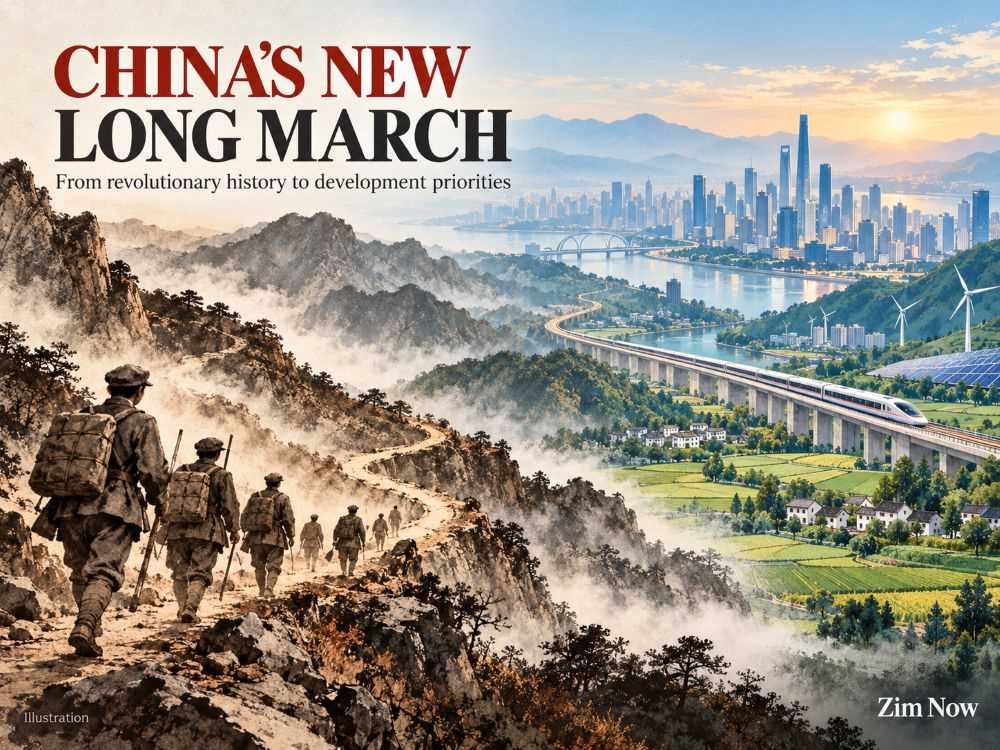
Chinese President Xi Jinping has drawn on the history of the Long March to call for development that improves people’s lives, greater self-reliance and preparedness for domestic and international challenges.
In an address marking the 90th anniversary of the Red Army’s Long March victory, dated October 22, Xi linked the Communist Party of China’s revolutionary experience to its present goals of economic development, shared prosperity and military modernisation.
His message placed particular emphasis on adapting ideas to national circumstances and maintaining public support through practical action.
The Long March involved Red Army forces undertaking a series of military withdrawals and movements between 1934 and 1936 after campaigns against Communist revolutionary bases threatened their survival.
In his account, Xi described forces crossing rivers, snow-covered mountains and marshlands while fighting their way through successive blockades. He presented their survival and regrouping as a turning point that opened a new chapter in the Chinese revolution.
Among the lessons he highlighted was the need to abandon rigid thinking when it failed to address conditions on the ground.
Xi said the Party had gradually broken free from dogmatism and begun independently addressing practical questions about its direction and military strategy. He argued that Marxist principles could resolve China’s problems only when closely integrated with the country’s circumstances.
That emphasis carried into his description of China’s current development path, which he characterised as a “new Long March”.
He called for improvements in the quality of economic growth alongside reasonable expansion, with development measured against people’s growing expectations for better lives.
Related Stories
“We will promote all-round social progress, ensure that development is for the people, by the people and its fruits are shared by the people, and advance common prosperity for all,” he said.
Public support was another thread connecting his historical account with his present-day priorities.
Xi attributed the Red Army’s survival partly to communities that supplied food and clothing, sheltered the wounded, passed intelligence and contributed recruits. He said maintaining close ties with the population remained essential to the Party’s work.
The address also connected development with security, calling for readiness to withstand major difficulties in a complex domestic and international environment. It did not identify particular countries or disputes.
Xi urged the Party and military to anticipate risks and respond to challenges while pursuing China’s national development goals.
Military modernisation formed a substantial part of that agenda. He reiterated the objective of building a world-class military, advancing defence capabilities through technology, reform and training, and meeting the armed forces’ centenary development goal.
He also reaffirmed the Party’s absolute leadership over the military and called for stronger internal discipline and continued reform within the Party itself.
The speech set out broad political priorities rather than a new package of economic measures, financing commitments or international cooperation proposals.
Its central message was continuity: Xi presented the independence, adaptability, discipline and public support that he associated with the Long March as foundations for China’s next stage of development.





Leave Comments