








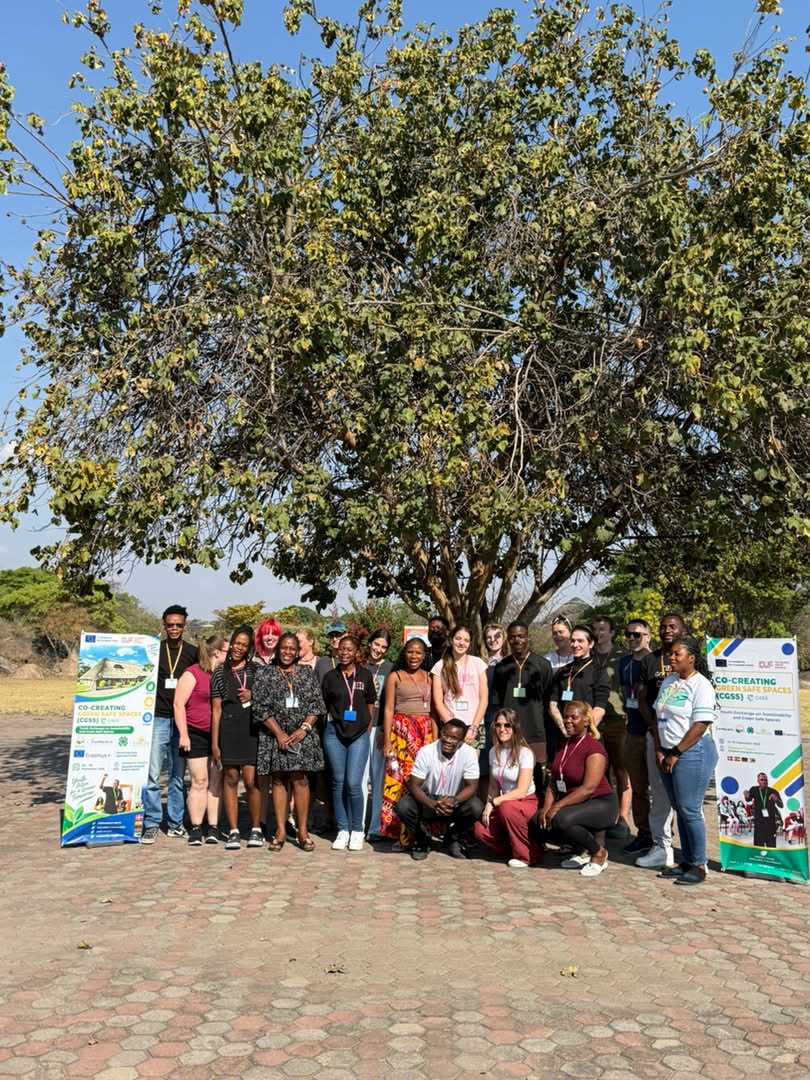
Twenty-eight young people from Zimbabwe, Malawi, Denmark, and Spain have gathered in Zimbabwe for a seven-day youth exchange designed to translate climate knowledge into practical, community-led action.
The Co-Creating Green Safe Spaces Youth Exchange, which runs in Harare and Domboshava from 24 to 30 September, is hosted by the Rural Enterprise Trust of Zimbabwe (RETZ). The initiative is part of an Erasmus+ Capacity Building partnership co-funded by the European Union and the Danish Youth Council.
The international gathering brings together representatives from RETZ, Malawi’s Sustainable Rural Community Development Organisation, Denmark’s Søholm 4H, and Spain’s Las Niñas del Tul. Local organisations, including the Youth Agenda Trust (YAT) and the Youth Empowerment and Transformation Trust (YETT), are also participating.
Speaking at the launch, RETZ Vice Board Chairperson Caroline Mupembe highlighted that the exchange offers a cross-cultural platform for youth to share experiences and engineer solutions tailored to their local contexts.
“This exchange is not only about bringing young people from four countries into one space. It is about creating an environment where they can listen to one another, share their different experiences and work together to develop solutions that respond to the realities of their communities,” Mupembe said.
She further stressed that green safe spaces must blend environmental sustainability with inclusion, mutual respect, and active civic involvement.
“Young people, including those who are often left behind, should feel safe to express themselves, contribute their ideas and participate in decisions that affect their lives and communities,” she added.
Related Stories
The opening sessions prioritized key foundational principles, including safeguarding, social inclusion, relationship-building, and establishing a shared learning environment. As the week progresses, modules will dive into climate adaptation, mitigation, resilience, sustainable food systems, gender equality, leadership dynamics, and youth empowerment.
RETZ Youth Coordinator Tatenda Madziro emphasised that the initiative views young people as active partners in development rather than passive recipients of aid.
“Young people already understand many of the challenges facing their communities because they experience them every day. Our responsibility is to create the space, provide appropriate tools and connect them with others so that they can analyse those challenges and co-create practical responses,” Madziro said.
Throughout the week, participants will collaborate directly with local farmers and young producers to examine climate change impacts, food systems, and sustainable livelihoods. Hands-on learning will focus on water conservation techniques, seed saving, harvesting, and the management of community seed banks.
A practical field visit to community gardens in Domboshava will introduce delegates to Mushandirapamwe the traditional Zimbabwean ethos of collective work and shared responsibility. Delegates will assist in the preliminary design of a local community garden, exploring how green spaces can bolster livelihoods, strengthen social inclusion, and build long-term climate resilience.
Training modules led by YETT will focus on youth participation, leadership, dynamic power relations, and climate advocacy, whilst YAT will lead sessions on sustainable agriculture and resilient food systems.
The dynamic itinerary also features educational visits to the Parliament of Zimbabwe and an agroecology farm, alongside structured intercultural exchanges designed to foster cross-border networks.
The seven-day exchange will conclude with a youth panel and evaluation session, where participants will draft formal action plans and personal commitments to implement within their respective organisations and home communities.






Leave Comments